What Is LINK? Chainlink’s Leading Oracle Network
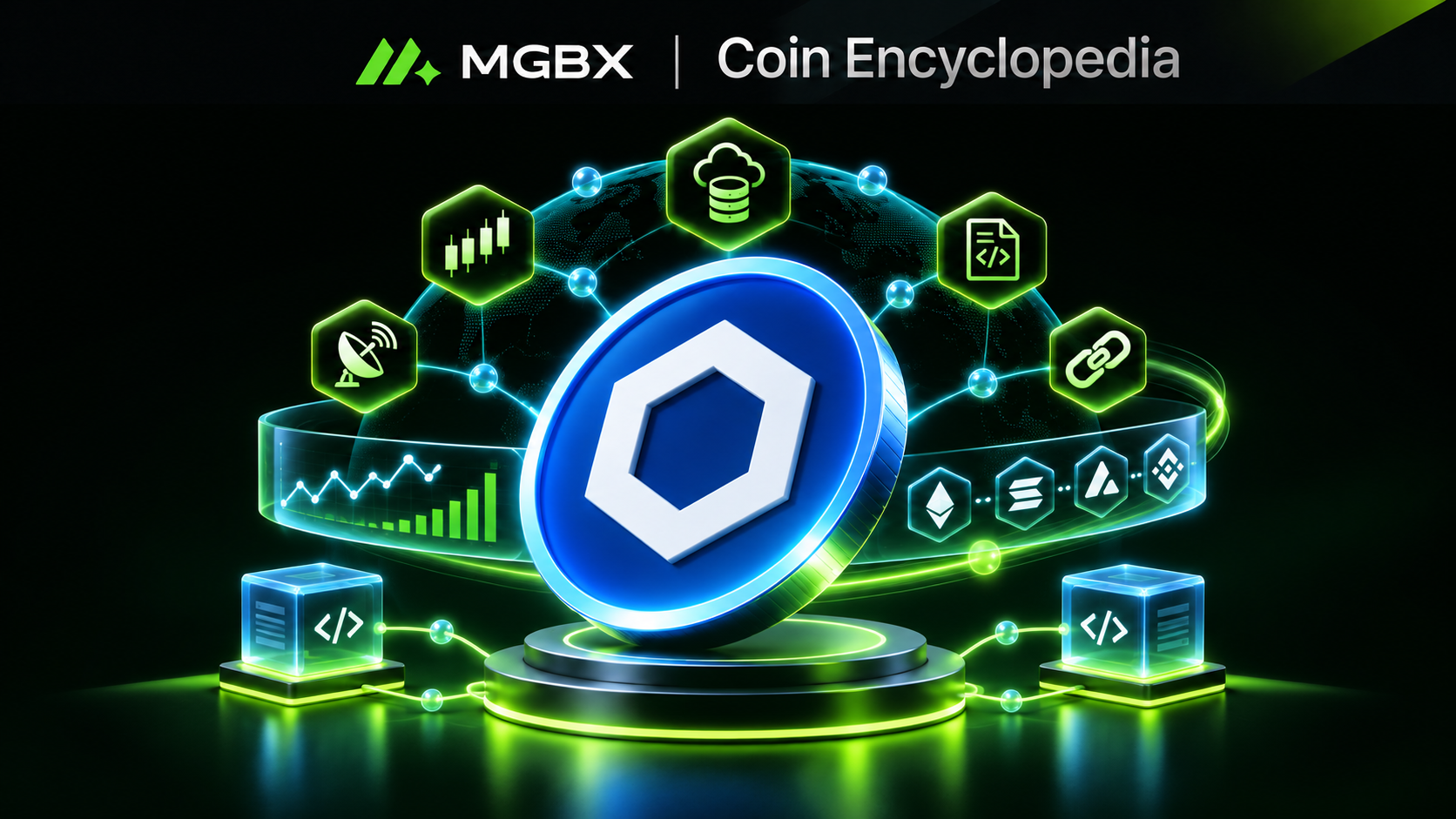
LINK supports Chainlink service payments and certain staking mechanisms. Oracles help smart contracts use external information, such as asset prices and reserve data, but do not predict the future or guarantee accuracy. Multiple sources and nodes reduce some single-point dependencies, while reliability still depends on data quality, update rules, and application integration. Assessing LINK requires distinguishing service adoption, payment methods, and staking coverage rather than treating partnership announcements as evidence of investment returns.
What Is LINK, and Why Do Smart Contracts Need Oracles?
LINK is the token of the Chainlink ecosystem, which provides oracle and cross-chain interoperability services. Smart contracts follow on-chain rules, but nodes cannot independently read changing websites and expect identical results. Oracles deliver external information through defined processes so applications can act on it.
For example, lending protocols need prices to assess collateral ratios. Stale or abnormal data can trigger inappropriate liquidations even when contracts execute correctly. Oracles address data access and verification, not price prediction.
Chainlink’s official data documentation covers price feeds and other services. Applications have different requirements: they do not all use the same oracle, and not every automated market-making mechanism requires external prices.
How Does Chainlink Provide Data and Cross-Chain Services?
Decentralized oracles can generate reports using multiple sources and node operators, reducing reliance on one interface or provider. However, correlated sources or markets with limited liquidity can undermine data independence.
Developers must also check update timing, price precision, and exception handling. Whether an application pauses when data becomes stale can be as important as its oracle choice. Integration alone does not complete risk management.
Chainlink’s cross-chain interoperability services move messages and assets between supported networks. Documentation outlines execution processes, service limits, and developer responsibilities. Confirmation requirements, contract permissions, and failure handling still affect outcomes; cross-chain services are not risk-free.
What Roles Do LINK Payments and Staking Play?
LINK supports service settlement and security incentives, but payment methods vary by product. The official token documentation describes payment abstraction, which enables different payment options. Not every end user must manually buy LINK first.
Staking rules differ by version, participant, and covered service. The official staking guide distinguishes slashing arrangements for node operators and community stakers in version 0.2. Participants do not all provide identical guarantees for every data service. Capacity, withdrawal conditions, and reward sources also require review.
Assess development through sustained paid usage, service quality, coverage, and circulating supply changes. Institutional trials, production deployments, and ongoing commercial use are distinct stages. Partnerships do not automatically establish substantial revenue or imply LINK price appreciation.
Frequently Asked Questions
Can oracles predict market movements?
No. They provide data and related verification services, not market forecasts.Do multiple nodes eliminate incorrect data?
No. Source quality, correlation, and application handling still matter.Will every LINK staker be slashed if a node malfunctions?
Not necessarily. Rules depend on the staking version, participant role, and applicable conditions.Does holding LINK provide equity in its development company?
No. Token ownership does not automatically confer company shares or profit-sharing rights.
Mastering the basics is the first step. Follow MGBX Academy to access more cryptocurrency educational resources and market opportunities.
The process for trading on MGBX:
Register a trading account and complete the necessary identity verification;
Deposit funds and select a trade type;
On the cryptocurrency trading page, enter the amount or quantity of the cryptocurrency you wish to purchase;
Confirm the order to complete the trade, and check that your assets have increased accordingly.
Further Readings:
Major Cryptocurrencies: An Investment Guide
What Is DOT? Polkadot’s Cross-Chain Ecosystem
What Are MATIC and POL? Polygon’s Approach to Scaling Ethereum