Injective (INJ): A Layer 1 Blockchain Built for DeFi
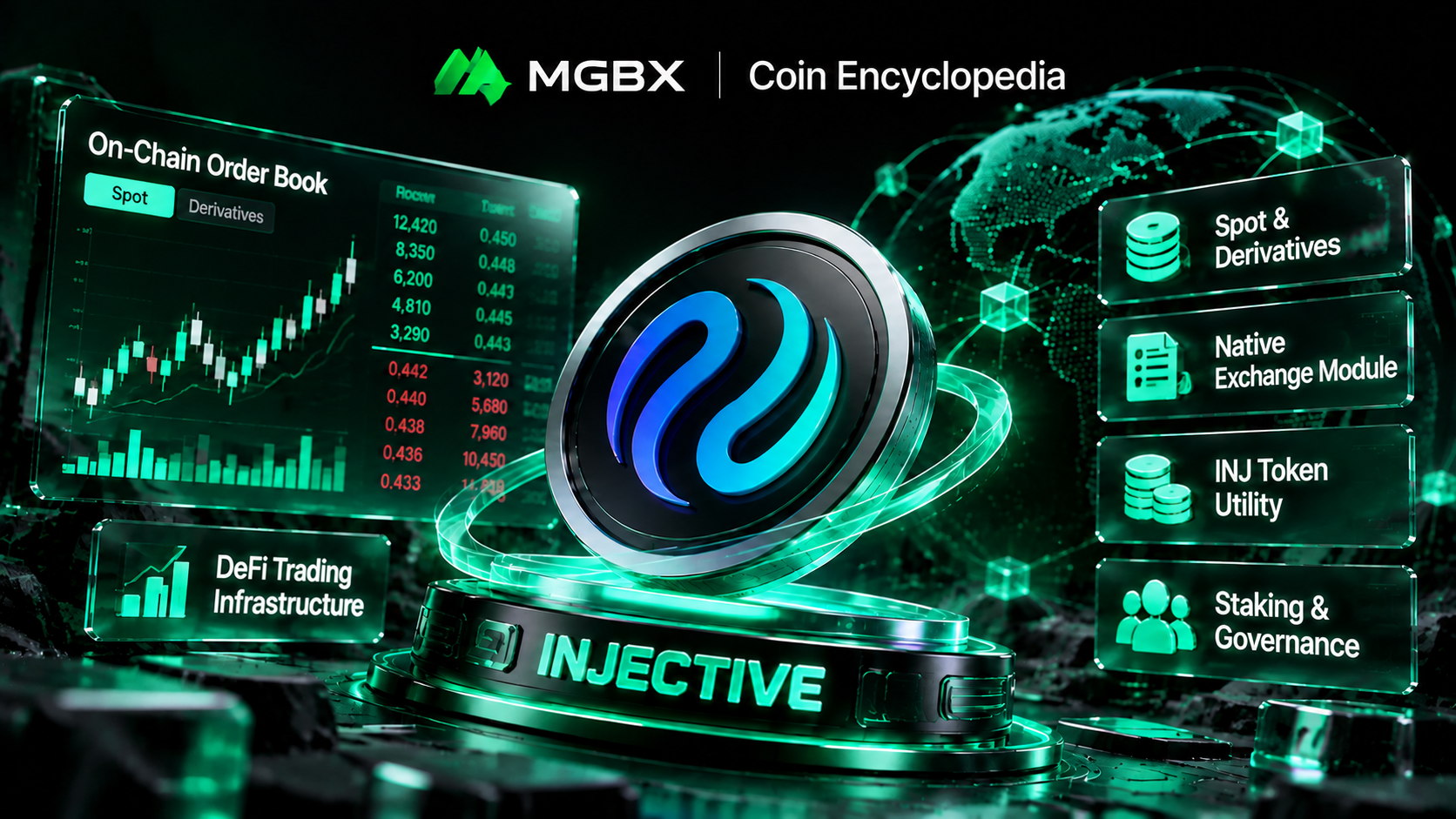
Injective is a Layer 1 blockchain designed for decentralized finance, offering native trading modules for spot and derivatives markets, as well as on-chain order management and matching. INJ is the network’s native token, used for transaction fees, staking, and governance. Understanding Injective requires examining demand for financial applications, on-chain trading mechanisms, tokenomics, and associated risks.
What Is Injective? A Layer 1 Built for On-Chain Finance
Injective is a Layer 1 blockchain designed for on-chain financial applications, with a focus on decentralized trading, derivatives, and other financial products. Unlike platforms that rely entirely on general-purpose smart contracts to build trading functionality, Injective provides native modules tailored to financial use cases, allowing developers to build trading applications on top of its infrastructure. The official Injective learning center introduces its financial infrastructure and ecosystem.
The Exchange module is a key component of Injective. According to the official Injective developer documentation, the module supports spot and derivatives markets, incorporating order book management, trade execution, order matching, and settlement into on-chain processes. This infrastructure helps developers build different types of trading applications without having to implement every underlying trading function from scratch.
Injective also provides modules for oracles, insurance, and auctions, offering additional building blocks for financial applications. However, having native trading infrastructure does not guarantee sufficient liquidity for every application or ensure that every trade will execute at the expected price. The actual trading experience still depends on market depth, trading design, and user demand.
How On-Chain Order Books Support DeFi Trading
An on-chain order book records buy and sell orders, including their prices and quantities, providing the basis for market quotes and order matching. Injective’s native Exchange module allows developers to create spot and derivatives markets and process related trading operations on-chain. The Injective Exchange module documentation explains features such as order placement, fund deposits, and trading operations.
For DeFi developers, native financial modules can reduce the complexity of building trading infrastructure and allow different applications to use shared on-chain functionality. However, the order book model is not suitable for every use case. Its effectiveness also depends on trading activity, order book depth, and market volatility. Derivatives applications must pay particular attention to oracle pricing, margin requirements, and liquidation rules.
When assessing trading security, users should distinguish between the technical mechanisms provided by a protocol and the actual risk outcomes. Any trading system may face smart contract vulnerabilities, market manipulation, insufficient liquidity, or extreme market movements. High performance and on-chain order matching alone do not make trading risk-free.
INJ Token Utility and the Buyback-and-Burn Mechanism
INJ is the native token of Injective. It is primarily used to pay network transaction fees, participate in staking and governance, and support the ecosystem’s economic mechanisms. The official Injective INJ page outlines the token’s main utilities, staking functionality, and community buyback mechanism.
Under Injective’s published tokenomics, community buybacks use revenue generated by the Injective ecosystem to repurchase INJ, with the repurchased tokens permanently burned to reduce the circulating supply. The official Injective tokenomics paper also describes INJ’s fee, staking, governance, and supply mechanisms. Specific implementation rules may change as governance decisions or protocol updates are introduced, so users should refer to the latest official information.
It is important to note that buybacks and token burns do not guarantee an increase in INJ’s price. Its market value is still influenced by supply and demand, broader market conditions, ecosystem activity, and investor expectations.
Frequently Asked Questions
-
What is Injective?
Injective is a Layer 1 blockchain designed for DeFi and on-chain financial applications. -
What is INJ used for?
INJ is used to pay network fees, participate in staking and governance, and support the ecosystem’s tokenomics. -
What is the purpose of Injective’s order book?
Its native Exchange module supports on-chain order management, matching, and settlement, helping developers build spot and derivatives applications. -
Does the INJ buyback-and-burn mechanism mean its price will rise?
No. Buybacks and burns affect token supply dynamics, but market prices are determined by multiple factors.
Mastering the basics is the first step. Follow MGBX Academy to access more cryptocurrency educational resources and market opportunities.
The process for trading on MGBX:
-
Register a trading account and complete the necessary identity verification;
-
Deposit funds and select a trade type;
-
On the cryptocurrency trading page, enter the amount or quantity of the cryptocurrency you wish to purchase;
-
Confirm the order to complete the trade, and check that your assets have increased accordingly.
Further Readings:
Layer 1 Blockchain Investment Landscape