Tether Reserves and Audits: Is USDT Really Backed 1:1?
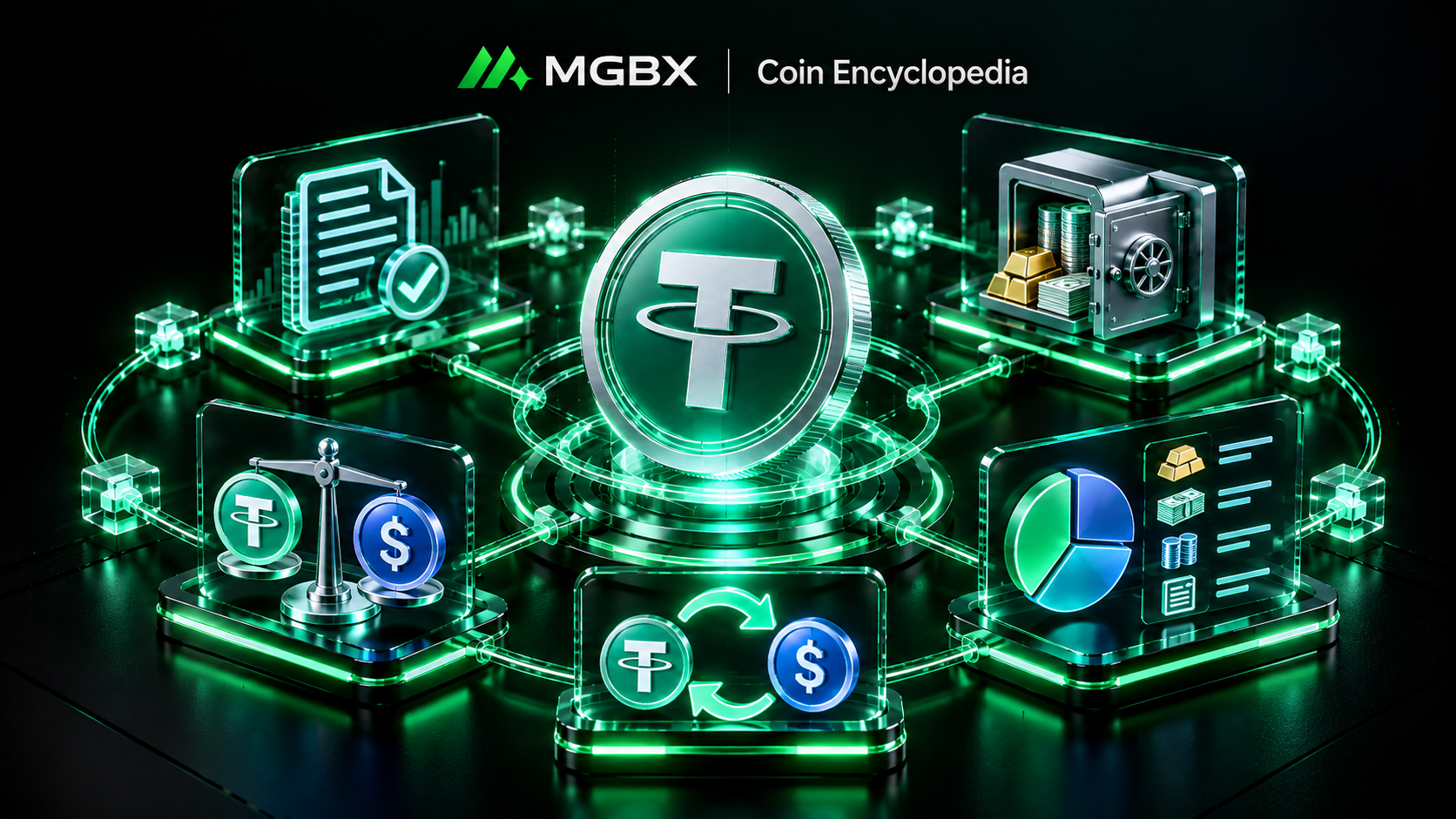
USDT aims to maintain a 1:1 peg to the U.S. dollar, but understanding this commitment requires distinguishing between reserve backing, secondary-market prices, and actual redemption terms. Tether states that circulating USDT is supported by corresponding reserve assets and publishes related information through its transparency page and quarterly reserve reports. However, reserves are not held entirely as bank cash, and quarterly attestations are not the same as continuous real-time audits. Assessing USDT transparency requires examining reserve composition, asset and liability figures, the type of independent review, and the conditions for direct redemption.
What Does USDT’s 1:1 Peg Actually Mean?
USDT is issued by Tether and is designed to maintain a 1:1 peg to the U.S. dollar. Under Tether’s official terms, circulating Tether tokens are supported by corresponding reserve assets. For USD₮, Tether explains that redemptions are handled in accordance with the applicable terms and may be subject to fees.
This does not mean that every USDT is backed by a physical $1 bill held in a bank, nor does it mean that its secondary-market price will always equal exactly $1.
Tether’s official materials explain that reserves may include traditional currencies, cash equivalents, and other assets, potentially including certain receivables. When evaluating USDT reserves, users should therefore consider the value, liquidity, and risk profile of the entire reserve portfolio rather than looking only at cash balances.
The 1:1 peg target and the actual price on an exchange are also two different things. USDT can temporarily trade above or below $1 when market supply and demand change or liquidity becomes constrained.
What Is the Difference Between Tether’s Reserve Reports and Audits?
Tether publishes circulating token information and reserve disclosures through its official transparency page. According to its transparency and FAQ information, Tether generally updates circulating supply information daily and releases quarterly reserve reports.
On July 31, 2026, Tether published its Q2 2026 reserve attestation, completed by BDO and covering relevant reserve and financial data as of June 30, 2026. On August 13, 2026, Tether announced that KPMG had completed an independent audit of Tether International’s 2025 financial statements.
These two forms of review should not be treated as equivalent. A quarterly reserve attestation focuses on reserves and related financial information at a specific reporting date, while a full financial statement audit follows a different scope and set of procedures. When reviewing a report, check what was examined, the reporting date, the asset categories, and the accompanying disclosures.
How Can You Assess USDT Transparency and Redemption Capacity?
There are three practical ways to assess USDT transparency. First, check Tether’s official transparency page for circulating token data, reserves, and related reports. Second, review the latest reserve attestation, paying attention to asset composition, liabilities, and excess reserves. Third, confirm whether the direct redemption terms apply to your situation.
According to Tether’s official redemption information, direct redemption through Tether requires account verification and compliance with requirements such as minimum redemption amounts. Tether currently publishes a minimum redemption amount equivalent to $100,000, along with applicable fees. Holding USDT on an exchange therefore does not mean that an ordinary user can directly redeem any small amount for U.S. dollars through Tether at any time.
Ultimately, USDT’s 1:1 reserve commitment, market price, and an individual holder’s actual redemption rights must be understood separately. Official disclosures help users evaluate reserves, but they do not eliminate depegging, liquidity, issuer, or regulatory risks.
FAQ
-
Does USDT really have 1:1 reserve backing?
Tether states that circulating USDT is supported by corresponding reserve assets. To assess this claim, review its official reserve reports and third-party attestations rather than assuming that every token corresponds to $1 in cash. -
Are all USDT reserves held in U.S. dollar cash?
No. Under Tether’s published terms, reserves may also include cash equivalents, other assets, and certain receivables. -
Is Tether’s quarterly reserve attestation the same as a full audit?
No. They differ in scope and purpose. Check the type of report and the reporting period it covers. -
Can ordinary USDT holders redeem directly with Tether?
Direct redemption is subject to account verification, minimum amounts, fees, and other terms. Ordinary users generally trade or convert USDT through platforms that support it.
Mastering the basics is the first step. Follow MGBX Academy to access more cryptocurrency educational resources and market opportunities.
The process for trading on MGBX:
-
Register a trading account and complete the necessary identity verification;
-
Deposit funds and select a trade type;
-
On the cryptocurrency trading page, enter the amount or quantity of the cryptocurrency you wish to purchase;
-
Confirm the order to complete the trade, and check that your assets have increased accordingly.
Further Readings:
Stablecoins in Cross-Border Payments
Stablecoin Payment Use Cases: A Complete Overview
Stablecoins vs. Traditional Banks: A Comparison of Efficiency