10 Common Futures Trading Mistakes Beginners Make
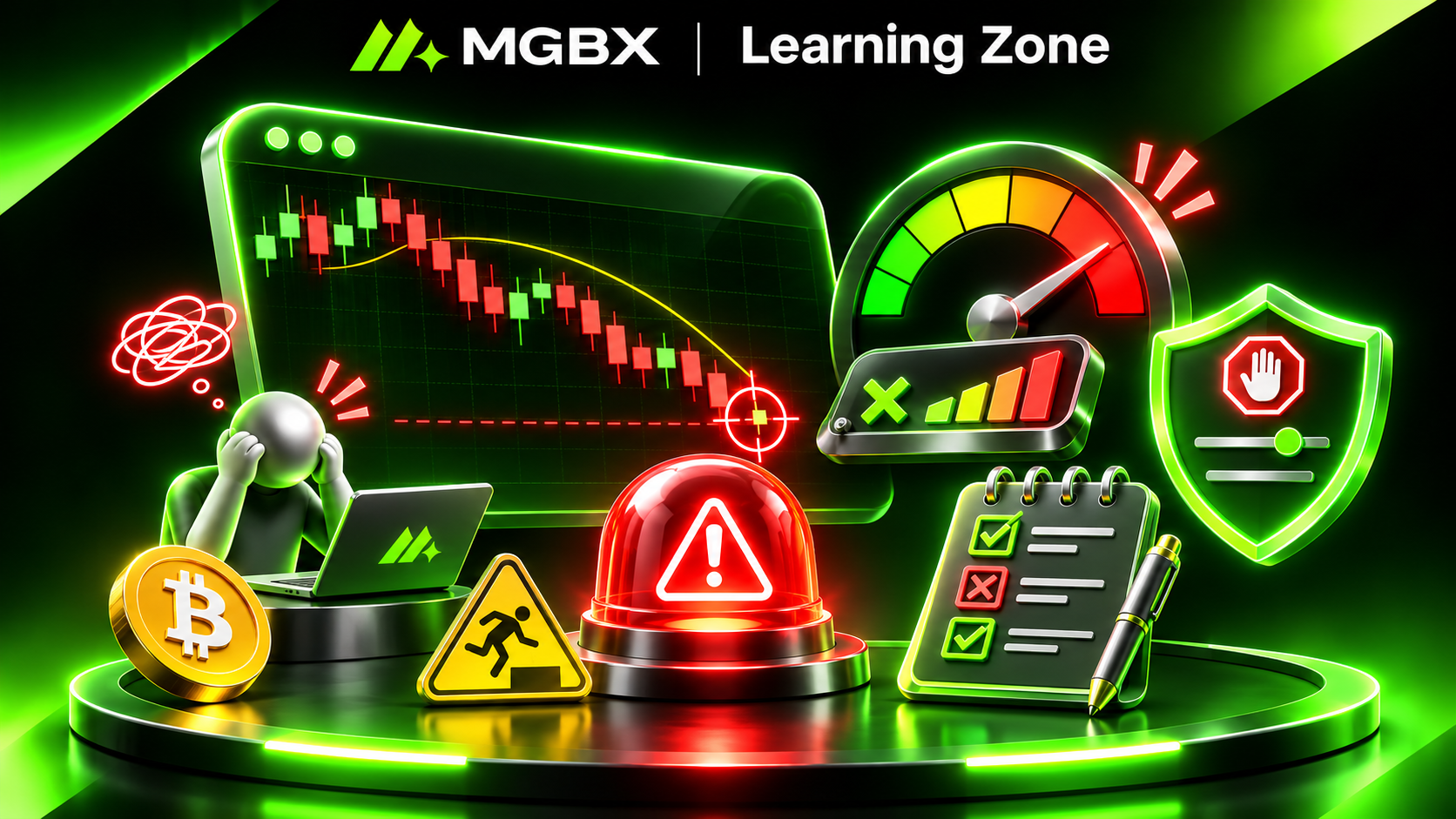
Major losses in futures trading are often caused not by one mistake, but by several risk behaviors occurring together, such as excessive leverage, oversized positions, no stop-loss, and repeatedly holding losing trades. Beginners often focus on predicting whether prices will rise or fall while overlooking position size, margin, funding costs, and exit discipline. Recognizing common futures trading mistakes and establishing clear risk rules in advance can help reduce avoidable risks caused by emotion and cognitive bias.
Excessive Leverage, Oversized Positions, No Stop-Loss, and Ignoring Liquidation
Mistake 1: Using excessive leverage. Leverage can improve capital efficiency, but it also amplifies the effect of price movements on margin. Choosing higher leverage does not make the market prediction itself more accurate.
Mistake 2: Taking oversized positions. When a single position represents too much of the account, even ordinary market volatility can create a significant impact on total equity.
Mistake 3: Trading without a stop-loss. Some beginners assume that a loss remains harmless as long as they do not close the position. However, leveraged futures have maintenance margin and liquidation requirements, so a position cannot necessarily wait indefinitely for the market to reverse.
Mistake 4: Checking the liquidation price only after opening the trade. Liquidation price, margin status, and maximum acceptable loss should be considered before entering a position, not only after the market begins moving against it.
Holding Losses, Chasing Price, and Emotional Trading
Mistake 5: Holding losing positions or continuously averaging against the trend. Adding to a position as price moves unfavorably may reduce the average entry price, but total risk exposure increases at the same time.
Mistake 6: Chasing rallies and selling into sharp declines. Entering after a rapid price move often means trading when volatility and slippage have already increased.
Mistake 7: Becoming overconfident after profits or trying to recover losses quickly. The first can lead to suddenly increasing leverage and position size, while the second can turn into revenge trading and excessive order activity.
The value of a trading plan is that it defines entry conditions, stop-loss areas, and position limits in advance, reducing the influence of short-term emotions on execution.
Ignoring Costs, Margin Modes, and Trade Reviews
Mistake 8: Looking only at price PnL while ignoring actual costs. Futures trading may involve opening and closing fees, funding payments, and slippage. With frequent trading, these costs can accumulate.
Mistake 9: Trading without understanding cross and isolated margin. Cross margin allows eligible funds within a defined scope to support positions, while isolated margin focuses more on separating risk. Without understanding margin mode, the actual scope of risk may differ significantly from what the trader expects.
Mistake 10: Never keep a trading journal. Without records, it is difficult to know whether a profitable trade resulted from a repeatable strategy or simple market randomness. It also becomes harder to identify recurring mistakes such as oversized positions, moving stop-losses, or holding losing trades.
Recording the entry rationale, position size, leverage, stop-loss, trading costs, and outcome provides more useful feedback than recording profit alone. For beginners, eliminating obvious mistakes is often more practical than searching for a so-called "high win-rate secret." For a broader introduction, read Complete Guide to Futures Trading: From Beginner Basics to Risk Management.
FAQ
What is the most important mistake the future beginners should avoid?
There is no single answer, but risk can rise rapidly when excessive leverage, oversized positions, no stop-loss, and holding losing trades occur together.Why can holding a losing position lead to liquidation?
Continued adverse price movements increase unrealized losses and gradually reduce the margin buffer available to meet maintenance margin requirements.How much leverage should a beginner use?
There is no universally safe leverage ratio. Actual risk also depends on position size, stop-loss distance, market volatility, and account equity.Does setting a stop-loss prevent large losses?
Not necessarily. Extreme volatility, price gaps, and slippage may cause actual execution to differ from the plan, so stop-losses should be combined with position control.Why is reviewing past trades important?
Trade reviews can identify recurring execution problems and help determine whether a strategy has repeatable logic rather than judging quality solely by the outcome of a single trade.
Mastering the basics is the first step. Follow MGBX Academy to access more cryptocurrency educational resources and market opportunities.
The process for trading on MGBX:
Register a trading account and complete the necessary identity verification;
Deposit funds and select a trade type;
On the cryptocurrency trading page, enter the amount or quantity of the cryptocurrency you wish to purchase;
Confirm the order to complete the trade, and check that your assets have increased accordingly.
Further Readings:
Complete Guide to Futures Trading: From Beginner Basics to Risk Management
What Is Futures Liquidation? Liquidation Mechanism and Liquidation Price Calculation
Futures Take-Profit and Stop-Loss Setup Guide
Futures Position Management: Kelly Criterion and Pyramid Scaling
USDT-Margined vs Coin-Margined Futures: Key Differences and How to Choose