Cross vs. Isolated Margin: How Do Risks Differ During a Market Sell-Off?
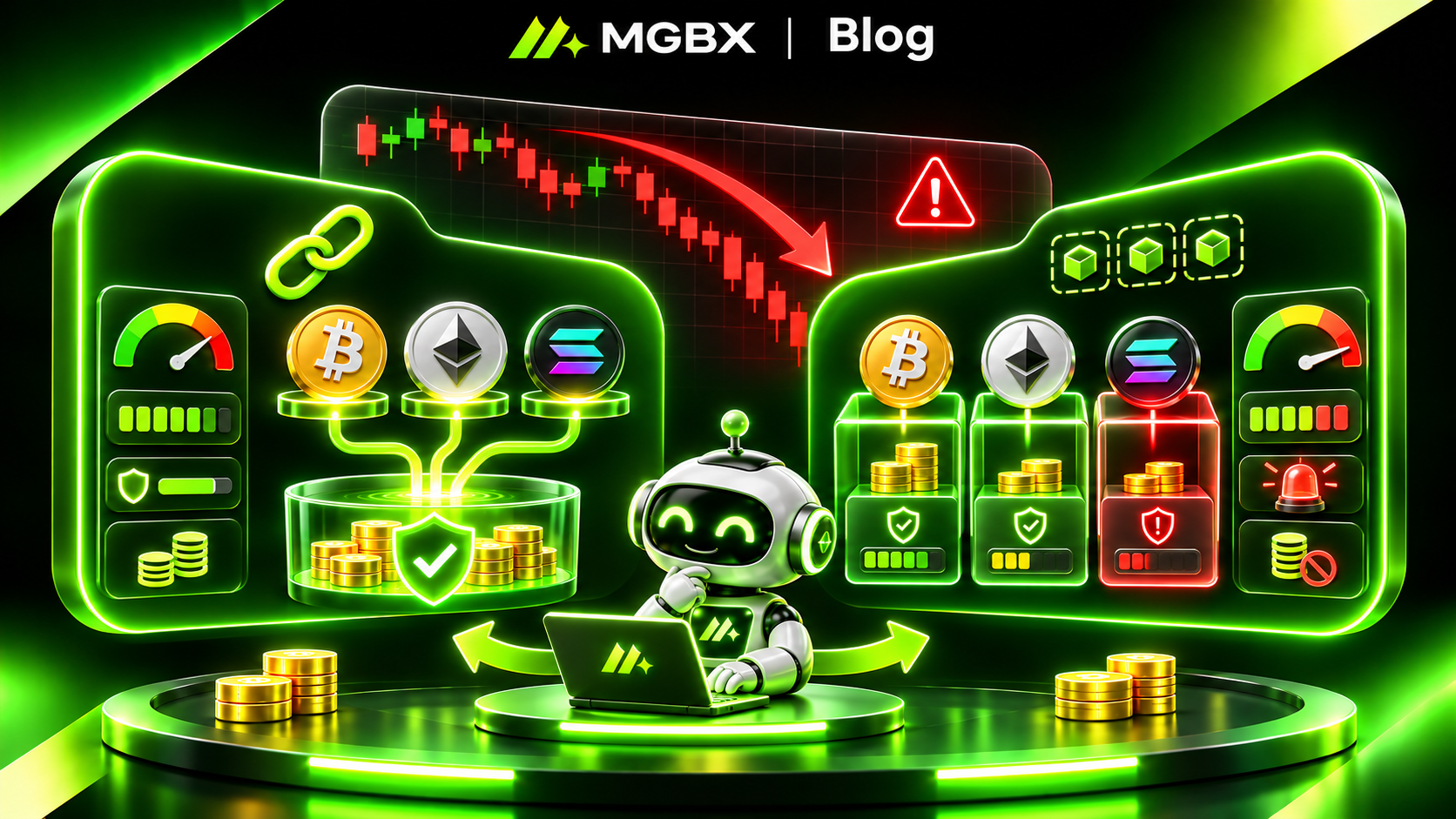
Cross and isolated margin determine which funds support positions, not whether losses occur. Cross margin shares eligible collateral, potentially delaying liquidation while exposing more funds. Isolated margin allocates collateral separately, but top-ups increase exposure. Our view: establish total exposure and funding limits before choosing a mode. Correlated positions, falling collateral values, and fees can compound risk.
Key Takeaways:
Cross margin shares collateral, potentially exposing more account funds.
Isolated margin boundaries depend on top-ups and product rules.
Same-direction positions can consume margin simultaneously.
Simplified loss calculations cannot predict liquidation prices.
What Do Cross and Isolated Margin Actually Separate?
One account remaining open while another faces liquidation does not mean it avoids losses. Cross margin shares eligible funds within a margin system—not necessarily every asset on the platform. Compare equal positions, not just leverage settings.
Isolated margin assigns specific collateral to a position. Loss exposure is not always limited to the initial deposit: manual or automatic top-ups increase committed funds. Fees and negative-balance treatment depend on product terms.
Automatic margin replenishment can draw available funds into isolated positions without guaranteeing protection from liquidation. MGBX users should check this setting rather than relying on the “isolated” label.
How Does a Decline Affect 1,000 USDT in Equity?
Assume 1,000 USDT in equity supports BTC, ETH, and SOL longs worth 2,000 each. A simultaneous 5% decline loses 100 per position, or 300 overall. Ignoring fees and liquidation, equity falls to 700—a 30% loss.
Under isolated margin, allocating 200 to each position leaves 400 outside their support if automatic top-ups are disabled. Each position retains 100 after those losses. Cross margin leaves 700 in shared equity, but maintenance requirements and other commitments mean it is not all freely available.
If only SOL falls 8%, its loss is 160. An isolated allocation of 200 has little buffer left; cross margin may keep supporting it. Staying open preserves both recovery potential and further downside.
Use product-specific liquidation formulas, not simply inverse leverage. Maintenance margin, risk tiers, fees, funding, and other positions affect the result.
Why Can Multiple Assets Amplify Risk?
This hypothetical stress test uses three linear longs initially worth 2,000 USDT each. It excludes fees and liquidation.
Asset | Initial Notional Value | Assumed Decline | Price Loss |
Bitcoin BTC | 2,000 | 4% | 80 |
Ether ETH | 2,000 | 6% | 120 |
Solana SOL | 2,000 | 10% | 200 |
Total | 6,000 | Not applicable | 400 |
Losses reach 40% of initial equity. Positions that appear manageable individually can suffer together as liquidity shrinks and traders reduce exposure.
Crypto collateral adds another variable. Collateral initially worth 1,000 becomes worth 900 after a 10% decline, potentially alongside trading losses. Coin-margined and multi-asset calculations can include conversion rules and haircuts; stablecoin examples cannot simply be reused.
Hedges do not require cross margin or guarantee offsets. A Bitcoin long can fall while another asset’s short rises against you. Margin offsets depend on account rules; isolated hedge positions need separate buffers.
Set Funding Limits and Exit Conditions Before the Drop
Define eligible collateral, maximum top-ups, and exit rules for simultaneous losses. Choose the mode around your risk budget, not assumptions that particular coins require particular settings.
Adding margin increases the buffer without correcting direction. Starting with 200, adding 300, then losing 400 is not a 200-risk trade. Include all additions, trading fees, and funding in the review.
Failed orders or positions may restrict mode changes during a sell-off. Check exposure and balances first. Switching modes does not replace reducing positions, and stops remain subject to liquidity and price gaps.
Margin mode allocates support; position sizing determines market exposure. MGBX users should review effective leverage, top-ups, and combined directional positions. No margin mode eliminates losses.