Solana Technology Explained: PoH Consensus and High TPS
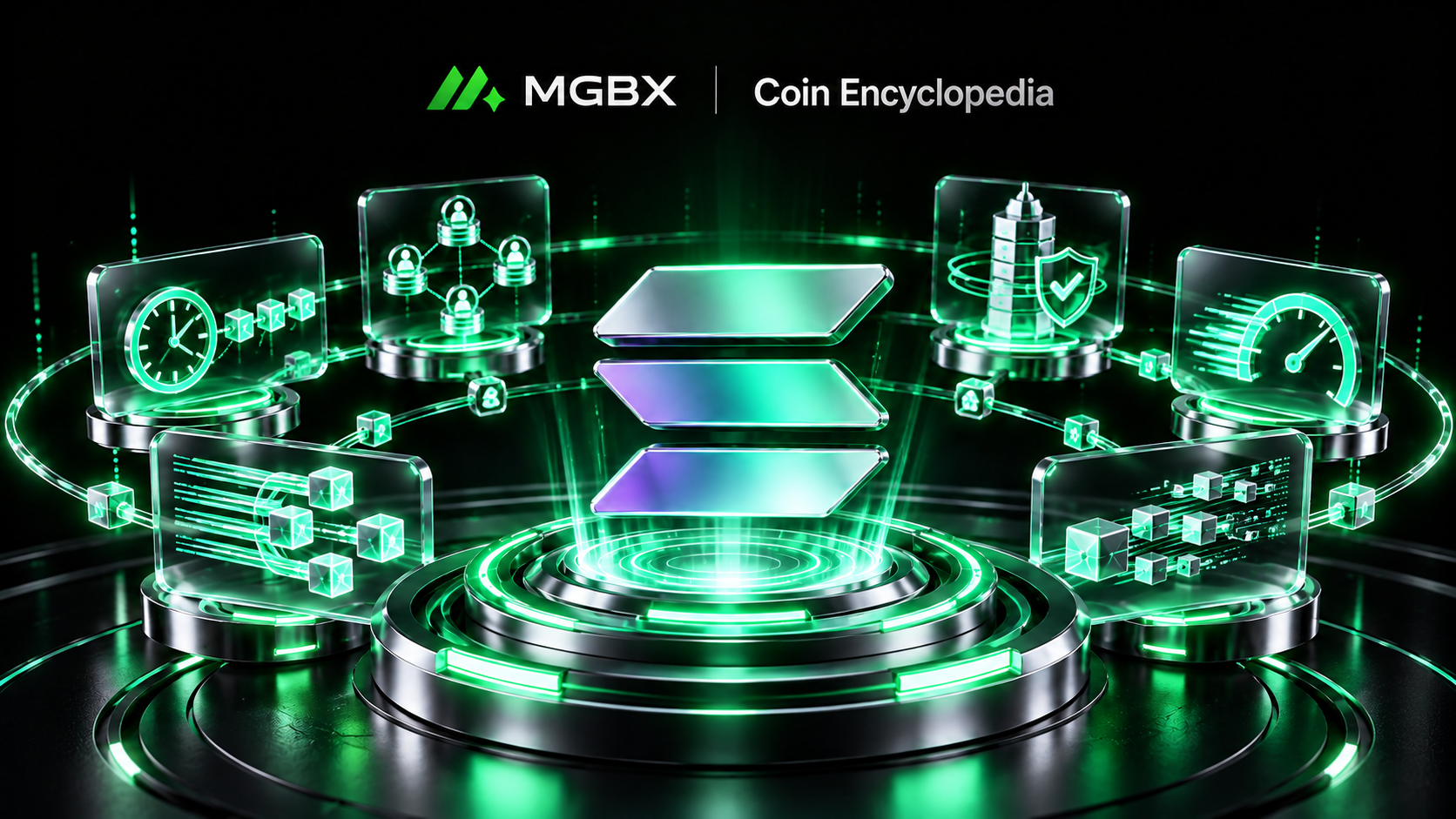
Solana’s high TPS is not achieved by PoH alone. More precisely, PoH is a verifiable cryptographic timekeeping mechanism that helps the network record the order of events. Solana then combines PoS, Tower BFT, Sealevel, and other underlying components to reach consensus and execute transactions. Understanding that “PoH is a clock, not a complete consensus algorithm” is one of the most important steps in learning how Solana works, and it also helps avoid confusing theoretical TPS with real-world network performance.
What Is PoH Consensus?
PoH stands for Proof of History. The term “PoH consensus” is often used in the market, but strictly speaking, PoH itself is not an independent algorithm that completes network consensus on its own.
Solana describes PoH as a cryptographic mechanism that records the passage of time and the order of events. It uses a continuous sequence of hash computations to produce a verifiable record. Because each step must be executed sequentially, other nodes can verify that a certain amount of time has passed and determine the relative order in which different events occurred.
It can be thought of as a verifiable clock built into the blockchain.
Traditional distributed networks require nodes to communicate extensively to determine which event happened first and which came later. PoH provides an ordered reference for events in advance, helping reduce some of the coordination overhead. However, whether a block is ultimately accepted still depends on validators reaching agreement through Solana’s PoS-based consensus process.
A more accurate way to describe it is this: Solana uses PoS for consensus and uses PoH to improve the efficiency of consensus and transaction ordering.
How PoS, Tower BFT, and Sealevel Work Together
Once PoH provides an ordered timeline, Tower BFT helps Solana validators vote on and confirm the state of the network. Tower BFT is a Byzantine Fault Tolerance mechanism optimized around PoH’s timekeeping structure, helping reduce some of the delays caused by repetitive communication in traditional consensus processes.
Another key component behind Solana’s technical performance is Sealevel.
Solana transactions declare in advance which accounts they will read from and write to during execution. This allows the system to identify transactions that do not conflict over the same state and process them in parallel, rather than forcing every transaction through a single sequential queue.
In addition, Turbine is designed to optimize block data propagation, Gulf Stream helps forward transactions to upcoming leaders in advance, and Pipelining divides transaction processing into multiple stages. Together, these components form part of Solana’s original core technology stack.
As a result, Solana’s high TPS comes from a coordinated architecture rather than a single feature: PoH improves time ordering, PoS and Tower BFT support consensus, Sealevel increases execution efficiency, and other components reduce data propagation and processing bottlenecks.
How Should High TPS Be Evaluated?
TPS stands for Transactions Per Second, meaning the number of transactions a network can process each second. However, different blockchains may count transactions differently, so a single TPS figure is not enough to determine which public blockchain is stronger.
One of Solana’s design advantages is that it can process a large volume of transactions directly at the base layer, making it well suited for DEXs, payments, blockchain games, and other applications that require frequent interactions. However, real-world TPS can vary depending on transaction type, network load, validator voting activity, and the methodology used to calculate the figure.
For everyday users, more practical questions matter than peak TPS: Can transactions still be submitted reliably during periods of high demand? How long does confirmation take? Do fees rise significantly? Can applications continue to operate normally?
For this reason, a more complete assessment of Solana’s technology should consider actual throughput, transaction success rates, confirmation experience, network stability, and the validator ecosystem, rather than relying only on theoretical performance figures used in promotional materials.
FAQ
-
Is PoH Solana’s consensus mechanism?
More precisely, PoH is a verifiable timekeeping mechanism. Solana’s network consensus is primarily based on PoS and works together with Tower BFT and PoH. -
Does Solana rely entirely on PoH to achieve high TPS?
No. PoH, Tower BFT, Sealevel, transaction propagation, and data processing mechanisms all contribute to Solana’s overall performance. -
What is Sealevel?
Sealevel is Solana’s parallel smart contract execution environment, allowing transactions that do not conflict over the same state to be processed simultaneously. -
Is a blockchain always better if it has higher TPS?
Not necessarily. Network stability, security, decentralization, fees, and real-world application demand also need to be considered.
Mastering the basics is the first step. Follow MGBX Academy to access more cryptocurrency educational resources and market opportunities.
The process for trading on MGBX:
-
Register a trading account and complete the necessary identity verification;
-
Deposit funds and select a trade type;
-
On the cryptocurrency trading page, enter the amount or quantity of the cryptocurrency you wish to purchase;
-
Confirm the order to complete the trade, and check that your assets have increased accordingly.