Modular Blockchains: Celestia and Data Availability
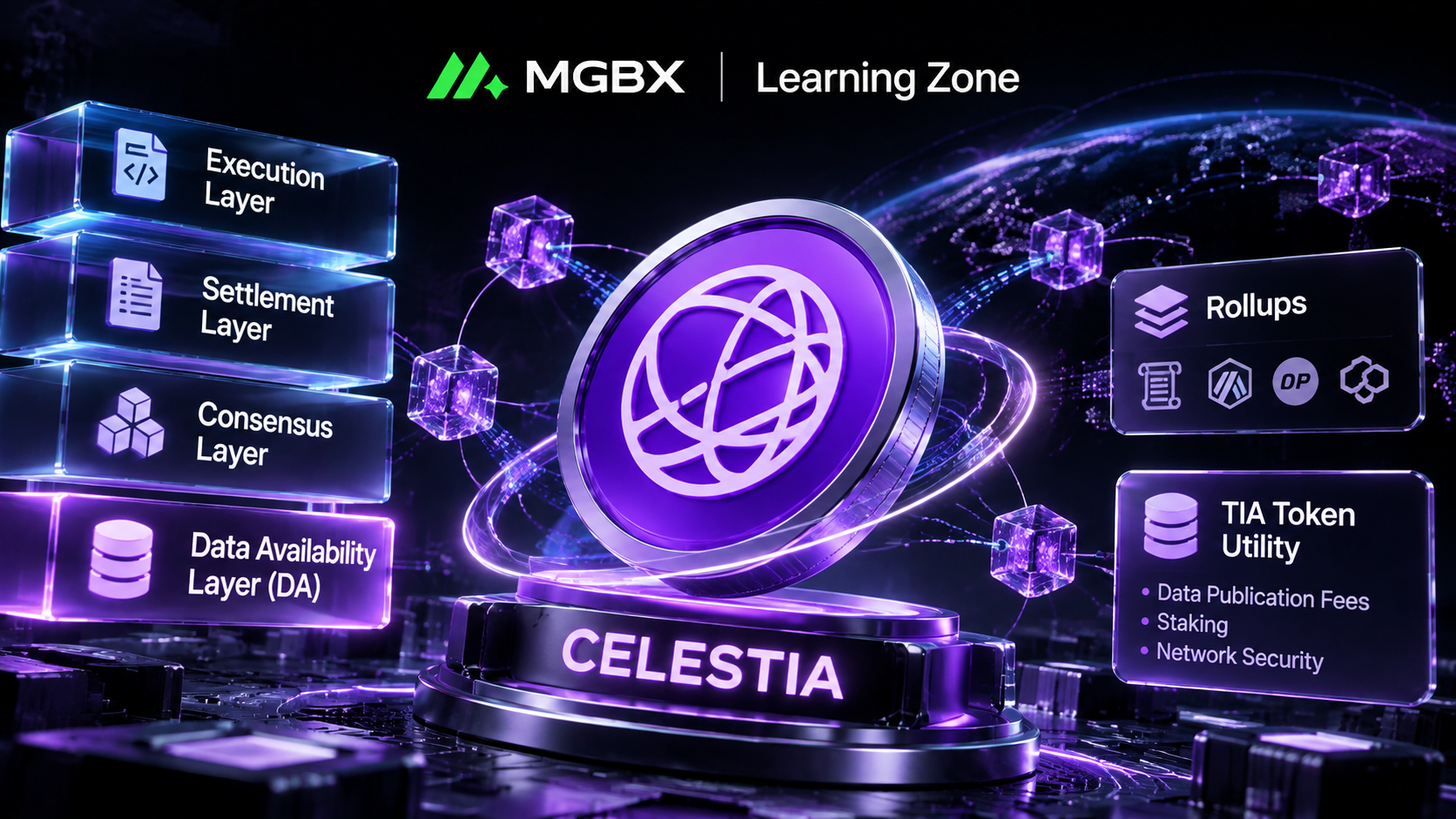
Modular blockchains improve scalability by separating execution, consensus, settlement, and data availability into distinct functions. Celestia is a prominent project focused on data availability, using data availability sampling to help light nodes verify whether block data is available. TIA is used to pay for data publication and supports network staking. Understanding the technical benefits and security limitations of the DA layer helps explain the future of modular blockchain architecture.
What Is a Modular Blockchain? The Role of the DA Layer
Traditional monolithic blockchains typically handle transaction execution, consensus, and data availability within the same network. Modular blockchains separate these functions across different layers or specialized networks, allowing developers to combine infrastructure according to their applications' needs.
The execution layer processes transactions and smart contracts, while the settlement layer confirms transaction outcomes or resolves disputes. The consensus mechanism determines the order of blocks, and the data availability layer, or DA layer, ensures that the transaction data required by a block has been published and can be accessed by network participants.
Data availability does not mean permanent storage. If transaction data is unavailable, users may be unable to independently verify the relevant state updates. Long-term access to historical data is a separate consideration.
How Does Celestia Support Scaling Through Data Availability Sampling?
Celestia is a modular blockchain network focused on data availability. It provides data publication and availability verification infrastructure for systems such as Rollups, allowing applications to separate transaction execution from data publication.
Celestia uses Data Availability Sampling, or DAS. Light nodes do not need to download an entire block. Instead, they randomly sample portions of the data and verify the corresponding proofs. As valid samples accumulate, nodes can determine with a high degree of probability whether the block data is available, reducing the resources required for independent verification.
This mechanism helps support a more scalable modular architecture, but it does not eliminate all trust assumptions or guarantee that historical data will remain permanently accessible. Network security still depends on factors such as data encoding, node sampling, and data availability mechanisms.
What Is the Role of the TIA Token? How Will Modular Blockchains Evolve?
TIA is the native token of the Celestia network. According to the official Celestia documentation, Rollup developers can use TIA to pay for publishing data to Celestia. TIA is also used for network staking, allowing participants to support network security by delegating their tokens to validators.
As Rollups and application-specific blockchains continue to develop, modular architecture offers developers more flexibility. However, using a separate DA layer also introduces considerations such as additional network dependencies, data publication costs, cross-layer coordination, and security assumptions. Different solutions involve trade-offs between performance, cost, and security, and no single approach suits every project.
To assess the development of the Celestia ecosystem, it is useful to monitor actual data publication demand, Rollup adoption, network performance, and developer activity rather than relying solely on the price of TIA or market sentiment. The long-term viability of modular blockchains ultimately depends on how effectively they address applications' scaling and cost challenges.
FAQ
-
What is data availability, or DA?
DA concerns whether block transaction data has been published and can be accessed and verified by network participants. -
How does Celestia differ from Ethereum?
Celestia focuses on data availability services, while Ethereum supports smart contract execution, consensus, and settlement, and also provides data availability for Rollups. -
What is the TIA token used for?
TIA is used to pay Celestia data publication fees and supports network functions such as staking. -
Does data availability mean permanent storage?
No. Data availability concerns whether data can be accessed and verified. Long-term storage and retrieval of historical data must be addressed separately.
Mastering the basics is the first step. Follow MGBX Academy to access more cryptocurrency educational resources and market opportunities.
The process for trading on MGBX:
-
Register a trading account and complete the necessary identity verification;
-
Deposit funds and select a trade type;
-
On the cryptocurrency trading page, enter the amount or quantity of the cryptocurrency you wish to purchase;
-
Confirm the order to complete the trade, and check that your assets have increased accordingly.