The Complete Beginner’s Guide to Leverage Trading
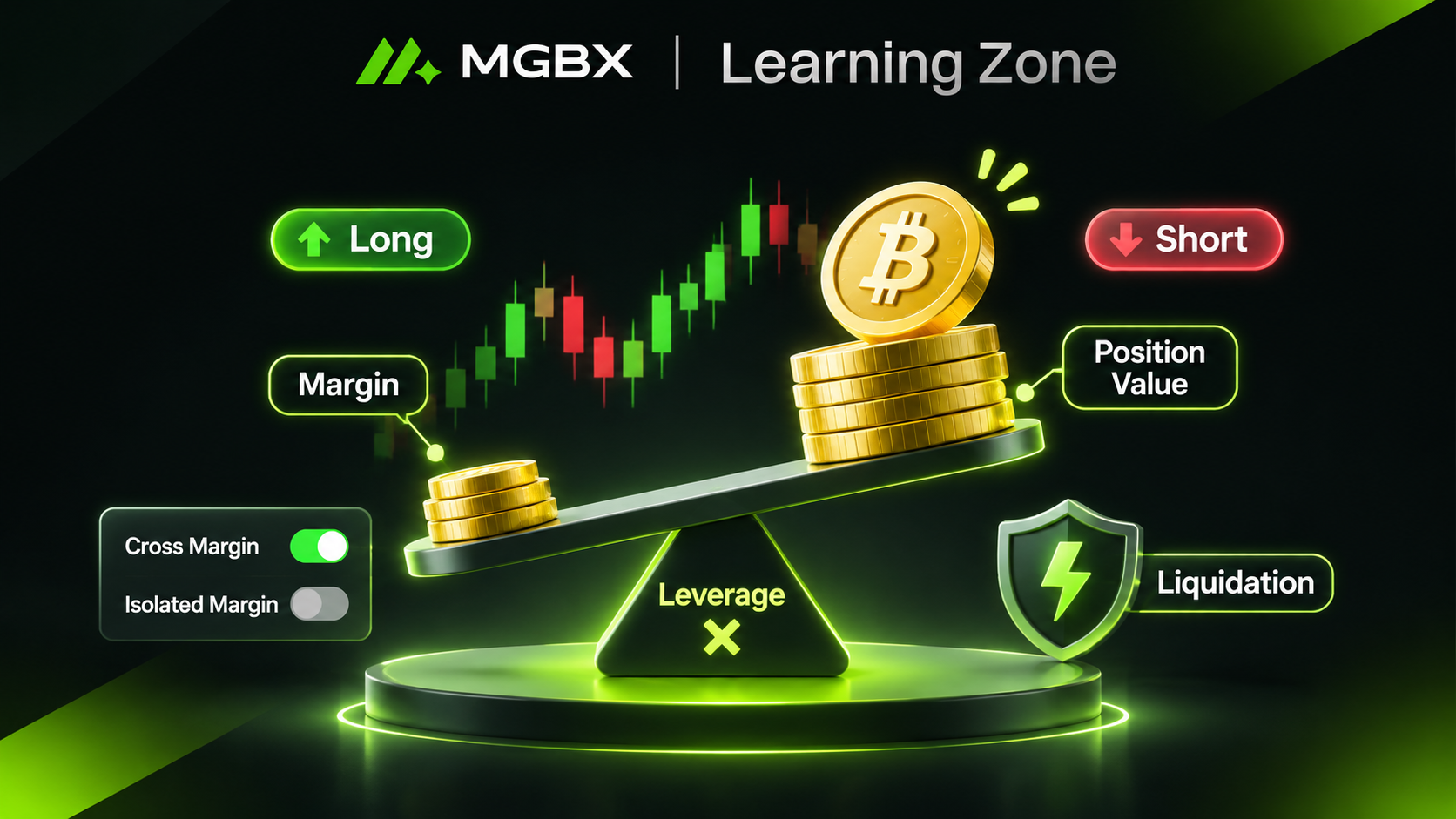
Leverage trading uses borrowed assets or futures margin to create greater market exposure with less capital, magnifying gains and losses relative to margin. Beginners should first distinguish spot margin trading from futures, then understand cross margin, isolated margin, costs, and liquidation conditions. Sound margin trading starts with an acceptable loss limit before choosing position size and leverage. Greater capital efficiency does not improve your win rate or replace an exit plan.
What Is Leverage Trading? Spot Margin vs. Futures
Leverage trading allows traders to take on greater market exposure with relatively little capital. For example, using 100 units of the quote currency as margin to open a position worth 500 units gives approximately 5x initial leverage. Price movements then affect the entire position, not just the margin committed.
Spot margin trading typically involves borrowing assets. To go long, traders can borrow the quote asset to buy crypto, then sell it and repay the loan. To go short, they can borrow the target token, sell it, and buy it back later to repay the debt. Futures leverage uses margin to establish long or short positions without requiring traders to borrow the corresponding tokens.
How Do Long Positions, Short Positions, and Costs Affect Returns?
Going long means expecting prices to rise; going short means expecting them to fall. For a linear futures long position initially worth 500 units, a 2% rise produces approximately 10 units of profit before costs. A 2% fall produces approximately 10 units of loss. With initial margin of 100 units, the return on margin is approximately plus or minus 10%.
A spot margin short works similarly: borrow one token, sell it for 100 units, then buy it back for 90 units to repay the loan. The difference is 10 units before costs. If the price rises to 110 units instead, buying back the token produces a loss.
Costs vary by product. Spot borrowing incurs interest, while perpetual futures may involve paying or receiving funding. Both can involve trading fees and slippage. Borrowing interest should not be treated as a universal cost across all leveraged products.
How Do Cross Margin, Isolated Margin, and Liquidation Work?
Isolated margin generally supports a position with margin allocated specifically to it. Cross margin shares eligible collateral within the relevant margin pool. Cross margin can provide additional protection against losses but also expose other available assets. Isolated margin helps separate risk, although manual or automatic margin additions can increase the amount committed.
If the equity supporting a position falls short of maintenance requirements, the platform may reduce or liquidate it. Liquidation does not require all margin to be lost first, and a stop-loss order does not guarantee execution. Before opening a position, check the margin mode, liquidation rules, order trigger price, and estimated costs, then size the position around your acceptable loss.
The supporting articles cover leverage mechanics, margin requirements, choosing leverage, and risk indicators, helping turn these concepts into a trading plan you can evaluate.
FAQ
Are leverage trading and futures trading the same?
No. Leverage increases exposure, and both spot margin trading and futures can use it.Does shorting always make a profit when prices fall?
No. Entry and exit prices, costs, and possible liquidation during the holding period also matter.Are isolated-margin losses limited to the initial margin?
Not necessarily. Additional margin, automatic top-ups, and fees affect the amount committed and potential losses.What should beginners learn first?
Understand position value, margin, costs, and exit conditions before choosing leverage.
Mastering the basics is the first step. Follow MGBX Academy to access more cryptocurrency educational resources and market opportunities.
The process for trading on MGBX:
Register a trading account and complete the necessary identity verification;
Deposit funds and select a trade type;
On the cryptocurrency trading page, enter the amount or quantity of the cryptocurrency you wish to purchase;
Confirm the order to complete the trade, and check that your assets have increased accordingly.