Why does My Order Fail? Troubleshooting Order Status and Execution Conditions
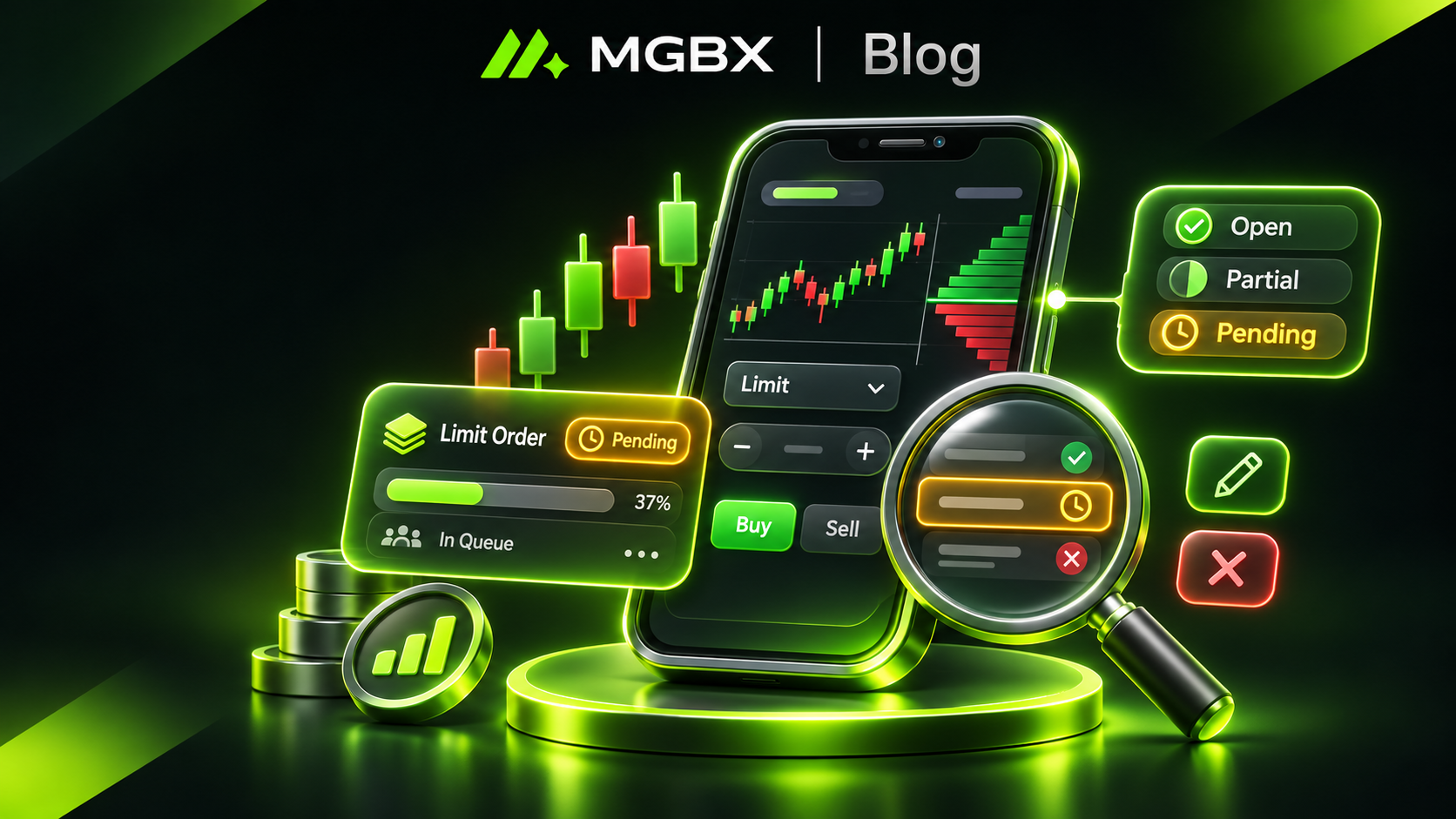
Orders may remain unfilled because of price mismatches, queue priority, insufficient liquidity, or execution restrictions. Connection issues and trading interruptions can also matter. First confirm whether the order is active or partially filled, then review its trigger and execution conditions. Compare depth across assets using equal order values and price ranges. The goal is to balance acceptable prices, execution speed, and position risk—not to secure a fill at any cost.
Key Takeaways:
Untriggered, open, partially filled, and canceled orders require different checks.
A chart touching your limit price does not guarantee available liquidity.
Market orders prioritize execution but do not guarantee a complete fill.
Fills can occur during cancellation; confirm the final quantity before resubmitting.
Check Order Status Before Resubmitting
An unfilled order does not automatically indicate a malfunction, but technical issues remain possible. Confirm submission, locate the order ID, and check trading-pair or date filters. If connectivity is unstable, refresh order and balance records.
An untriggered conditional order generally has not generated an executable order. Open orders await matching; partial fills already create holdings or exposure. Canceling only removes the remaining quantity: buying 0.4 ETH of a 1 ETH order before cancellation leaves that 0.4 ETH intact.
Repeated clicks during delayed updates may create duplicate orders. Save the trading pair, order ID, timestamp, price, and error message. Contact official support if records conflict. Establish existing exposure before submitting again.
Why Is a Limit Order Still Waiting After the Price Was Reached?
A limit order sets a price boundary, not a fill guarantee. Buys require sellers at or below the limit; sells require buyers at or above it. The last traded price describes a completed trade, not remaining liquidity.
Suppose the best bid is 75,900 and the best ask is 75,901. A buy limit at 75,850 waits for eligible sellers. Under price-time priority, earlier orders at that price execute first.
If 500 units are ahead of your 100-unit order and sellers execute only 300 units at 75,850, yours may remain untouched despite the chart reaching that price.
Conditional orders also separate trigger and execution prices. A stop triggered at 95 may place a sell limit at 94. If bids fall to 93, it can remain unfilled. A last-price move also does not establish that a mark-price trigger was reached.
Check the price source, trigger status, resulting order type, and executable quotes. Stop-market orders prioritize execution but remain exposed to slippage, price protection, and liquidity constraints.
How Do You Compare Depth Across BTC, ETH, and SOL?
Use the same direction, order value, and price range. This hypothetical snapshot compares 10,000 USDT buys against sell orders within 0.1% above the best ask.
Comparison | BTC Pair | ETH Pair | SOL Pair |
Planned purchase | 10,000 | 10,000 | 10,000 |
Sell orders within range | 50,000 | 12,000 | 4,000 |
Depth-to-order ratio | 5× | 1.2× | 0.4× |
Main consideration | Will depth remain? | Small cancellations could matter | Remainder needs time or higher prices |
These figures are not market rankings. Depth varies across venues, pairs, and time. Market capitalization does not guarantee low-slippage execution; compare spreads proportionally, too.
An order book snapshot can change through competing fills or cancellations. Displayed depth is no guarantee, and historical 24-hour volume cannot replace current executable liquidity.
Price protection may allow only part of a market order to execute. Check the specific venue and pair’s thresholds rather than borrowing another product’s rules.
We consider order size relative to executable depth more useful than token price. Splitting orders may reduce immediate impact but introduces waiting and price-movement risk.
Review Restrictions Before Keeping, Adjusting, or Canceling
Post-only orders may be canceled if they would immediately take liquidity. Reduce-only orders cannot increase exposure and may be adjusted or canceled when incompatible with the position.
Time-in-force matters: good-till-canceled orders remain active, immediate-or-cancel permits partial fills and cancels the remainder, while fill-or-kill requires immediate full execution.
Also check available funds, margin, minimum size, quantity precision, and funds reserved by other orders. Review announcements for maintenance or suspensions. Triggered orders may still face execution restrictions.
Once the cause is clear, decide whether to wait, adjust, or cancel. Confirm final fills before resubmitting. Execution alone does not make a price attractive; if chasing changes the trade’s risk-reward balance, walking away may better preserve the original plan.