Ethereum ETFs and Institutional Adoption
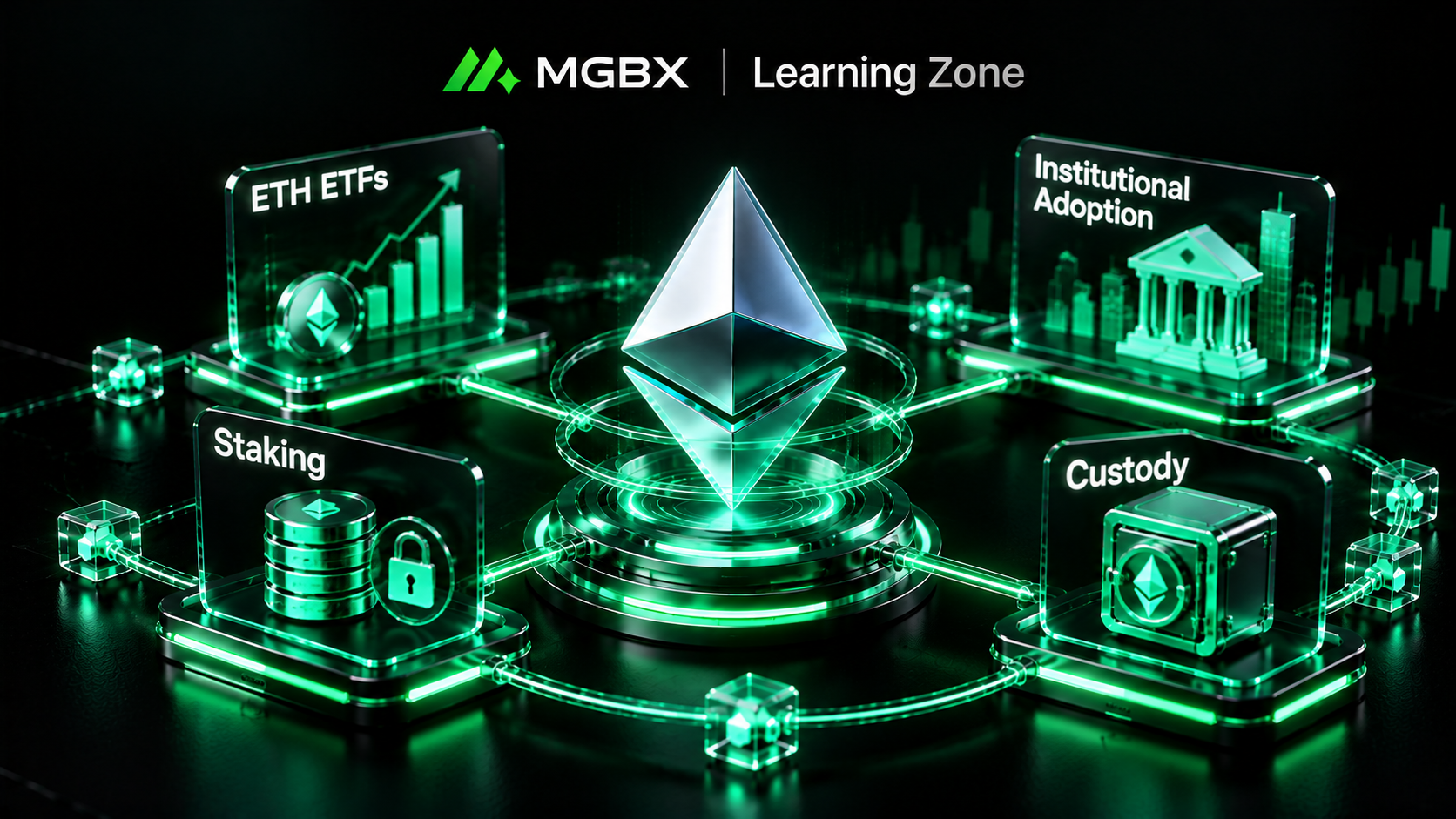
Ethereum ETFs provide traditional brokerage accounts with exposure to ETH price movements, but investing in an ETF is not the same as directly holding ETH. U.S. Ether ETPs were approved for trading in 2024, followed by products incorporating staking features. Compared with BTC ETFs, ETH ETFs may differ in staking rewards, custody arrangements, and product structures. To assess institutional adoption, investors should consider fund size, holdings disclosures, product structures, and real-world use cases rather than relying solely on short-term fund flows.
How Do Ethereum ETFs Work?
The U.S. Securities and Exchange Commission (SEC) approved exchange rule changes allowing Ether-based ETPs to trade in May 2024. The related spot products began trading in July 2024. These products generally hold Ether through a trust structure, while investors hold fund shares in brokerage accounts, giving them economic exposure to ETH price movements.
The main advantage of ETFs and ETPs is that they lower the barriers to managing wallets, private keys, and on-chain transactions directly. However, investors hold shares in a securities product rather than directly controlling ETH on the blockchain. Fees, custody arrangements, tax treatment, redemption mechanisms, and other risks should be assessed using each product’s latest prospectus and official disclosures.
What Is the Difference Between ETH ETFs and BTC ETFs?
Both types of products provide exposure to crypto assets through traditional brokerage accounts. For example, BlackRock’s IBIT aims to reflect Bitcoin’s price performance, while ETHA aims to reflect Ether’s price performance. Both are securities-based investment products and do not give investors direct control over the underlying assets on-chain.
ETH ETFs have also evolved to include new product structures. The iShares Staked Ethereum Trust ETF (ETHB), launched in 2026, aims to provide exposure to Ether’s price performance as well as staking rewards generated from a portion of its ETH holdings. Some Grayscale Ether products have also incorporated staking mechanisms. This means the differences between ETH ETFs and BTC ETFs may extend beyond their underlying assets to include potential sources of returns and product structures.
How Can You Assess Institutional Adoption of Ethereum?
ETF assets under management, fund flows, trading volume, and holdings disclosures can help measure institutional participation, but they do not necessarily indicate increased adoption of the Ethereum network itself. A more comprehensive assessment should also consider institutional custody infrastructure, products that support institutional staking, corporate use of stablecoins and on-chain settlement, and the growth of applications across Ethereum and Layer 2 networks.
It is also important to distinguish between “buying an ETH ETF” and “using Ethereum.” ETF investors gain exposure through a securities product, whereas on-chain users directly use ETH to pay Gas fees, participate in staking, and interact with smart contracts.
FAQ
-
Does buying an Ethereum ETF mean I directly own ETH?
No. Investors generally hold shares of an ETF or ETP. Their specific rights depend on the product’s legal documents and terms. -
Which is better, an ETH ETF or a BTC ETF?
The two products have different underlying assets and risk profiles. The right choice depends on investment objectives, fees, risk tolerance, and whether staking exposure is important. -
Can Ethereum ETFs generate staking rewards?
Some products can. Whether staking is supported, how rewards are distributed, and what fees apply depend on the specific product’s documentation. -
Do ETF inflows mean ETH’s price will definitely rise?
No. Fund flows are only one market indicator. ETH prices are also influenced by macroeconomic liquidity, supply and demand, and market sentiment.
Mastering the basics is the first step. Follow MGBX Academy to access more cryptocurrency educational resources and market opportunities.
The process for trading on MGBX:
-
Register a trading account and complete the necessary identity verification;
-
Deposit funds and select a trade type;
-
On the cryptocurrency trading page, enter the amount or quantity of the cryptocurrency you wish to purchase;
-
Confirm the order to complete the trade, and check that your assets have increased accordingly.