BTC Transaction Fees Explained: How to Reduce Trading Costs
This guide explains how Bitcoin transaction fees work, how they are calculated, what affects them, and how users can reduce BTC trading and transfer costs.
What Are BTC Transaction Fees?
When using Bitcoin, users may need to pay certain fees. In general, BTC-related fees fall into two categories: Bitcoin network fees and crypto exchange trading fees.
On-chain fees are primarily used to incentivize miners to validate transactions and help secure the Bitcoin network. Exchange trading fees, meanwhile, cover services such as order matching, platform infrastructure, and system operations.
Unlike traditional financial transfers, Bitcoin network fees are not calculated as a fixed percentage of the amount being sent. Instead, they are mainly affected by transaction data size, network congestion, and the fee rules of the exchange or wallet being used.
Why Does Bitcoin Require Transaction Fees?
The Bitcoin network does not rely on a bank or central authority to process transactions. Instead, miners and nodes around the world help maintain the network.
When a user sends BTC, miners validate transactions, include them in blocks, and help record them on the blockchain. Transaction fees are an important part of miner revenue and provide an incentive to continue supporting the network.
Fees also help prevent the network from being overwhelmed by large volumes of low-value or spam transactions. If Bitcoin transactions were completely free, malicious users could potentially flood the network with unnecessary transactions, consuming block space and affecting other users.
For this reason, BTC transaction fees are not only a cost of using the network but also an important part of maintaining Bitcoin’s security and stability.
How Are BTC Transaction Fees Calculated?
Bitcoin transaction fees are mainly determined by the size of the transaction data and current demand for block space, rather than the amount of BTC being transferred.
For example, sending 1 BTC does not necessarily cost more than sending 0.1 BTC. If both transactions have a similar data size and are submitted under the same network conditions, their fees may be similar.
Key factors that affect BTC network fees include the number of UTXOs used, the number of transaction outputs, and the fee rate selected by the user.
Suppose a user wants to transfer 1 BTC:
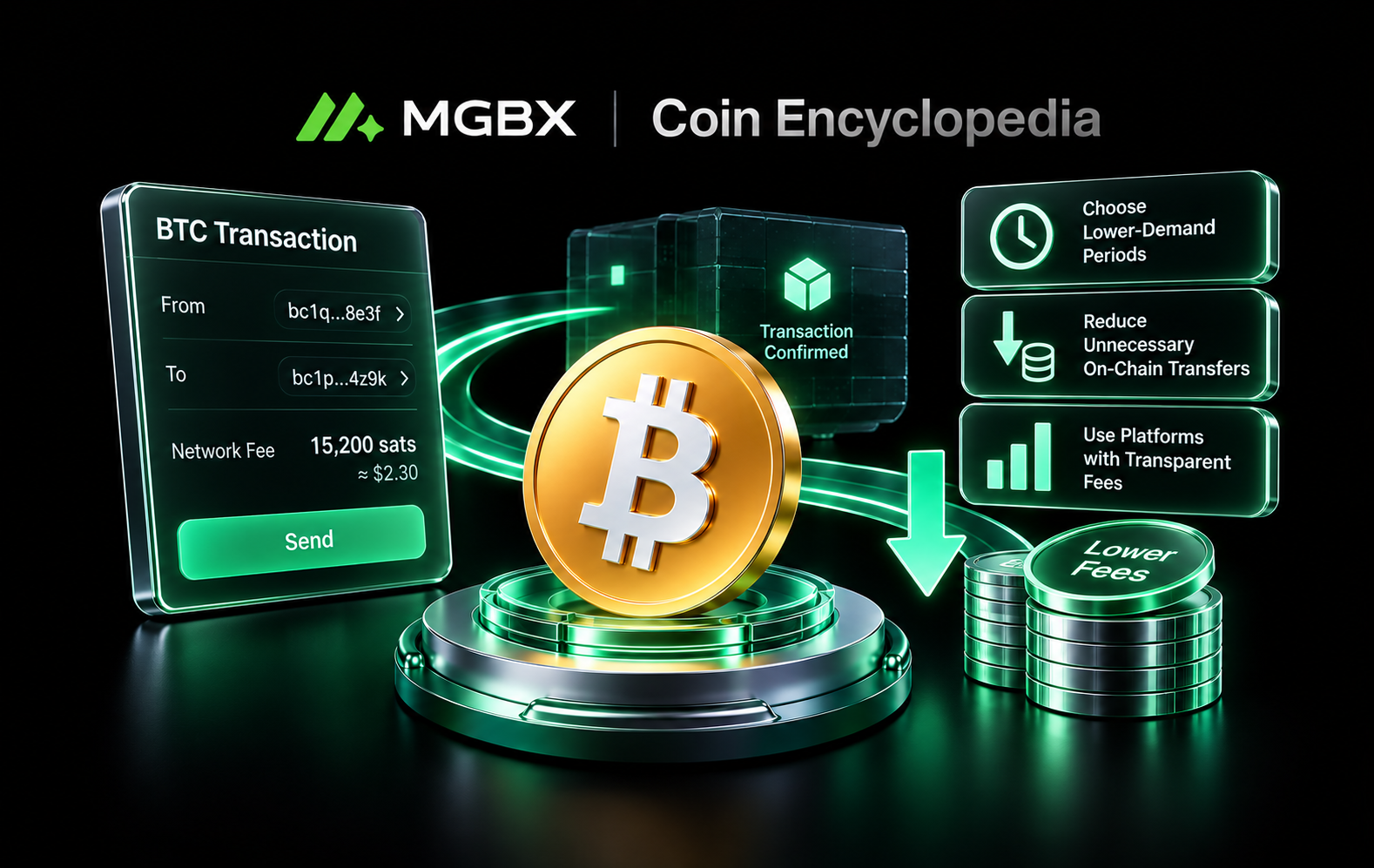
When the Bitcoin network is relatively quiet and transaction demand is low, fees may be lower. A typical BTC transfer may cost several thousand to tens of thousands of satoshis, which could be worth only a few dollars or less depending on the BTC price.
When transaction demand rises and block space becomes more competitive, users may need to select a higher fee rate to receive faster confirmation. In this case, the fee for the same 1 BTC transfer could rise to tens of dollars or more, depending on network congestion and the preferred confirmation speed.
How Can You Reduce BTC Transaction Fees?
Users can reduce BTC transaction costs in several ways:
Choose an appropriate transaction time: On-chain fees are generally lower when demand on the Bitcoin network is lower.
Reduce unnecessary on-chain transfers: If the main goal is to buy and sell BTC, users can trade directly on an exchange instead of making frequent withdrawals that may incur network fees.
Choose a platform with transparent fees and sufficient liquidity: Different exchanges may offer different fee structures based on trading volume, account tier, or other factors, so users can choose according to their trading needs.
Understanding fee structures and planning transactions carefully can help improve overall trading efficiency. Whether you are buying BTC for the first time or building a longer-term digital asset position, you can explore BTC trading opportunities on MGBX.
How to Buy BTC on MGBX:
Register a trading account and complete the required identity verification.
Deposit funds and go to the BTC trading page.
Enter the amount you want to spend or the amount of BTC you want to buy.
Confirm the order to complete the transaction, then check that your BTC balance has been updated accordingly.
FAQ
How much are BTC transaction fees?
BTC fees are not fixed. They vary based on network congestion, transaction data size, and the fee rules of the platform being used.Are BTC network fees the same as trading fees?
Not exactly. Trading fees usually refer to the cost of buying or selling BTC on an exchange, while network fees are typically paid when withdrawing BTC or transferring it between wallets.Why do BTC fees sometimes increase?
When transaction demand rises and block space becomes more competitive, users may need to pay higher fees for faster confirmation.How can I reduce BTC transaction fees?
Users can choose lower-demand periods, avoid unnecessary on-chain transfers, and use platforms with transparent fee structures.