Layer 1 vs Layer 2: The Difference Between Blockchain Base Layers and Scaling Networks
What is the difference between Layer 1 and Layer 2? Learn how base blockchains, rollups, gas fees, security, and settlement mechanisms work together to scale networks.
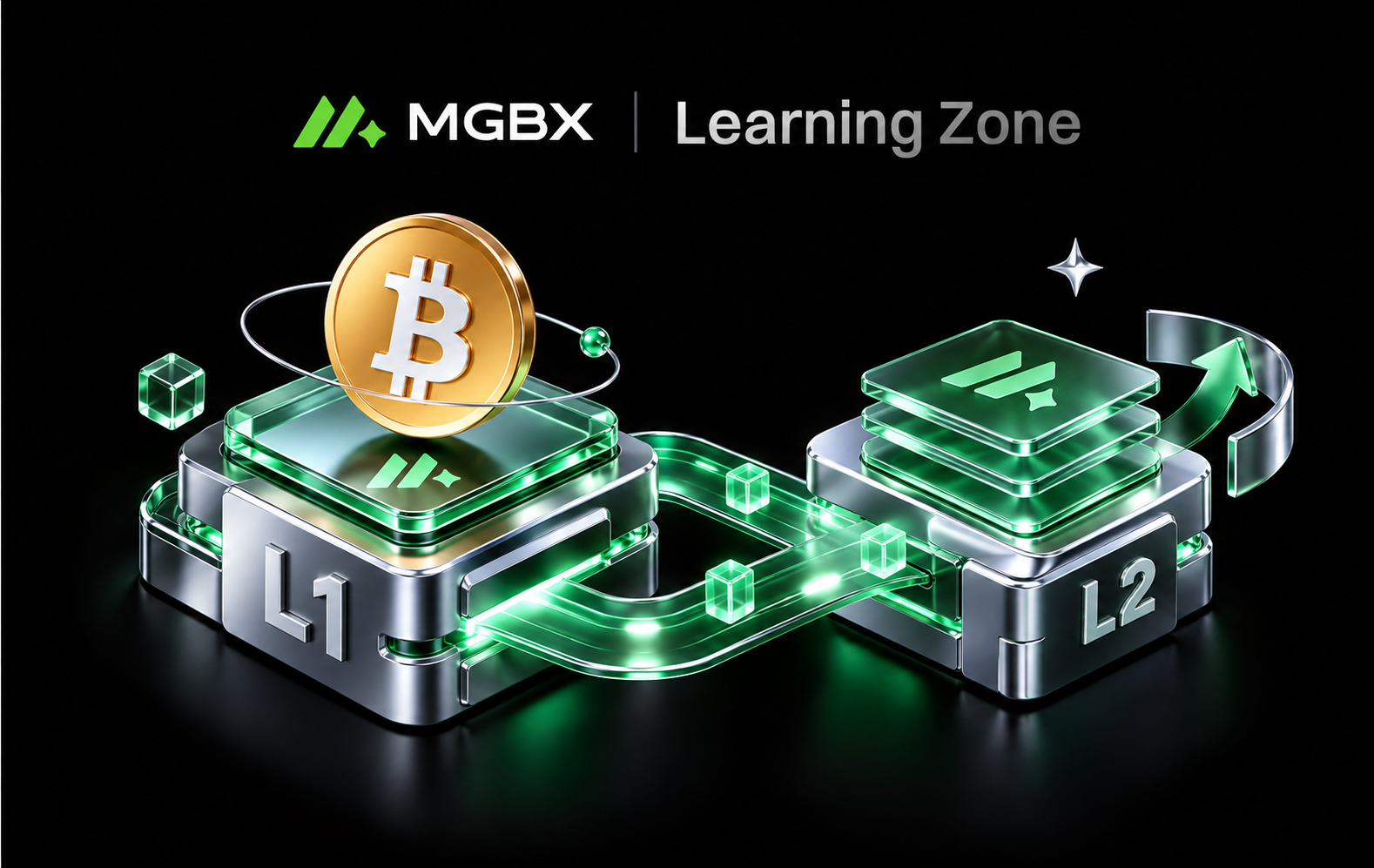
The core difference between Layer 1 and Layer 2 is which layer is responsible for base consensus, transaction execution, and final settlement. Layer 1 networks such as Ethereum and Bitcoin are foundational blockchains that maintain their own consensus and network state. Layer 2 solutions are built on top of base networks and use technologies such as rollups to expand transaction capacity while relying on Layer 1 to varying degrees for security, data, or settlement. The two layers are complementary rather than direct competitors.
What Are Layer 1 and Layer 2?
Layer 1 refers to the underlying blockchain network itself, such as Ethereum or Bitcoin. These networks have their own nodes, consensus mechanisms, blockchain history, and native assets. Ethereum describes Layer 1 as the base blockchain on top of which Layer 2 solutions are built, while Layer 2 refers to scaling solutions designed to increase the processing capacity of the base layer while inheriting certain security guarantees from Layer 1.
Layer 1 can therefore be viewed as the foundation for consensus and settlement, while Layer 2 primarily focuses on improving scalability and transaction capacity. However, Layer 2 networks can differ significantly in architecture and security assumptions, so not every faster or cheaper blockchain should automatically be classified as a Layer 2.
How Do Rollups Help Layer 2 Scale?
Rollups are one of Ethereum’s main Layer 2 scaling approaches. They generally process or batch large numbers of transactions outside Layer 1 and then submit the necessary data, state results, or proofs back to Ethereum. Because multiple transactions can share Layer 1 data and settlement costs, rollups can typically improve throughput while reducing the cost per transaction.
Optimistic Rollups generally assume submitted transaction results are valid and use a challenge mechanism to address invalid state transitions. ZK Rollups, by contrast, use validity proofs to demonstrate to Layer 1 that a batch of state transitions follows the protocol rules. Ethereum provides separate technical documentation for both approaches.
Layer 1 vs Layer 2: What Should Users Actually Pay Attention To?
For everyday users, the most practical difference between Layer 1 and Layer 2 is not which technology is more advanced, but which network holds the asset, which token is used to pay gas fees, how assets move between networks, and what security and settlement mechanism ultimately supports the transaction. Choosing an incompatible network when depositing or withdrawing can create additional asset-handling risks even when the token name appears identical.
Sidechains should also be distinguished from Layer 2 solutions. Ethereum describes a Sidechain as an independently operated blockchain with its own consensus mechanism. Its transactions and state changes are not submitted back to Ethereum in the same way as a typical Layer 2, meaning it does not directly inherit Ethereum’s security properties.
FAQ
Are Bitcoin and Ethereum both Layer 1 networks?
Yes. Both operate their own blockchains, node networks, and consensus rules, making them base-layer networks.Is Layer 2 always cheaper than Layer 1?
Not necessarily, although reducing transaction costs and increasing throughput are common Layer 2 design goals. Actual fees still depend on network demand, data costs, and the specific scaling design.Is a sidechain the same as Layer 2?
Not exactly. Sidechains generally use independent consensus and security models, while typical Layer 2 solutions rely more directly on the base layer for security or settlement.Is Layer 2 always safer than Layer 1?
There is no universal answer. Users should evaluate the proof system, data availability model, bridge design, sequencer setup, and other infrastructure of each network.
Mastering the basics is the first step. Follow MGBX Academy to access more cryptocurrency educational resources and market opportunities.
The process for trading on MGBX:
Register a trading account and complete the necessary identity verification;
Deposit funds and select a trade type;
On the cryptocurrency trading page, enter the amount or quantity of the cryptocurrency you wish to purchase;
Confirm the order to complete the trade, and check that your assets have increased accordingly.