Crypto Portfolio Risk Management
Learn crypto portfolio risk management strategies, including asset allocation, diversification, and portfolio risk control techniques.
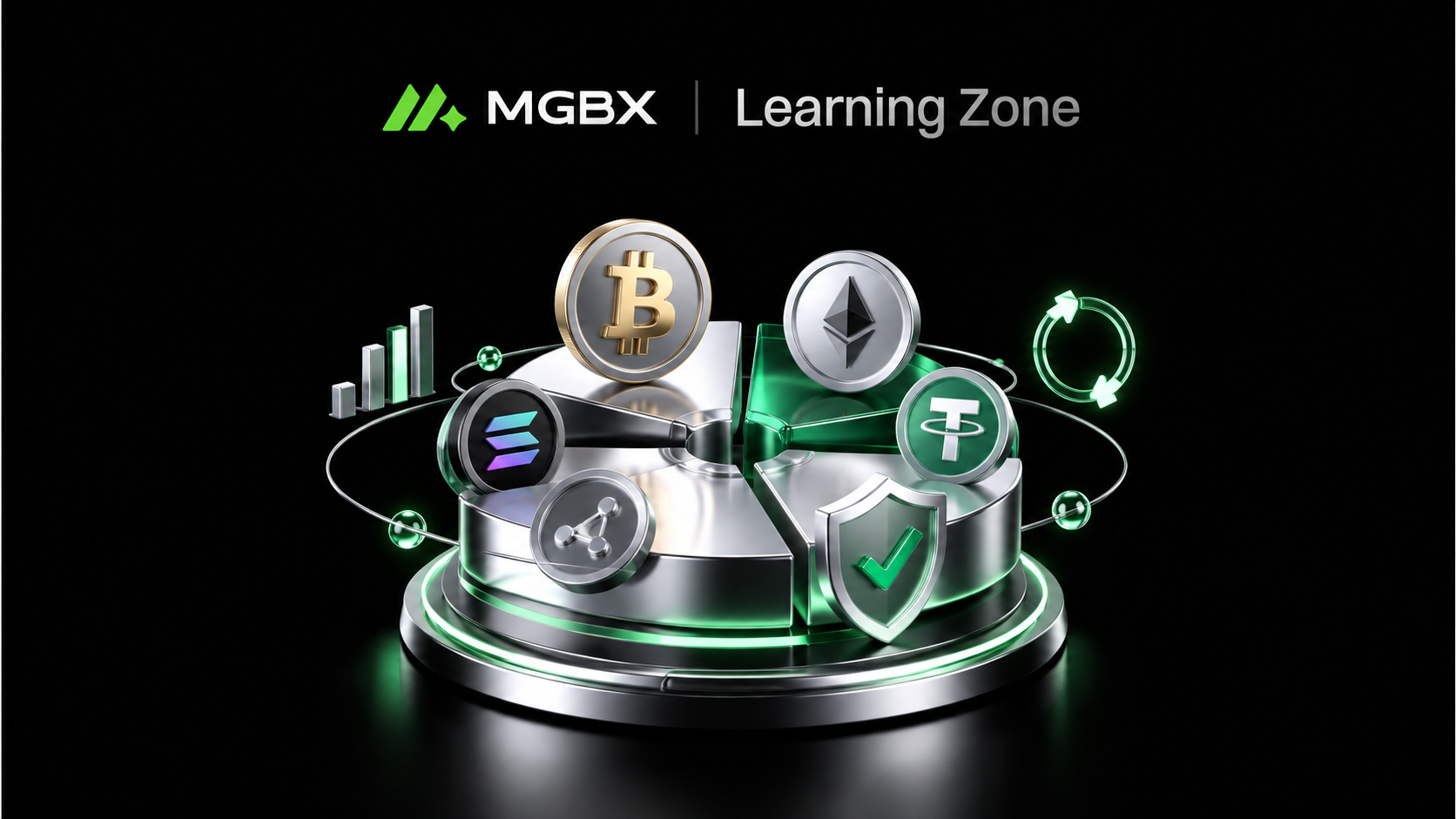
As the cryptocurrency market continues to evolve, investors now hold a wider range of digital assets, from major assets such as BTC and ETH to DeFi, Layer 2, RWA, and emerging sector tokens. However, concentrating capital in a single asset can create significant risks. The core of portfolio risk management is not simply holding more assets, but using proper asset allocation, diversification, and dynamic adjustments to reduce volatility and improve long-term stability. This article explains key crypto portfolio management strategies to help investors build a more structured digital asset allocation framework.
Crypto Investment: Portfolio Risk Management
In traditional financial markets, investors usually diversify risk across different asset classes such as stocks, bonds, and cash. In the cryptocurrency market, although the number of available assets continues to grow, many digital assets may still have strong correlations. Therefore, portfolio management remains essential.
Many investors misunderstand portfolio management as simply buying more cryptocurrencies. However, holding multiple assets does not always mean true risk diversification.
For example, an investor may hold several different altcoins and believe the portfolio is diversified. However, if these assets are all driven by the same market sentiment, they may decline at the same time during a major BTC correction. This situation is known as “false diversification.”
Effective crypto portfolio risk management requires investors to evaluate:
Risk sources;
Market correlations;
Volatility levels;
Liquidity conditions.
BTC, ETH, stablecoins, and assets from different blockchain sectors are influenced by different market factors. By allocating capital across different asset types, investors can reduce the impact of a single market event on the overall portfolio.
For long-term crypto investors, the goal of portfolio management is not to maximize returns in every market cycle, but to maintain long-term market participation while controlling downside risks.
Asset Diversification: Reducing Single-Asset Concentration Risk
Diversification is one of the core principles of portfolio risk management.
In the cryptocurrency market, asset allocation can be approached from multiple perspectives.
Diversify by asset type. Combining different types of assets can reduce excessive exposure to a single market direction.
Core assets:
Assets such as BTC and ETH, which have stronger market recognition and higher liquidity.Ecosystem assets:
Including DeFi, Layer 2, and blockchain infrastructure-related tokens that represent different application sectors.Stable assets:
Such as stablecoins, which can reduce portfolio volatility and provide liquidity during market adjustments.Emerging sector assets:
Innovative sectors such as AI and RWA, which may offer higher growth potential but also carry higher risks.
Allocate based on risk levels. A common approach is the “Core-Satellite” portfolio structure:
Core allocation:
A larger portion of the portfolio is allocated to relatively stable major assets.Satellite allocation:
A smaller portion is allocated to higher-growth but higher-volatility assets to capture additional opportunities.
This structure allows investors to maintain exposure to market growth while controlling overall portfolio risk.
Evaluating Portfolio Risk: Correlation and Maximum Drawdown
Portfolio management is not only about the number of assets held. More importantly, it requires evaluating the overall risk of the portfolio.
Asset correlation is an important factor. If multiple assets move in the same direction, holding different tokens may not effectively reduce risk. For example, when BTC rises, many altcoins may follow; when BTC declines, altcoins may experience even larger losses. In this case, the portfolio remains exposed to significant market risk.
Maximum drawdown is another important metric. Maximum drawdown measures the largest decline from a portfolio’s historical peak value to its lowest point. Understanding maximum drawdown helps investors determine whether the current portfolio risk level matches their personal risk tolerance.
For high-volatility portfolios, even strong long-term returns may not matter if drawdowns exceed an investor’s psychological tolerance and cause them to exit at the wrong time. Therefore, portfolio risk management is not only about asset selection but also about matching risk exposure with personal risk capacity.
Dynamic Portfolio Adjustment: Optimizing Allocation Based on Market Cycles
The cryptocurrency market changes rapidly, and a portfolio should not remain unchanged forever after the initial allocation.
As market conditions shift, asset proportions may gradually move away from the original plan. For example, an initial portfolio allocation may be with BTC of 60%, ETH of 30%, other assets of 10%. If a high-volatility asset experiences a significant price increase, its portfolio weight may rise quickly, increasing overall risk exposure.
Therefore, investors should conduct regular portfolio rebalancing.
Common approaches include:
Time-based rebalancing: Reviewing and adjusting portfolio allocations on a regular schedule, such as quarterly or semi-annually.
Target allocation rebalancing: Adjusting positions when an asset’s portfolio weight deviates beyond a predefined range.
The purpose of rebalancing is not to predict market tops or bottoms, but to maintain the intended risk level.
In different market conditions, investors may also adjust their risk exposure:
High-volatility markets:
Reduce high-risk asset exposure and increase liquidity reserves.Clear market trends:
Adjust risk asset allocation according to strategy.Uncertain markets:
Increase cash or stablecoin allocation and wait for better opportunities.
For crypto investors, effective portfolio management is not about eliminating all risks. Instead, it is about maintaining capital stability across different market cycles.
FAQ
What is crypto portfolio risk management?
Crypto portfolio risk management refers to the process of reducing the impact of individual asset volatility through asset allocation, diversification, risk assessment, and dynamic adjustments.Does holding multiple cryptocurrencies always reduce risk?
Not necessarily. If multiple assets are affected by the same market factors, they may still decline together. Effective diversification requires consideration of asset correlation.How many cryptocurrencies should be included in a portfolio?
There is no fixed number. The appropriate amount depends on capital size, research ability, and risk tolerance. Too few assets may increase concentration risk, while too many assets may reduce management efficiency.Why should a portfolio be adjusted regularly?
Because price changes can cause asset allocations to move away from the original plan. Regular rebalancing helps investors maintain their target risk level.What role do stablecoins play in a portfolio?
Stablecoins can reduce portfolio volatility and provide liquidity, allowing investors to adjust positions or capture opportunities during market corrections.
Mastering the basics is the first step. Follow MGBX Academy to access more cryptocurrency educational resources and market opportunities.
The process for trading on MGBX:
Register a trading account and complete the necessary identity verification;
Deposit funds and select a trade type;
On the cryptocurrency trading page, enter the amount or quantity of the cryptocurrency you wish to purchase;
Confirm the order to complete the trade, and check that your assets have increased accordingly.
Further Readings:
Complete Guide to Crypto Trading Risk Management
Black Swan Events: Survival Strategies During Extreme Market Conditions
The Cost of Emotional Trading: A Behavioral Economics Perspective