Building a Personal Trading Risk Management Checklist
Learn how to build a crypto trading risk management checklist with pre-trade checks, risk assessment, and disciplined execution to improve trading stability.
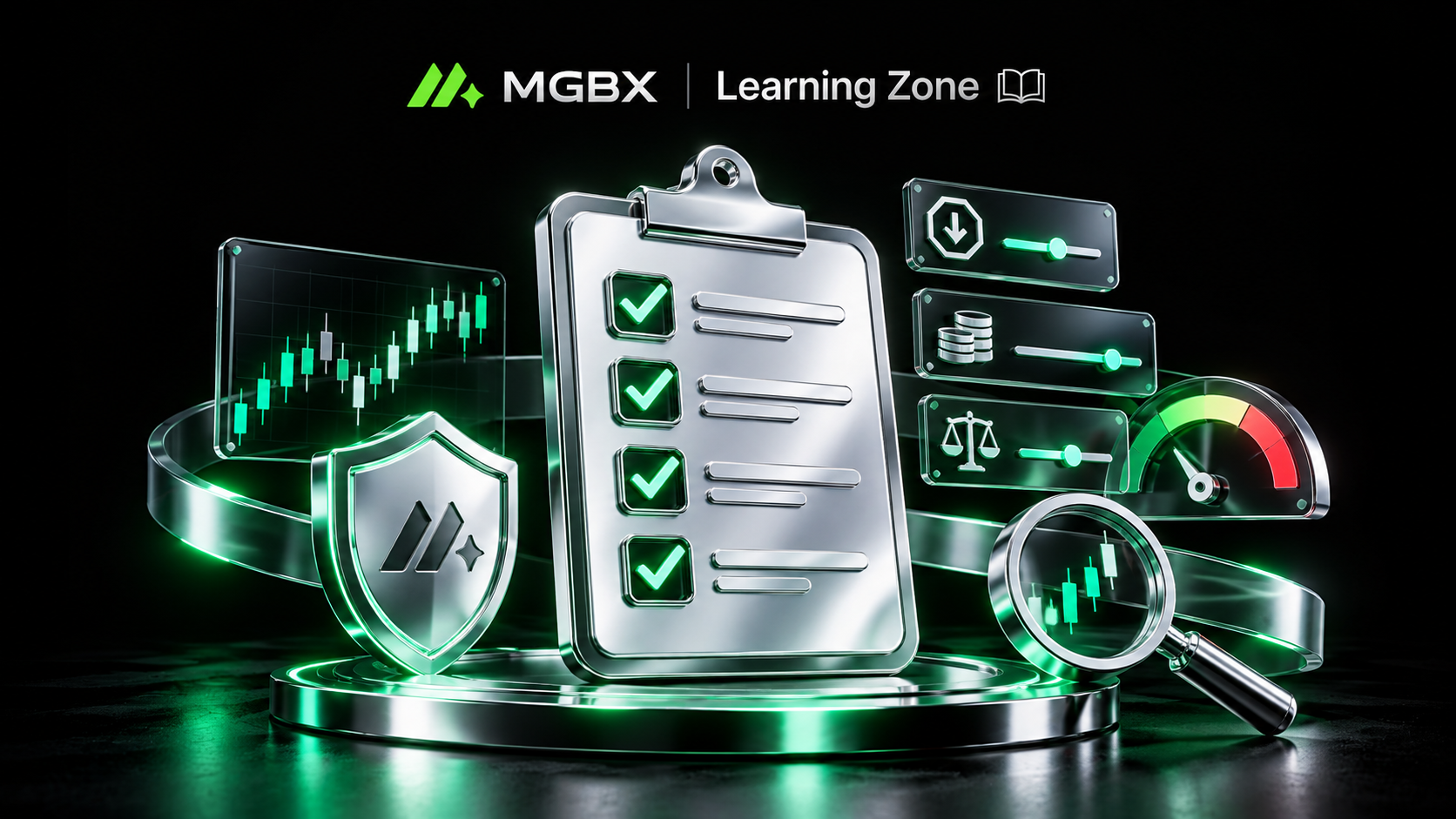
In cryptocurrency trading, many losses are not caused by a lack of market opportunities, but by the absence of a systematic risk review process. A trading risk checklist helps traders evaluate market conditions, trading logic, position size, and risk boundaries before opening a position, reducing emotional decisions and impulsive actions. This article explains the key components of a personal trading risk checklist, including pre-trade analysis, risk assessment, execution discipline, and trade reviews, helping traders build a more structured trading process and improve long-term consistency.
Why Do Traders Need a Risk Management Checklist?
In the cryptocurrency market, trading opportunities appear constantly, but not every price movement is worth participating in. Many traders do not fail because they cannot identify market opportunities, but because they lack clear execution rules and allow emotions to influence their decisions.
A Trading Risk Checklist helps traders review key risk factors through a structured process before entering a trade, ensuring that each position meets predefined requirements. Similar to aviation checklists used before flights, a trading checklist is not needed because traders lack experience. Instead, it exists because rapidly changing markets can cause people to overlook important risks under pressure, fear, or greed.
For example, a trader sees a token increase 20% within a short period and worries about missing the opportunity, so they immediately buy at a higher price. However, if the trader applies a risk checklist before entering the trade:
Is there a clear entry rationale?
Where is the stop-loss level?
Is the Risk-Reward Ratio reasonable?
Does the position size match capital management rules?
They may realize that the trade is driven more by market emotions than by a validated trading strategy.
Therefore, the purpose of a risk checklist is not to reduce the number of trades, but to filter out lower-quality opportunities and make trading decisions more systematic.
What Should Be Included in a Personal Trading Risk Checklist?
A complete trading risk checklist should generally cover three key areas: trading logic, risk control, and market conditions.
Confirm the trading logic. Traders should clearly understand:
Why am I entering this trade?
What is the basis for this decision?
What conditions would prove my analysis is incorrect?
For example, technical traders should confirm:
Is the current market trend clear?
Is the price near important support or resistance levels?
Does the trading signal match the strategy requirements?
If a trader cannot clearly explain the reason behind a trade, it may indicate that the decision is based on temporary market movements rather than a structured strategy.
Confirm stop-loss and target levels. Every trade should have predefined:
Entry price;
Stop-loss price;
Target price.
For example, a trader plans to buy ETH:
Entry Price: 3,500 USDT
Stop-Loss Price: 3,250 USDT
Target Price: 4,000 USDT
The trader can calculate in advance:
Potential Loss: 3,500 - 3,250 = 250 USDT
Potential Profit: 4,000 - 3,500 = 500 USDT
Risk-Reward Ratio: 500 ÷ 250 = 2
Therefore, the trade has an R:R ratio of 2:1.
If the trade does not meet the trader’s risk requirements, waiting for a better opportunity is usually more disciplined than changing the rules because the market is moving.
Check position size and risk exposure. Traders should evaluate:
Does the trade exceed the maximum risk limit?
Is the current position too concentrated?
Is the leverage level too high?
A proper trading process should determine risk first and position size second, rather than increasing capital exposure simply because an opportunity appears attractive.
Trading Execution Discipline: Let Rules Replace Emotional Decisions
The main purpose of building a risk checklist is to reduce emotional trading.
Common problems in real market conditions include:
Buying after a price surge;
Adding to losing positions;
Taking profits too early;
Changing plans during market fluctuations.
These behaviors usually do not happen because traders do not understand risk, but because they struggle to follow their original rules under real-time market pressure.
Therefore, experienced traders often establish clear execution rules:
No trading without a defined plan;
No trading without a stop-loss level;
No increasing positions beyond risk limits;
Reduce trading frequency after consecutive losses.
For perpetual futures traders, execution discipline is even more important. Leverage amplifies market movements, and without clear rules, even small price fluctuations can quickly increase account risk.
Trading journals are also an important part of a risk management system. Traders can record:
Trading time;
Entry reasons;
Position size;
Stop-loss level;
Final outcome;
Emotional state during the trade.
Through long-term reviews, traders can identify recurring behaviors, such as:
Frequently chasing rallies;
Taking profits too early;
Increasing risk after losses.
FAQ
What is a trading risk checklist?
A trading risk checklist is a structured tool used before and during trades to review risks, confirm trading conditions, and improve execution discipline. It helps traders reduce emotional decisions.Why do experienced traders still need a risk checklist?
Experience can improve decision-making, but it cannot completely eliminate psychological biases or execution mistakes. A checklist helps traders maintain consistency with their rules.What are the most important items to check before entering a trade?
Key items usually include trading logic, stop-loss levels, position size, Risk-Reward Ratio, and current market conditions.Will a risk checklist reduce trading opportunities?
It may reduce some impulsive trades, but it helps traders filter lower-quality opportunities and improve capital efficiency.How can traders build the habit of using a risk checklist?
By maintaining trading journals, following a fixed review process, and conducting regular trade reviews, risk management can gradually become a consistent trading habit.
Mastering the basics is the first step. Follow MGBX Academy to access more cryptocurrency educational resources and market opportunities.
The process for trading on MGBX:
Register a trading account and complete the necessary identity verification;
Deposit funds and select a trade type;
On the cryptocurrency trading page, enter the amount or quantity of the cryptocurrency you wish to purchase;
Confirm the order to complete the trade, and check that your assets have increased accordingly.
Further Readings:
Complete Guide to Crypto Trading Risk Management
Black Swan Events: Survival Strategies During Extreme Market Conditions
The Cost of Emotional Trading: A Behavioral Economics Perspective