Ethereum Development History: From Genesis to ETH 2.0
Explore the history and evolution of Ethereum and ETH, from Vitalik Buterin and The DAO to The Merge, Dencun, Pectra, Fusaka, and Ethereum’s latest scaling roadmap.
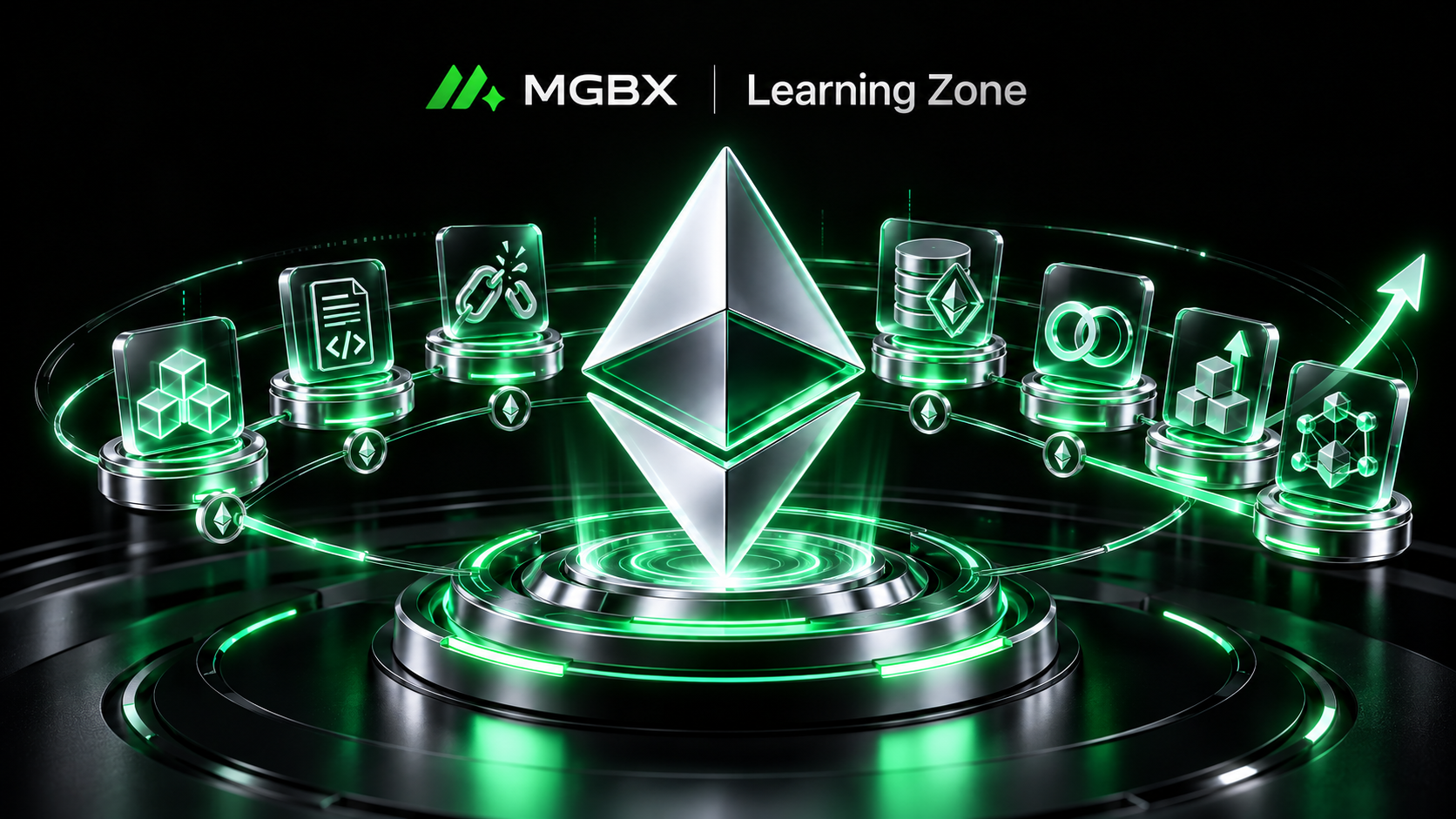
The development of Ethereum was not simply a matter of upgrading from “ETH 1.0 to ETH 2.0.” Instead, it has been a series of ongoing protocol upgrades. From Vitalik Buterin’s original proposal in 2013 and the launch of the mainnet in 2015 to The DAO, The Merge, Dencun, Pectra, and Fusaka, Ethereum’s technical roadmap has continued to evolve around security, scalability, decentralization, and user experience.
2013–2015: Vitalik Buterin and the Birth of Ethereum
The history of Ethereum can be traced back to 2013, when Vitalik Buterin proposed building a more general-purpose blockchain than those designed solely for asset transfers. His vision was to allow developers to run programs directly on the blockchain.
In 2014, the Ethereum project entered its public development and early fundraising phase. In July 2015, the first mainnet version, Frontier, went live, officially launching Ethereum.
This period established Ethereum’s core direction for the following decade: transforming blockchain from a “ledger that records asset changes” into an open computing platform capable of executing smart contracts. This foundation later enabled the growth of ETH and ecosystems such as DeFi and NFTs.
2016–2020: The DAO and the Shift Toward PoS
The The DAO incident in 2016 became one of the most significant governance events in Ethereum’s early history. Due to a vulnerability in The DAO’s smart contract, an attacker moved more than 3.6 million ETH from the project. The community subsequently split over how to respond, eventually leading to a hard fork. The network that adopted the new state became today’s Ethereum, while the other chain continued as Ethereum Classic.
The incident also highlighted the importance of smart contract audits, protocol governance, and the relationship between “code is law” and community consensus.
At the same time, Ethereum’s long-term roadmap began shifting from Proof of Work (PoW) to Proof of Stake (PoS). In 2020, the Beacon Chain went live, laying the groundwork for the eventual transition to the new consensus mechanism.
2022: The Merge and the Real Meaning of ETH 2.0
On September 15, 2022, Ethereum completed The Merge, officially transitioning from PoW to PoS. According to official Ethereum sources, the change reduced the network’s energy consumption by approximately 99.95%.
This is also where misunderstandings about ETH 2.0 most often arise.
“Ethereum 2.0,” or “Eth2,” was once used as a broad term for a series of major Ethereum upgrades. However, beginning in late 2021, Ethereum’s core developers gradually moved away from the Eth1/Eth2 terminology in favor of more precise terms such as “execution layer” and “consensus layer.” Therefore, ETH 2.0 is not a new token, and there was never a mandatory process for converting existing ETH into ETH2.
The Merge was also not the end of Ethereum’s development, but rather a key milestone in its broader roadmap.
Dencun, Pectra, and Fusaka: Scaling Becomes the New Focus
After completing its transition to PoS, Ethereum increasingly shifted its focus toward scalability and user experience.
The Dencun upgrade in 2024 introduced blobs through EIP-4844, providing Rollups with lower-cost data storage space. In May 2025, Pectra went live, with EIP-7702 giving traditional EOAs more flexible account capabilities, including transaction batching and sponsored gas fees. In December 2025, Fusaka went a step further by introducing PeerDAS to improve data availability and scaling capabilities for Layer 2 networks.
As of August 2026, the official Ethereum roadmap continues to advance toward further upgrades. There is therefore no single “final version” of Ethereum that has been completed and will remain permanently unchanged. The roadmap itself may continue to evolve as research and development progress.
Looking back at Ethereum’s history, the key story is not a simple transition from “ETH 1.0 to ETH 2.0,” but how an open protocol has continuously evolved to address its own challenges. From Frontier and The DAO to The Merge, Dencun, Pectra, and Fusaka, Ethereum’s development has consistently focused on security, scalability, and usability. Understanding this evolution also helps avoid the common misconception that the phased-out term “ETH 2.0” refers to a new asset.
Mastering the basics is the first step. Follow MGBX Academy to access more cryptocurrency educational resources and market opportunities.
The process for trading on MGBX:
Register a trading account and complete the necessary identity verification;
Deposit funds and select a trade type;
On the cryptocurrency trading page, enter the amount or quantity of the cryptocurrency you wish to purchase;
Confirm the order to complete the trade, and check that your assets have increased accordingly.