What Is USDD? How It Works, USDDOLD Migration, and Key Risks
What is USDD? Learn how the new USDD uses overcollateralization, the PSM stability mechanism, USDDOLD migration, and the key risks of stablecoin use.
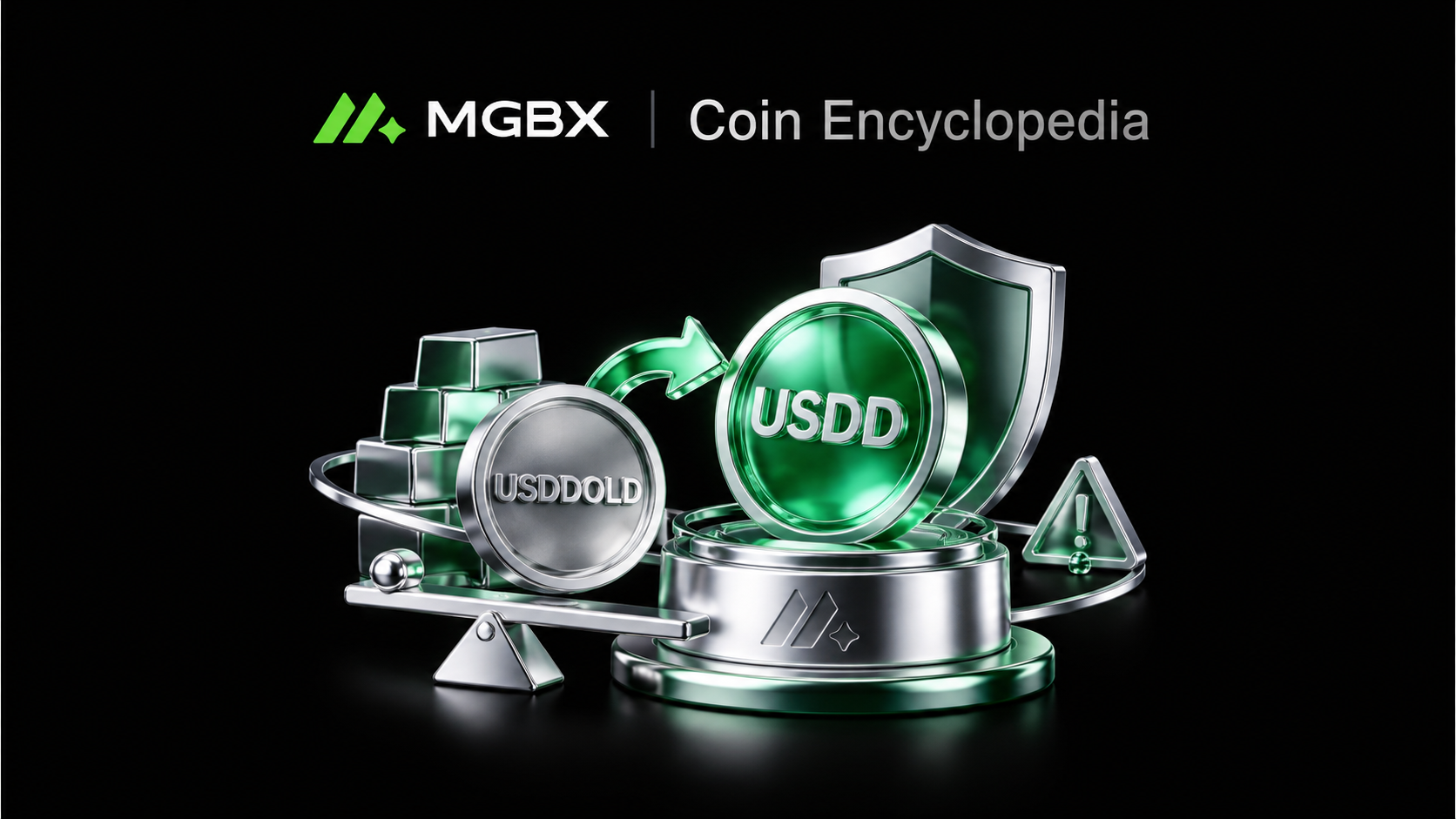
USDD is a decentralized stablecoin designed to maintain a price close to $1. The new USDD should be distinguished from the older USDDOLD system. Its core mechanisms include overcollateralization, Vaults, liquidation, and the Peg Stability Module. Users who still hold USDDOLD can use the official migration tool to convert it into the new USDD. When evaluating whether USDD fits a particular use case, it is important to focus on collateral structure, liquidity, smart contract risk, and depegging risk rather than assuming that a stablecoin has no price or yield risk.
What Is USDD and How Does the New Version Maintain Its Dollar Peg?
USDD, short for Decentralized USD, is a decentralized stablecoin designed to maintain a price close to $1. According to the current USDD documentation, the new USDD is backed by crypto assets and uses an overcollateralized model to support system stability. Users can deposit supported collateral into a Vault and mint USDD according to the applicable collateral ratio.
This approach does not rely solely on market confidence to maintain the peg. If a Vault’s collateral ratio falls below the required threshold, the protocol can trigger a liquidation process to reduce the risks associated with insufficient collateral.
Another important mechanism is the PSM, or Peg Stability Module. It provides conversion routes between USDD and supported stablecoins such as USDT and USDC, creating opportunities for market arbitrage and liquidity adjustment when USDD moves away from its $1 target. According to the current official documentation, PSM swaps do not charge a protocol service fee, although users still need to pay blockchain Gas fees.
It is also important to distinguish the new USDD from USDDOLD. Earlier descriptions involving the TRON DAO Reserve and reserve assets such as BTC and TRX primarily refer to USDDOLD and should not be directly applied to the current USDD protocol.
How to Migrate USDDOLD to the New USDD
Users who still hold USDDOLD can convert it into the new USDD through the official USDD Migration feature.
The basic process is to open the official migration page, connect a supported wallet, enter the amount of USDDOLD to convert, review the balance and network information, and confirm the transaction in the wallet. Once the on-chain transaction is confirmed, the corresponding amount of new USDD will be credited to the connected wallet.
According to the current USDD migration documentation, there is no fixed migration deadline. The migration function itself does not charge an additional protocol fee, so users mainly need to cover the applicable blockchain Gas fee.
When migrating assets, users should pay particular attention to the website URL, network, and contract address. For stablecoin upgrades, it is safer to access the Migration page through the project’s official website rather than through unsolicited messages, search ads, or unverified links. Contract addresses can also be checked through a blockchain explorer.
What Can USDD Be Used For and What Are the Risks?
USDD can be used for stablecoin swaps, DeFi applications, on-chain settlement, and other services that support the asset. The official ecosystem also offers features such as sUSDD Savings. However, any associated yield should not be treated as risk-free interest. Users may still face protocol, stablecoin price, liquidity, and smart contract risks.
When evaluating USDD, a more useful question than simply asking about yield is why the asset is able to maintain a price close to $1. A sharp decline in collateral value, weaker market liquidity, liquidation problems, or changes in stablecoin demand could all affect price stability.
USDD’s “stability” therefore refers to the protocol’s target price, not a guarantee of principal. Before buying, depositing, or withdrawing USDD on a trading platform, users should also confirm which trading pairs, networks, and deposit or withdrawal routes are currently supported rather than assuming that every network is available.
FAQ
Is USDD an algorithmic stablecoin?
The new USDD is better understood as an overcollateralized stablecoin. Its system includes collateral Vaults, liquidation, the PSM, and other risk management mechanisms, so it should not be analyzed using the same framework as earlier purely algorithmic stablecoin models.What is the difference between USDDOLD and the new USDD?
USDDOLD refers to the previous version of the system. The new USDD uses updated collateral, liquidation, and stability mechanisms, so the two should be evaluated separately.Can USDDOLD still be migrated?
According to the current official documentation, yes. There is currently no fixed migration deadline. If the rules change in the future, users should follow the latest USDD documentation.Does USDD always stay at $1?
No. $1 is its target peg, but the market price can still deviate because of liquidity conditions, collateral movements, supply and demand, and protocol-related risks.
Mastering the basics is the first step. Follow MGBX Academy to access more cryptocurrency educational resources and market opportunities.
The process for trading on MGBX:
Register a trading account and complete the necessary identity verification;
Deposit funds and select a trade type;
On the cryptocurrency trading page, enter the amount or quantity of the cryptocurrency you wish to purchase;
Confirm the order to complete the trade, and check that your assets have increased accordingly.