What Are Smart Contracts? Ethereum’s Core Innovation
What is a smart contract? Learn how smart contracts work, Ethereum’s innovation, programmable blockchains, and why applications such as DeFi and NFTs can execute automatically.
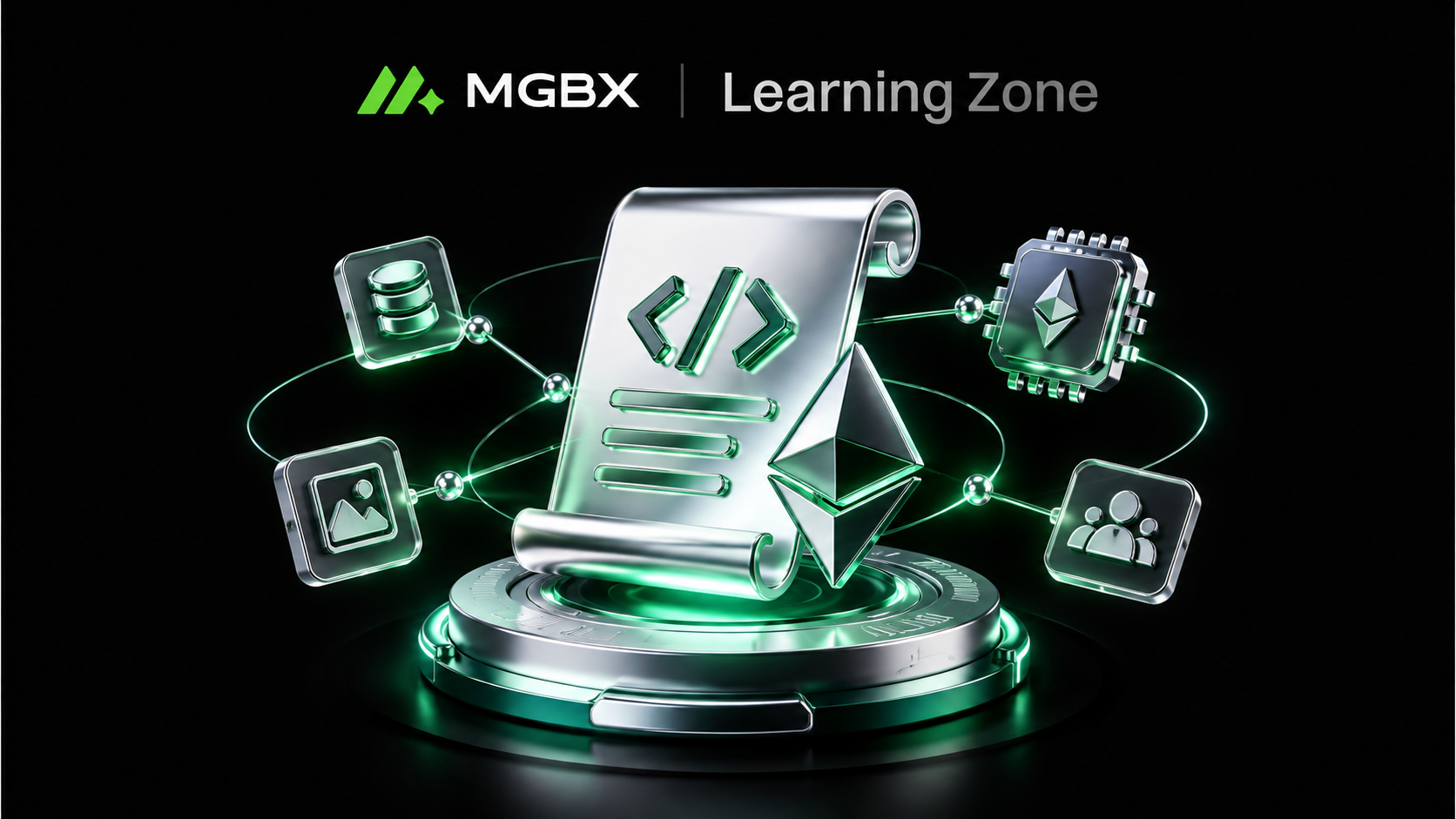
Smart contracts are programs deployed and run on a blockchain. Unlike traditional contracts, they do not actively “think” or make decisions. Instead, they execute predefined instructions when called by a transaction, following the rules encoded in their code. Ethereum provides smart contracts with a general-purpose execution environment through the EVM, transforming blockchain from a system that simply records transfers into a programmable platform. This has enabled applications such as DeFi, NFTs, and DAOs, while also introducing new risks related to code vulnerabilities, permissions, and oracles.
What Is a Smart Contract? An On-Chain Program
The term “smart contract” can make it sound like a traditional legal contract, but from a technical perspective, it is closer to a computer program deployed at an address on a blockchain.
Nick Szabo proposed the concept of a Smart Contract in the 1990s. Ethereum later provided a general-purpose blockchain environment that allowed developers to write and deploy these programs at scale. Smart contracts typically do not run on their own. They are triggered by transactions or calls from other contracts. For example, when a user deposits assets into a lending protocol, the smart contract updates balances and collateral status according to its predefined rules.
Therefore, rather than thinking of a smart contract as an “automatically signed legal agreement,” it is more accurate to view it as a publicly deployed program that processes on-chain state according to rules encoded in its code.
Smart Contracts: Making Ethereum a Programmable Blockchain
The most basic function of traditional blockchains is to verify and record asset transfers. One of Ethereum’s key innovations was enabling developers to write more general-purpose program logic. Developers typically use languages such as Solidity to write smart contracts, compile them, and deploy them to Ethereum. When users interact with a contract, the EVM executes the corresponding operations according to its code. Contracts can also call one another, allowing developers to combine different protocols much like software modules.
This is the core idea behind a “programmable blockchain”: the blockchain does not merely record “who owns how much.” It can also define how assets are traded, collateralized, issued, or combined. For example, a DeFi application can interact with a token contract, a trading protocol, and an oracle without requiring a single company to control every component.
Why DeFi and NFTs Depend on Smart Contracts
In DeFi, decentralized exchange protocols can use smart contracts to process asset swaps, while lending protocols can manage collateral ratios and liquidation conditions.
NFTs also rely on smart contracts to define token IDs, ownership, and transfer rules. However, owning an NFT generally means owning the corresponding on-chain token; it does not automatically mean owning the copyright to its associated image, music, or other content. The specific rights depend on the project’s terms and applicable legal arrangements.
DAOs, stablecoins, blockchain games, and other applications also use smart contracts to manage different types of rules.
Therefore, the real impact of smart contracts is not limited to any single industry. They make it possible to put different types of rules on the same open network, where other applications can interact with and build on them.
Automatic Execution Does Not Mean Zero Risk
One of the defining characteristics of smart contracts is determinism, but deterministic execution does not mean absolute security.
If the code contains a vulnerability, the network may still execute the flawed code exactly as written. Some protocols also use proxy contracts, multisig administrators, or governance mechanisms to enable upgrades. Therefore, the claim that “smart contracts can never be modified after deployment” is not universally true.
In addition, Ethereum cannot directly access real-world information such as weather conditions, asset prices, or sports results. Applications that require off-chain information generally rely on mechanisms such as oracles, which introduce additional data and trust risks.
A more accurate way to understand smart contracts is this: they reduce the need for humans to manually enforce rules, but they do not automatically eliminate risks related to code, governance, or external data.
Smart contracts have helped Ethereum evolve from a digital asset ledger into a programmable blockchain. Developers can use code to define assets and business rules, which the EVM then executes on-chain. This provides the foundation for applications such as DeFi, NFTs, and DAOs. However, “automatic execution” does not mean “absolute security” or “complete trustlessness.” To truly understand smart contracts, it is important to consider both their composability and the risks associated with code vulnerabilities, access controls, and reliance on oracles.
Mastering the basics is the first step. Follow MGBX Academy to access more cryptocurrency educational resources and market opportunities.
The process for trading on MGBX:
Register a trading account and complete the necessary identity verification;
Deposit funds and select a trade type;
On the cryptocurrency trading page, enter the amount or quantity of the cryptocurrency you wish to purchase;
Confirm the order to complete the trade, and check that your assets have increased accordingly.