Base: Coinbase’s L2 Strategy
Explore Base’s technical architecture, Coinbase’s L2 strategy, gas fees, and ecosystem value to understand how Base fits into Ethereum scaling.
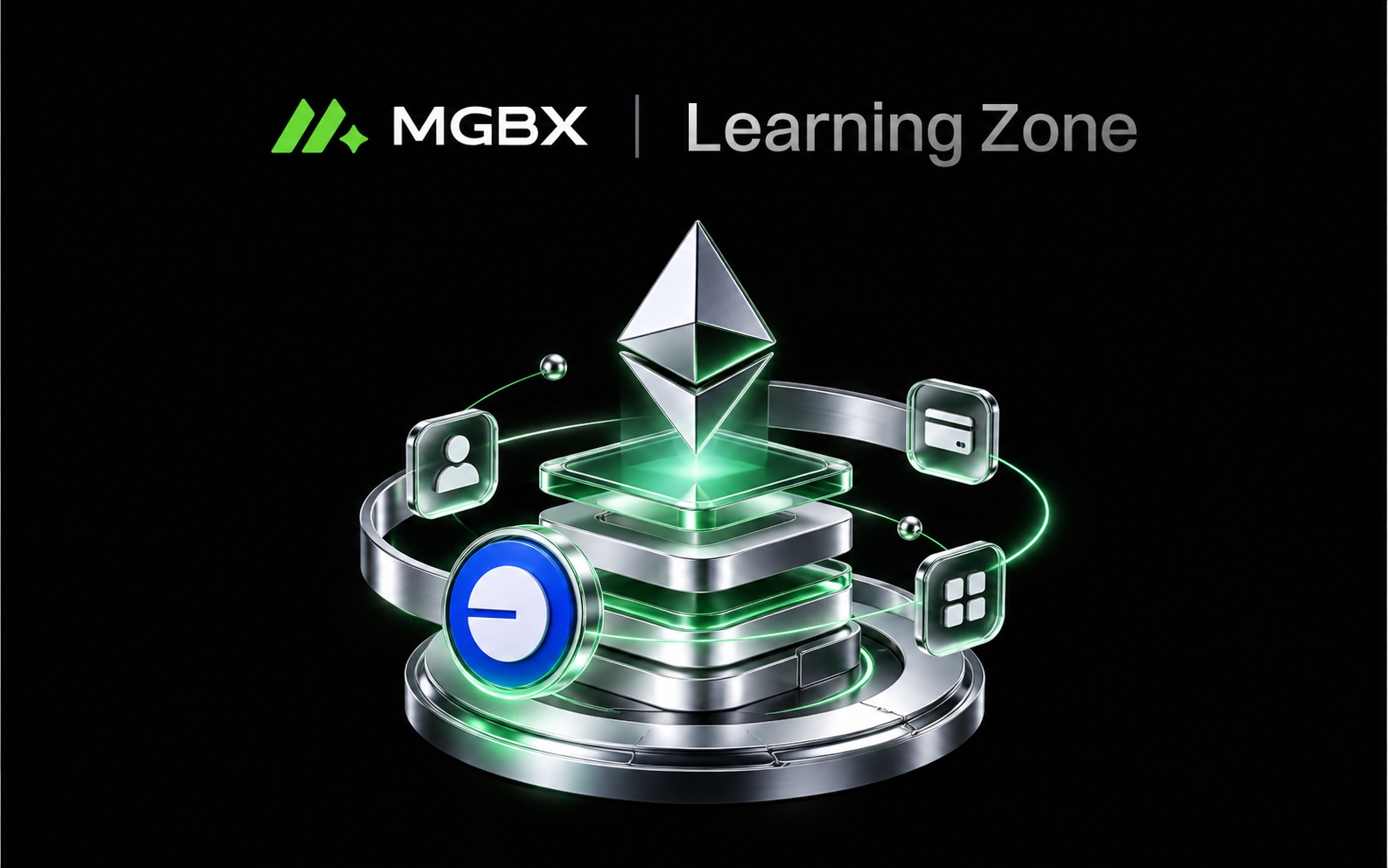
Base is an Ethereum Layer 2 network incubated by Coinbase and built on the OP Stack. By lowering on-chain transaction costs and improving the developer experience, Base connects Ethereum infrastructure, Coinbase’s user ecosystem, and on-chain applications. Understanding Base requires looking beyond scaling technology to its payments, accounts, developer ecosystem, and progress toward decentralization.
What Is Base: How Ethereum L2 and the OP Stack Reduce On-Chain Costs
Base is an Ethereum Layer 2 network incubated by Coinbase and a key part of the company’s expansion into on-chain infrastructure. Base is built on the OP Stack and uses a rollup architecture to process transactions. In simple terms, transactions can be executed on Base before the relevant data is published to Ethereum. This allows Base to use Ethereum for data availability and state verification while avoiding the higher cost of executing every operation directly on Ethereum Mainnet. According to the Base protocol documentation, Layer 2 transaction data is published to Ethereum, while invalid state transitions can be challenged.
For everyday users, one of Base’s most noticeable advantages is lower network fees. A Base transaction fee generally consists of a Layer 2 execution fee and a Layer 1 security fee. The first covers transaction execution on Base, while the second reflects the cost of publishing data to Ethereum. These fees are deducted from the sender’s ETH balance, so users need ETH to pay network gas fees when transferring assets or interacting with smart contracts on Base.
From a development perspective, Base follows the broader Ethereum development model and maintains strong compatibility with existing Ethereum tools and applications. For teams already familiar with Ethereum smart contracts and developer tooling, this can reduce the technical effort required to deploy applications on a new network. Coinbase describes Base as a secure, low-cost, developer-friendly Ethereum Layer 2 built in collaboration with Optimism using the OP Stack.
Area | Key Base Feature | What It Means for Users and Developers |
Network Positioning | Ethereum Layer 2 | Expands transaction capacity within the Ethereum ecosystem |
Technical Architecture | OP Stack and Rollup | Reduces on-chain execution and data-processing costs |
Network Fees | Layer 2 execution fee plus Layer 1 security fee | Provides a clearer transaction cost structure |
Gas Asset | Network fees are primarily paid in ETH | No separate Base network token is required for gas |
Development Environment | Compatible with the Ethereum development ecosystem | Lowers barriers to application deployment and migration |
Coinbase Connection | Incubated by Coinbase | Connects trading access, accounts, and on-chain applications |
Why Coinbase Needs Base: From a Trading Gateway to On-Chain Infrastructure
The strategic value of Base goes beyond creating a blockchain with lower transaction fees. When Coinbase introduced Base, it positioned the network as infrastructure designed to bring more users on-chain. Rather than limiting its role to digital asset trading, Coinbase can use its own Layer 2 infrastructure to connect wallets, payments, developer tools, and decentralized applications, extending the user journey beyond buying and selling crypto assets.
This advantage can be understood as a combination of technology and distribution. Base provides Layer 2 scaling, while the broader Coinbase ecosystem gives developers access to account, payment, and user onboarding tools. Base Account currently uses a smart contract wallet architecture, supporting passkey-based sign-in and a more streamlined on-chain payment experience. According to Base documentation, Base Account is built on Smart Wallet and supports universal sign-on and one-tap USDC payments. These tools do not change the underlying blockchain rules, but they can reduce the number of wallet-related steps users need to understand before interacting with on-chain applications.
From this perspective, Base and Coinbase have a clear strategic relationship. Coinbase provides user access, developer services, and payment infrastructure, while Base provides the network layer for more on-chain transactions and applications. As the Base ecosystem expands, its role is evolving from a pure Ethereum scaling network toward broader payments and on-chain financial infrastructure. Base’s current strategy places particular emphasis on stablecoin payments, account experience, liquidity, and developer growth. This means its long-term competitiveness may depend not only on lower gas fees, but also on whether users adopt Base for payments, trading, and everyday on-chain activity.
What to Watch in the Base Ecosystem
For users evaluating Base, short-term token trends should not be the only consideration. The long-term development of a Layer 2 ecosystem can also be assessed through developer activity, user transactions, stablecoin and payment demand, DeFi liquidity, and the number and quality of applications. Base’s official ecosystem currently spans categories including DeFi, consumer applications, infrastructure, wallets, and AI, reflecting its effort to build an ecosystem that extends beyond financial trading alone.
Base also carries technical and asset-related risks. Although Layer 2 data is published to Ethereum and Ethereum provides an important security and settlement foundation, Base still has its own risks related to sequencers, cross-chain bridges, smart contracts, and individual application protocols. A more accurate way to understand Base is that it uses Ethereum to strengthen security and data verifiability, rather than being identical to using Ethereum Mainnet directly. Before participating in DeFi, bridging assets, or trading new tokens on Base, users should verify the network, contract address, liquidity, and project source.
Base stated in 2025 that the team had begun exploring the possibility of a network token, but no finalized launch plan had been announced. Users should therefore follow official Base announcements and distinguish third-party tokens using the name Base or BASE from any official network token that Base may introduce in the future.
FAQ
What is Base?
Base is an Ethereum Layer 2 network incubated by Coinbase and built on the OP Stack. Its main goals are to reduce on-chain transaction costs and improve application scalability.Does Base have its own token?
Base has not launched a network token. The team has stated that it is exploring the possibility, but no confirmed launch plan or timeline has been announced.Are Base transaction fees the same as gas fees?
Network fees paid for transfers and smart contract interactions on Base are generally referred to as gas fees. Base breaks these costs into a Layer 2 execution fee and a Layer 1 security fee, which together make up the network cost of completing a transaction.Why is Base important to Coinbase’s strategy?
Base allows Coinbase to expand beyond digital asset trading and custody into on-chain networks, payments, accounts, and developer infrastructure. These products can make it easier for users and developers to access on-chain applications.Is using Base as secure as using Ethereum Mainnet?
Not exactly. Base benefits from Ethereum by publishing Layer 2 transaction data to the network and using related verification mechanisms, but its sequencer, bridges, smart contracts, and third-party applications still carry their own technical and asset risks.
Mastering the basics is the first step. Follow MGBX Academy to access more cryptocurrency educational resources and market opportunities.
The process for trading on MGBX:
Register a trading account and complete the necessary identity verification;
Deposit funds and select a trade type;
On the cryptocurrency trading page, enter the amount or quantity of the cryptocurrency you wish to purchase;
Confirm the order to complete the trade, and check that your assets have increased accordingly.
Further Readings:
Layer 2 Asset Investment Guide