Cryptocurrency Trading vs. Stock Trading: Key Differences Between the Two Markets
Learn the key differences between cryptocurrency trading and stock trading, including market structure, trading hours, asset characteristics, and risk profiles.
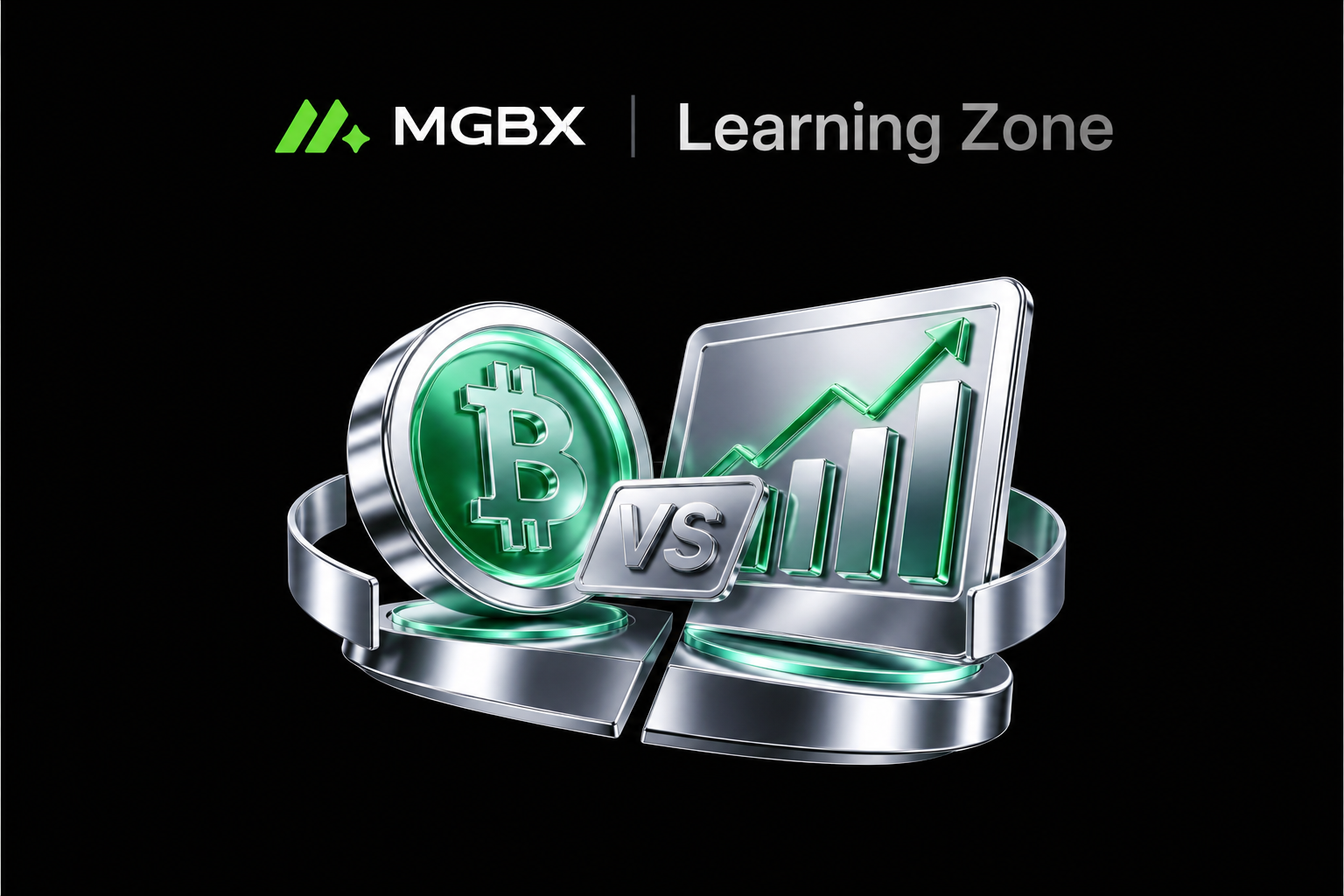
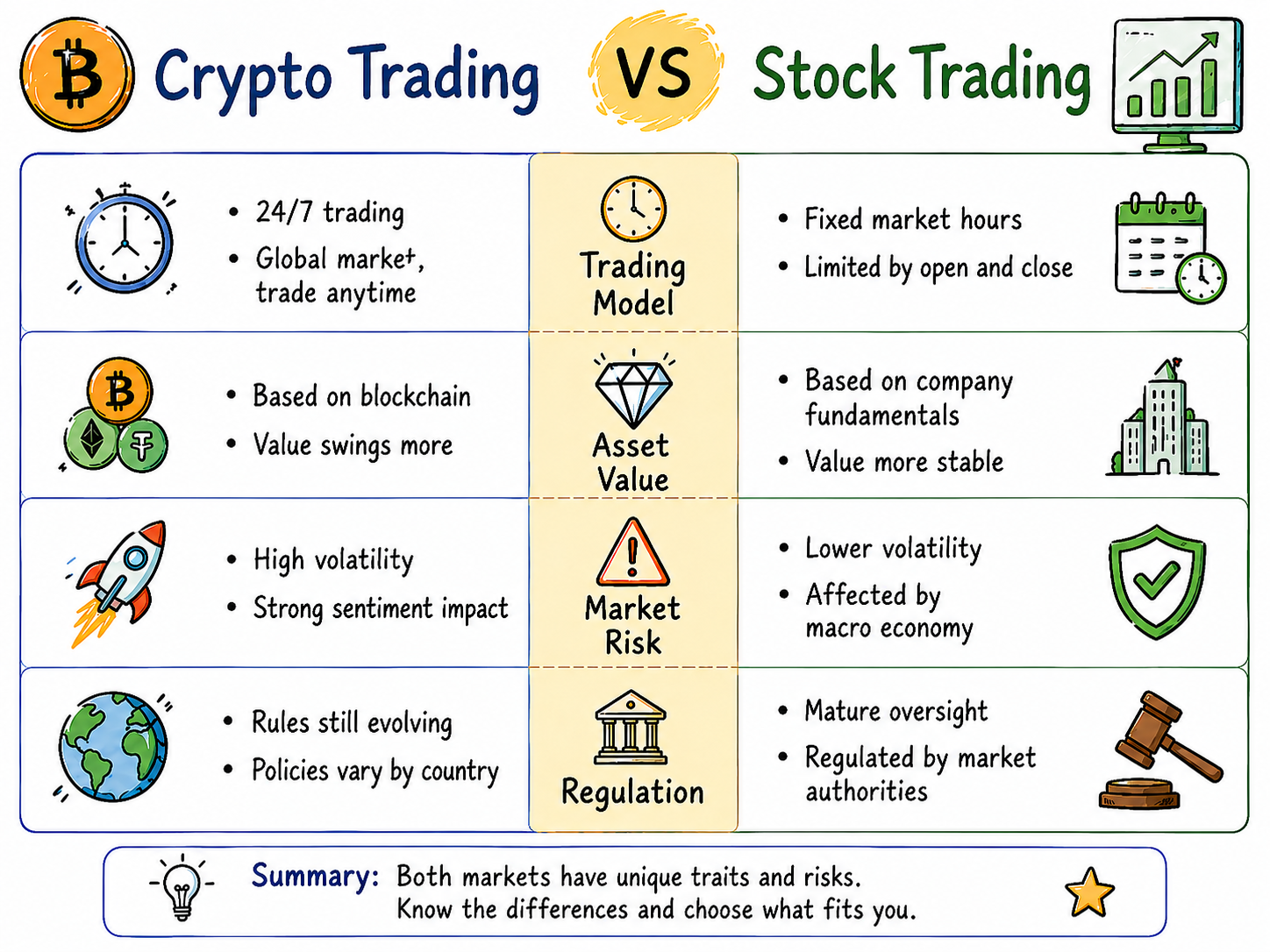
Cryptocurrency trading and stock trading are two major ways of participating in financial markets. Although both involve buying and selling assets based on market prices, they differ significantly in market structure, asset characteristics, trading hours, and risk profiles. As the digital asset market continues to develop, more users are looking to understand the differences between crypto and stocks. This article compares the two markets from four key perspectives to help users build a clearer understanding of how each market works.
Trading Mechanisms: How Crypto and Stock Markets Operate
One of the biggest differences between cryptocurrency trading and stock trading is how the markets operate and when they are open. Stock markets generally operate through traditional securities exchanges, where investors buy and sell shares of listed companies through brokerage accounts. Trading is limited to official exchange hours, and most stock markets are open only during specific periods on business days, with trading suspended on weekends and certain public holidays. Over time, this structure has developed into a relatively mature system with established trading rules and market practices.
Cryptocurrency markets, by contrast, generally operate around the clock. Because digital assets are traded through global blockchain networks and cryptocurrency platforms, users can participate at different times without being restricted by traditional market hours. This 24/7 model gives the market a higher degree of accessibility and allows users from different regions to participate in the same global digital asset market.
However, continuous trading also means prices can move at any time, without a market close to pause activity. Users therefore need to pay closer attention to volatility, trading plans, and risk management. In terms of trading structure, stock trading mainly involves company shares, while cryptocurrency trading is often conducted through trading pairs, such as using a stablecoin to trade Bitcoin or other digital assets.
Asset Value: How Pricing Logic Differs Between the Two Markets
From an asset perspective, cryptocurrencies and stocks represent two different value systems. A stock represents an ownership interest in a listed company, and its price is typically influenced by factors such as company earnings, financial performance, industry conditions, and expectations for future growth. As a result, stock investors often focus on business performance, competitive strength, and long-term development prospects.
Cryptocurrencies are built around blockchain technology and digital asset ecosystems, and different assets may serve different technological functions or market use cases. Bitcoin, for example, is often associated with digital value storage and broader market consensus, while blockchain networks such as Ethereum support smart contracts and decentralized applications.
Digital asset prices are influenced not only by supply and demand, but also by technology upgrades, ecosystem development, industry trends, and changes in market sentiment.
This difference in underlying value drivers is one of the key distinctions in a crypto vs. stocks comparison. Stock analysis tends to focus more heavily on corporate fundamentals, while cryptocurrency trading may also require users to understand blockchain technology, market structure, and how digital assets operate. Understanding how different assets derive value can help users develop a more complete view of both markets.
Market Risk: Comparing Volatility and Risk Management
Market volatility is another major difference between cryptocurrency and stock trading. Traditional stock markets have developed over a long period of time, with relatively mature participant structures, trading systems, and regulatory frameworks. The prices of large publicly listed companies, in particular, are often influenced by corporate earnings, financial data, and broader macroeconomic conditions.
The cryptocurrency market is still developing rapidly, with market size, participant structure, and asset categories continuing to evolve. As a result, price volatility can often be more pronounced. Digital asset prices may respond to industry news, market narratives, technology developments, and shifts in investor sentiment, sometimes producing significant short-term movements.
This high level of activity can create more frequent market movements, but it also requires stronger risk awareness from users.
Risk management is essential in both stock and cryptocurrency trading. Digital asset users should fully understand the characteristics of different trading products, plan how capital is allocated, and avoid using complex trading tools without first understanding how they work. This is especially important when leverage is involved, as market volatility can further amplify potential losses. Understanding product mechanics and maintaining trading discipline are therefore critical.
Regulatory Environment: Trading Platforms and Market Development
The regulatory environment is another important factor when comparing crypto and stock markets. Stock markets have developed regulatory systems over many years, including listing requirements, trading rules, and asset custody frameworks. Investors generally participate through regulated securities institutions, and trading processes are relatively standardized.
Cryptocurrency markets are still evolving, and regulatory approaches differ across countries and regions. As the industry matures, more trading platforms are strengthening security systems, improving transparency, and enhancing user asset protection.
Users typically participate in cryptocurrency markets through trading platforms that provide account registration, asset management, and trading services. As a result, platform security, system stability, and service quality are important considerations.
For users who are new to digital assets, understanding the differences between cryptocurrency and stock trading is an important step toward building a sound trading foundation. The two markets have different histories, structures, and operating models, and there is no simple answer as to which is better. What matters is whether users understand the market rules and choose a trading method that fits their own needs.
MGBX aims to provide users with a secure and stable digital asset trading environment. Through a comprehensive trading system and a range of trading tools, MGBX helps users better understand the cryptocurrency market and gradually improve their trading experience.
Mastering the basics is the first step. Follow MGBX Academy to access more cryptocurrency educational resources and market opportunities.
The process for trading on MGBX:
Register a trading account and complete the necessary identity verification;
Deposit funds and select a trade type;
On the cryptocurrency trading page, enter the amount or quantity of the cryptocurrency you wish to purchase;
Confirm the order to complete the trade, and check that your assets have increased accordingly.
Further Readings:
A Complete Beginner’s Guide to Cryptocurrency Trading
An Overview of Cryptocurrency Trading Markets
Trading Order Types Explained: Market, Limit, Take-Profit and Stop-Loss Orders