Web3 Use Cases
Explore the main Web3 use cases and learn how DeFi, GameFi, SocialFi, and the Metaverse use blockchain technology and digital assets.
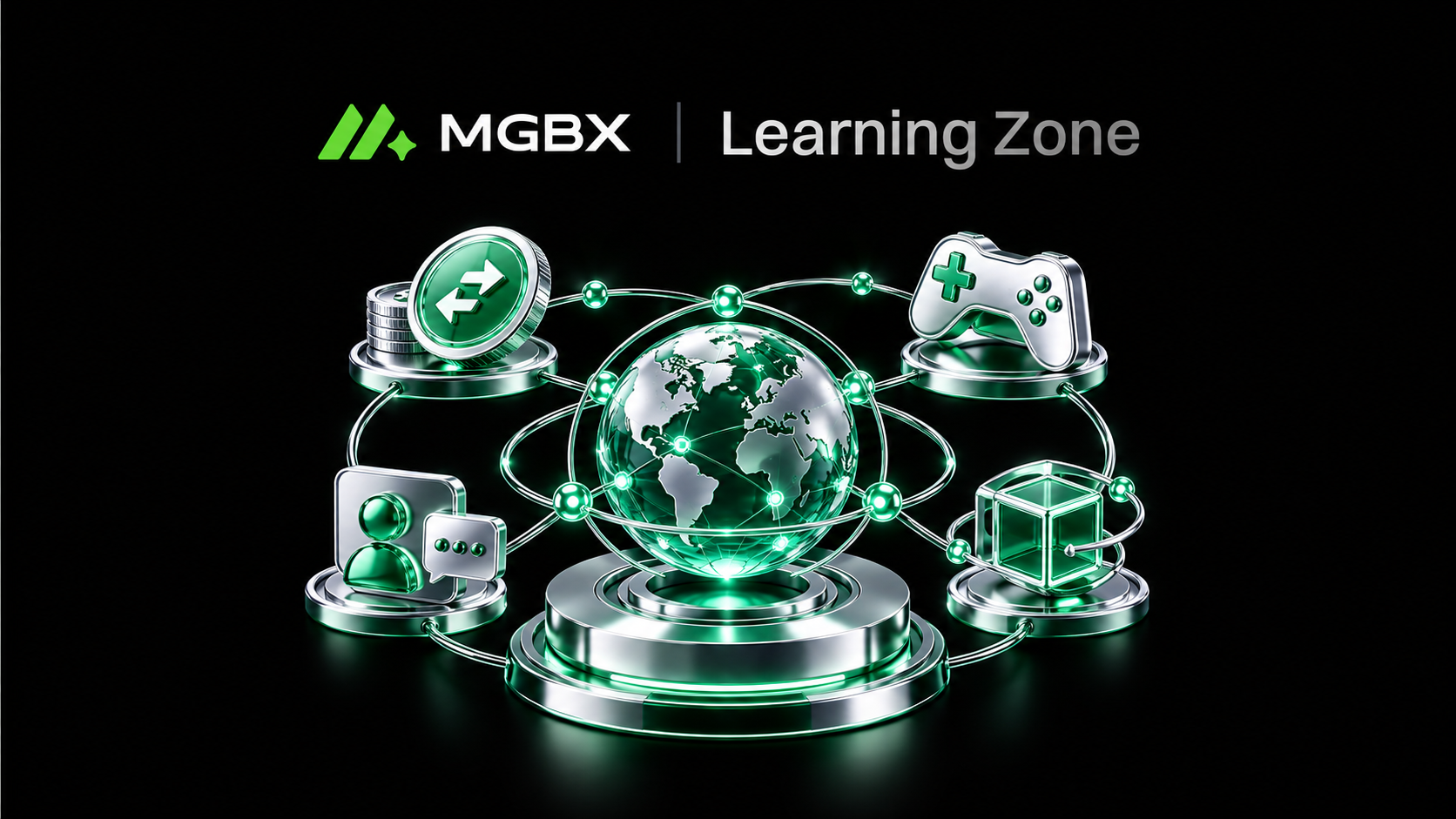
Web3 applications now span on-chain finance, gaming, social platforms, content creation, and virtual environments. DeFi uses smart contracts to provide trading and lending services; GameFi explores on-chain ownership of game assets; SocialFi aims to create portable social identities and new creator economy models; and the Metaverse combines digital identity, virtual assets, and interactive spaces. These innovations create new experiences, but they also come with smart contract, asset price, and project execution risks.
DeFi: Open On-Chain Financial Applications
DeFi stands for Decentralized Finance and is one of the most established Web3 use cases.
DeFi protocols use smart contracts to provide services such as token swaps, collateralized lending, stablecoins, payments, and liquidity management. Users can typically connect a wallet and interact directly with the protocol according to its rules.
Compared with traditional financial services, some DeFi rules and transaction records can be publicly verified, and different applications can often interact with one another. However, removing traditional intermediaries does not mean that there are no intermediating components at all. Front-end websites, oracles, cross-chain bridges, and governance multisigs can all affect how a protocol operates.
DeFi also does not guarantee stable returns. Smart contract vulnerabilities, liquidations, impermanent loss, oracle failures, and asset depegging can all result in losses. Ethereum describes DeFi as an open financial system built on blockchain technology that can support services such as lending, trading, and payments.
GameFi: Gaming Experiences and On-Chain Assets
GameFi combines Game and Finance and generally refers to games that integrate blockchain assets, NFTs, or token-based economic mechanisms.
In traditional games, characters, skins, and equipment are recorded in databases controlled by game companies. Some GameFi projects allow users to hold in-game assets through their wallets and transfer them through markets supported by the project. This model can improve asset verifiability, but it does not mean that game items automatically have value across different games. Each game has its own graphics, attributes, and economic system, and an NFT issued by one project usually cannot be used automatically in another game.
Early GameFi projects often emphasized Play-to-Earn. As the sector has evolved, a more sustainable approach has been to focus on gameplay first and then add on-chain features based on community and asset rules.
When evaluating a GameFi project, users should consider whether the game itself is sustainable, whether token issuance is reasonable, whether the contracts are secure, and whether the asset economy depends too heavily on new users.
SocialFi: Social Relationships and the Creator Economy
SocialFi combines Social and Finance and mainly explores decentralized social networks, content ownership, and creator monetization.
Traditional social platforms generally control user accounts, follower relationships, and recommendation algorithms. SocialFi aims to use wallets, open social graphs, and on-chain credentials to let users carry parts of their identity and social relationships across different applications. Creators may interact directly with supporters through digital memberships, paid content, on-chain subscriptions, or community credentials. Some applications also allow users to control account identifiers rather than relying entirely on a single platform login.
However, SocialFi also faces privacy and content governance challenges. Once social relationships are recorded publicly on-chain, they may be traceable over long periods. Token incentives can also encourage spam, fake engagement, or speculative behavior. Decentralized social networks are a type of dApp supported by blockchain or open protocols, but the level of decentralization can vary significantly between products, especially in identity, content storage, and governance.
Metaverse and Other Web3 Applications
The Metaverse generally refers to persistent and interactive digital environments. Web3 can provide virtual worlds with wallet-based identity, on-chain assets, and open economic tools, but the Metaverse is not the same as Web3 and does not always require blockchain technology.
In some Web3 Metaverse applications, users can manage virtual land, avatars, collectibles, and memberships. DeFi can provide payment tools, GameFi can provide interactive content, and SocialFi can support social relationships.
However, there is still no fully unified standard for assets and identities across different virtual worlds. So-called cross-metaverse interoperability usually requires technical and commercial cooperation between projects.
Beyond these areas, Web3 applications also include DAOs, NFTs, decentralized identity, prediction markets, supply chain records, and real-world asset tokenization. Before using a Web3 application, users should review wallet connection permissions, contract addresses, and the intended use of the asset. A project should not be assumed to have real value simply because it uses a popular Web3 concept.
Mastering the basics is the first step. Follow MGBX Academy to access more cryptocurrency educational resources and market opportunities.
The process for trading on MGBX:
Register a trading account and complete the necessary identity verification;
Deposit funds and select a trade type;
On the cryptocurrency trading page, enter the amount or quantity of the cryptocurrency you wish to purchase;
Confirm the order to complete the trade, and check that your assets have increased accordingly.
Further Readings:
What Is Web3: A Complete Guide to the Next Generation of the Internet