What Is Web3 Identity (DID): The Vision of Self-Sovereign Identity
Learn how Web3 identity and DIDs work, and understand the differences between decentralized identity, ENS, verifiable credentials, and SBTs.
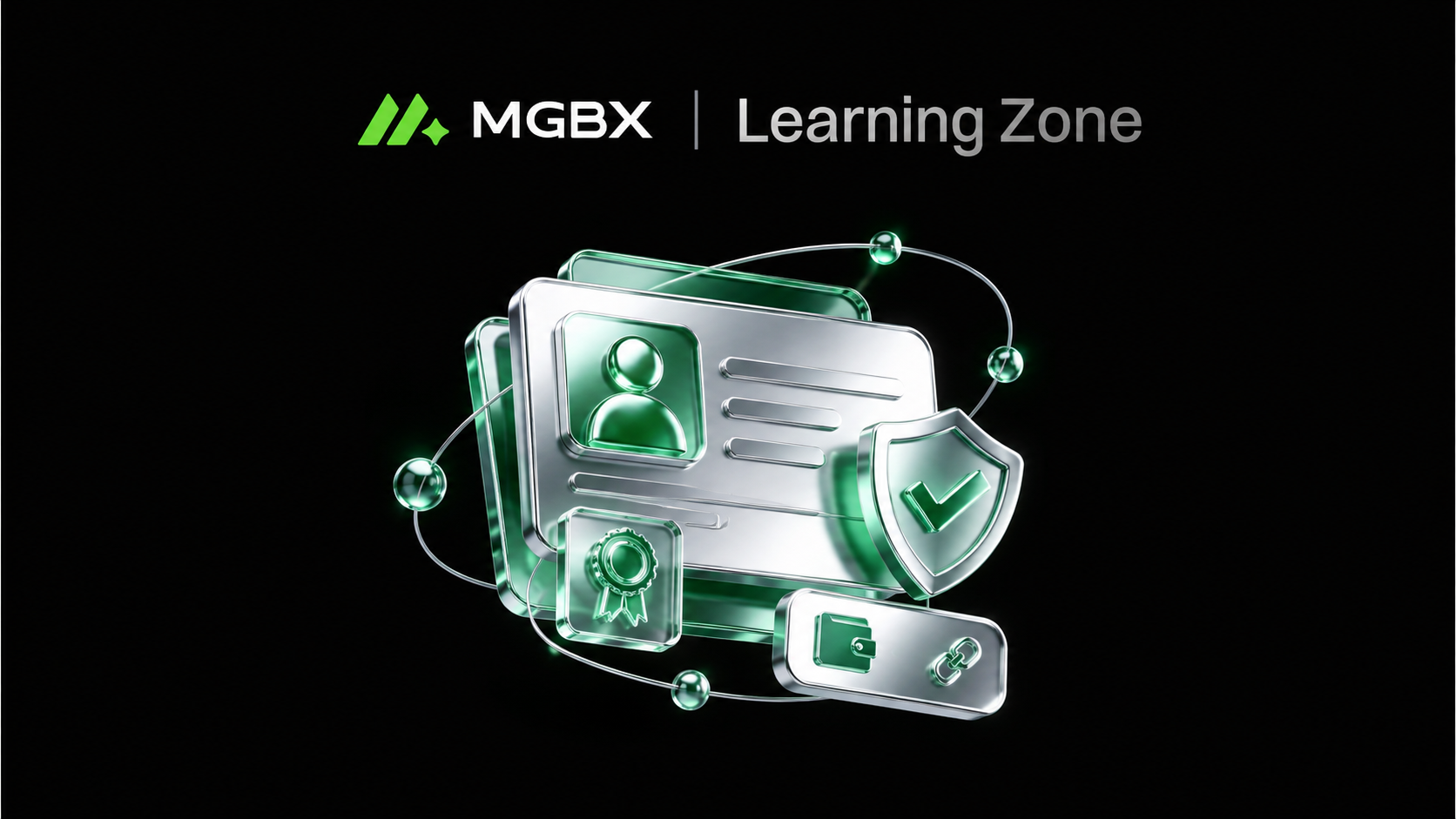
DIDs aim to let users manage digital identity through cryptographic identifiers and verifiable credentials instead of creating completely separate accounts on every platform. ENS can provide human-readable names for wallets and identities, while SBTs are a token concept designed to represent credentials or relationships that are not easily transferable. These technologies serve different purposes and do not automatically solve every identity problem. Privacy disclosure, credential trust, key recovery, and cross-platform compatibility remain key challenges for Web3 identity.
What Is a DID?
DID stands for Decentralized Identifier.
Unlike a username assigned by a platform, a DID can be controlled by an individual, organization, or device, with control proven through cryptographic methods. A DID is typically associated with a DID document that may include public keys, verification methods, and service endpoints. The W3C DID standard defines a common data model, core properties, resolution methods, and related operations for decentralized identifiers. One of its goals is to reduce reliance on a single centralized registry or identity provider.
However, a DID does not mean storing identity documents, home addresses, or personal information directly on a blockchain. Publishing sensitive information on a public network can create long-term privacy risks. In practice, systems usually record only the identifiers, status information, or verification materials that are necessary.
How Does Decentralized Identity Verify Information?
DIDs are often used together with verifiable credentials. A verifiable credential can be understood as a digital proof issued by a trusted entity and verified using cryptography. For example, a university may issue an education credential, a community may issue a membership credential, and an institution may issue proof of age or eligibility. Users can present the relevant credential when needed instead of repeatedly submitting their full personal information.
The key idea is not to let users simply claim any identity they want. Instead, it allows a verifier to check who issued the credential, whether it has been altered, and whether it is still valid.
Self-sovereign identity also does not mean trusted institutions are no longer needed. Degrees, employment records, and professional qualifications still need to be issued by credible organizations. DID mainly changes how identifiers are controlled, how credentials are stored, and how information is disclosed. It does not eliminate real-world trust relationships.
How Are ENS and SBTs Related to DID?
ENS stands for Ethereum Name Service and can map complex wallet addresses to easier-to-read names such as name.eth.
ENS can act as a public naming layer for Web3 identity. Users can associate an ENS name with a wallet address, avatar, website, or other public records, and display a consistent identity across applications that support ENS. However, ENS mainly solves naming and resolution. It is not the same as a complete DID framework. Owning a .eth name does not automatically prove a user’s real name, occupation, or creditworthiness.
SBT stands for Soulbound Token and generally refers to an on-chain token that cannot be freely transferred or has restricted transferability. It may be used to represent course completion, community contributions, or certain types of membership. SBTs are currently closer to a design concept than a globally standardized identity system. Recording education history, credit scores, or sensitive identity information publicly as SBTs may also create risks such as privacy exposure, profiling, and difficulty correcting inaccurate credentials.
What Challenges Does Web3 Identity Still Face?
DID-based identity systems still need to address four major challenges:
Key recovery:
If users lose the device or key that controls their identity, there needs to be a reliable recovery method without turning the recovery process itself into an attack vector.Cross-platform compatibility:
Different DID methods, wallets, and applications need common standards so the same identity and credentials can be recognized across multiple services.Privacy:
Users should be able to disclose only the information necessary for verification instead of exposing their entire on-chain history.Credential governance:
Systems need clear rules for who can issue credentials, how credentials can be revoked, how errors can be corrected, and what happens if an identity is compromised.
The real value of DID is not to create a permanently public personal profile. It is to give users more precise control over what they prove, to whom, and when.
Mastering the basics is the first step. Follow MGBX Academy to access more cryptocurrency educational resources and market opportunities.
The process for trading on MGBX:
Register a trading account and complete the necessary identity verification;
Deposit funds and select a trade type;
On the cryptocurrency trading page, enter the amount or quantity of the cryptocurrency you wish to purchase;
Confirm the order to complete the trade, and check that your assets have increased accordingly.
Further Readings:
What Is Web3: A Complete Guide to the Next Generation of the Internet
Web1 → Web2 → Web3: The Three Stages of Internet Evolution