5 Real-World Asset Tokenization Projects and Infrastructure Explained
What is RWA? Learn how real-world asset tokenization works and explore representative projects and infrastructure providers including Ondo, Securitize, Centrifuge, Polymesh, and Chainlink.
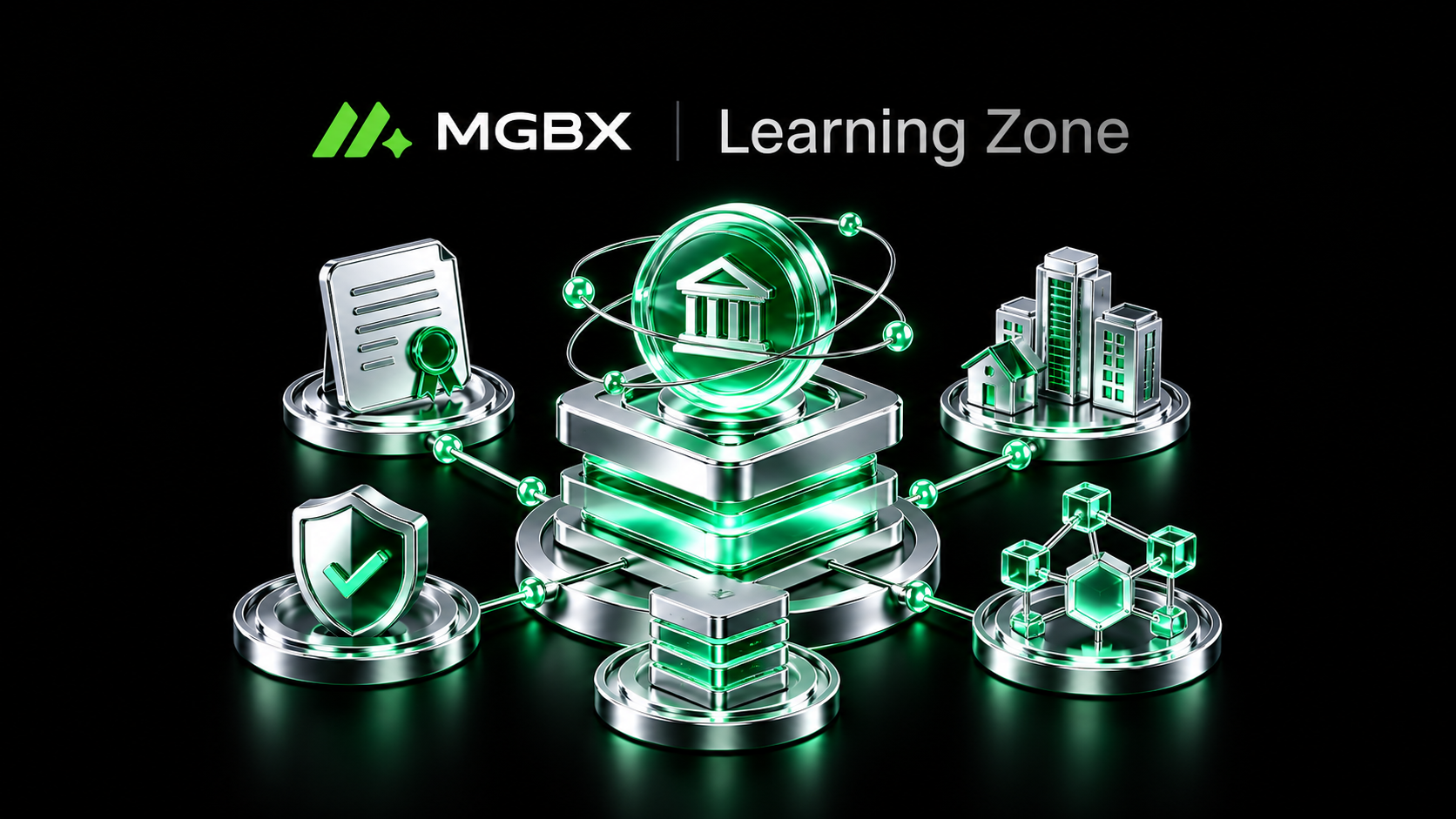
RWA stands for Real World Assets and generally refers to bringing off-chain assets or economic rights—such as government bonds, funds, private credit, equity-linked exposure, and real estate—onto blockchain networks through tokens. The real challenge of RWA is not simply issuing a token. It is ensuring that legal ownership, custody, valuation, investor eligibility, off-chain data, and redemption mechanisms all match the token’s stated rights. Projects such as Ondo, Securitize, and Centrifuge focus on issuance, compliance, and asset management, while Polymesh and Chainlink provide blockchain, data, and interoperability infrastructure.
RWA: Turning Real-World Assets Into Tokens?
RWA, or Real World Assets, generally refers to digital representations on blockchain networks of assets and economic rights that originate in traditional finance or the real economy. These can include U.S. Treasuries, fund shares, private credit, equity-linked exposure, real estate, and commodities.
However, putting an asset on-chain involves far more than creating an ERC-20 token. A complete tokenization process may also require identifying the underlying asset, establishing an issuer or legal vehicle, arranging custody, defining the rights represented by the token, verifying investor eligibility, and setting rules for issuance, transfer, and redemption.
Most importantly, an RWA token does not necessarily represent direct ownership of the underlying asset. Ondo, for example, states that Ondo Stocks provide holders with economic exposure to underlying securities, while the tokens themselves are not shares, ETFs, or ADRs. USDY similarly provides economic exposure linked to short-term U.S. Treasuries but does not mean the holder directly owns those Treasury securities. Different products may also be subject to geographic or investor eligibility restrictions.
For this reason, evaluating an RWA product should begin with its legal structure and product documentation, rather than the name of the underlying asset alone.
5 Representative RWA Projects
Ondo Finance focuses on on-chain traditional financial products such as Tokenized Treasuries and Ondo Stocks. Its OUSG product provides eligible institutions and investors with exposure linked to short-term U.S. Treasuries, while access requirements vary by product and jurisdiction.
Securitize functions more like an end-to-end tokenization and securities infrastructure provider. BlackRock’s BUIDL fund, for example, uses Securitize for services including tokenization and transfer agency. By 2026, Securitize had continued expanding BUIDL’s connections to on-chain liquidity and collateral use cases.
Centrifuge provides on-chain asset management and tokenization infrastructure for funds, credit, and other financial products. Through standardized vaults and a multichain architecture, it connects traditional asset management with DeFi. Its official documentation shows how the platform supports financial institutions in creating on-chain products.
Polymesh is a blockchain specifically designed for regulated assets and capital markets, with identity, compliance, asset management, and settlement features built directly into the protocol.
Chainlink is not an issuer of real-world assets, but it addresses another major RWA challenge: blockchains cannot independently know off-chain asset prices, reserve balances, or other real-world data. Chainlink Proof of Reserve, data services, and cross-chain infrastructure can support reserve verification, pricing, and interoperability for certain tokenized assets.
These five projects operate at different layers of the RWA value chain, so they should not be treated as the same type of project or ranked solely by token market capitalization.
Potential Value and Risks of RWA
The potential value of RWA lies in giving traditional assets new ways to be issued, recorded, transferred, collateralized, and settled digitally. By 2026, BlackRock’s BUIDL had continued expanding into on-chain liquidity and institutional collateral use cases, suggesting that tokenized Treasuries have moved beyond the purely conceptual stage.
However, tokenization does not automatically increase the value of an asset, nor does it turn traditional assets into risk-free DeFi yield products. RWA products may still involve underlying credit risk, issuer risk, custody risk, legal ownership issues, investor eligibility restrictions, oracle risk, smart contract risk, redemption constraints, and secondary-market liquidity risk.
It is also important to distinguish between RWA asset tokens and governance or ecosystem tokens issued by RWA-related projects. Buying ONDO, POLYX, or another ecosystem token does not mean directly buying U.S. Treasuries, fund shares, or real estate. In other words, the key questions are whether the underlying asset actually exists, what legal rights the token represents, and whether holders can redeem it under clearly defined rules.
FAQ
Does an RWA token mean I directly own the real-world asset?
Not necessarily. A token may represent fund shares, debt claims, income rights, economic exposure, or other rights depending on the product’s legal structure and offering documents.Why do some RWA products require KYC?
Some RWA products involve securities, funds, or other regulated financial instruments, so issuers may need to verify identity and investor eligibility based on jurisdiction and investor type.Does buying a project token such as ONDO mean I am buying U.S. Treasuries?
No. Ecosystem or governance tokens are different assets from the tokenized Treasury products offered by the platform.Do RWA tokens always have high liquidity?
No. Tokenization may improve transfer and settlement efficiency, but actual liquidity still depends on market participation, trading restrictions, and redemption mechanisms.What should investors look at when researching RWA projects?
Start with the underlying asset, legal ownership structure, issuer, custodian, investor eligibility, valuation data, redemption terms, smart contracts, and secondary-market liquidity.
Mastering the basics is the first step. Follow MGBX Academy to access more cryptocurrency educational resources and market opportunities.
The process for trading on MGBX:
Register a trading account and complete the necessary identity verification;
Deposit funds and select a trade type;
On the cryptocurrency trading page, enter the amount or quantity of the cryptocurrency you wish to purchase;
Confirm the order to complete the trade, and check that your assets have increased accordingly.