What Are Smart Contracts? Understanding the Idea of Code as Law
What are smart contracts? Learn how smart contracts execute on Ethereum and how they relate to the EVM, Gas, DeFi, DApps, and smart contract security.
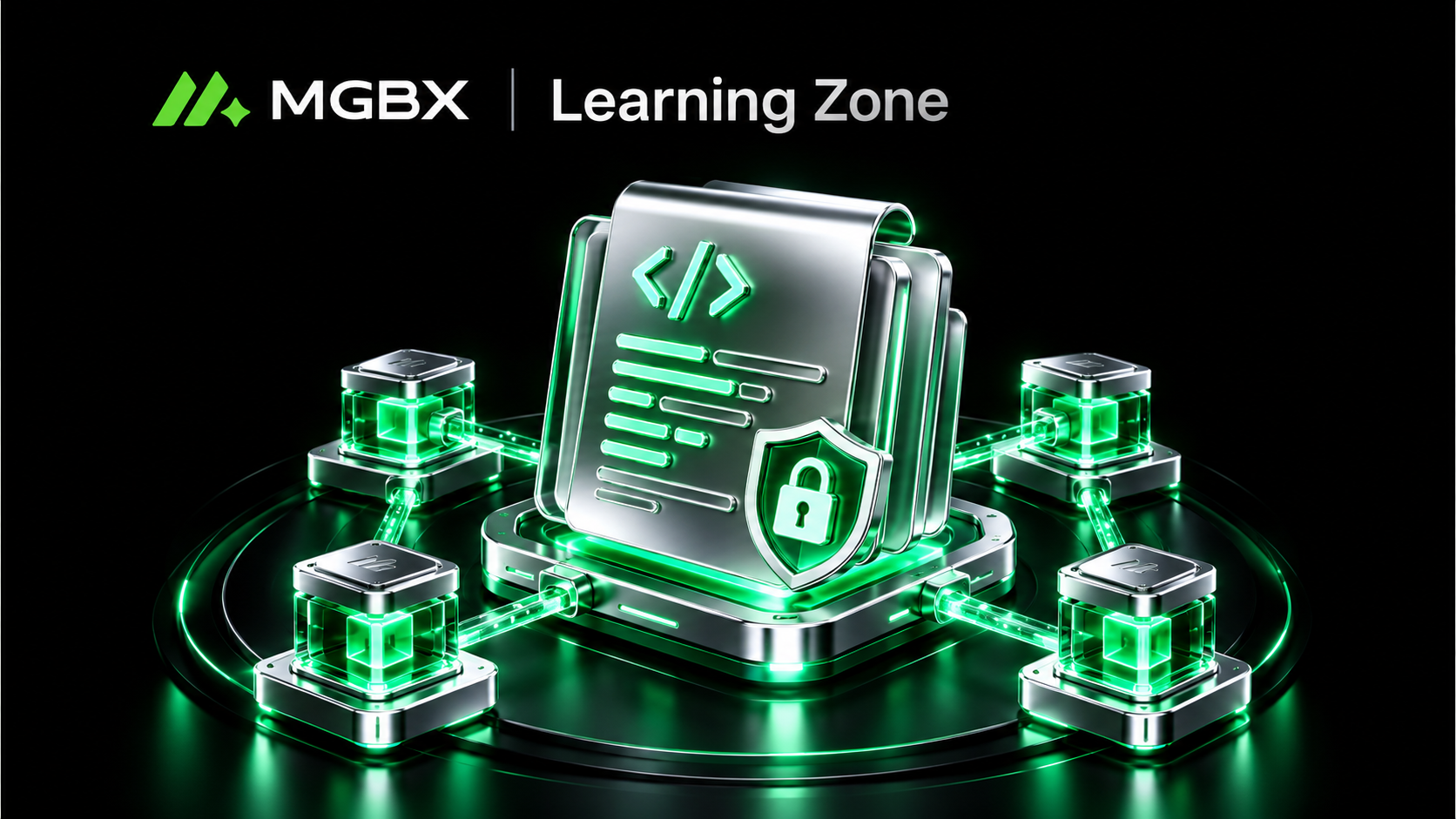
Smart contracts are programs deployed on a blockchain that process transactions and update network state according to predefined rules. Ethereum is one of the best-known smart contract platforms, and DeFi, NFTs, DAOs, and many DApps rely on smart contracts for on-chain operations. However, “code is law” is better understood as a concept describing automated execution rather than an absolute rule. Smart contracts can still contain software bugs, administrative permissions, oracle dependencies, and governance risks.
What Is a Smart Contract?
A smart contract is not an electronic contract that automatically understands legal language. It is program code that runs on a blockchain.
Ethereum officially describes smart contracts as programs that run on the Ethereum blockchain. They consist of code and state, have their own on-chain addresses, and can be called by users through transactions.
For beginners, a smart contract can be compared to a digital vending machine.
A vending machine follows predefined rules: once a user inserts the required amount and selects an item, the machine performs the programmed action. Smart contracts work in a similar way. Developers define the rules in advance, and when users or other contracts provide the required inputs, the network executes the corresponding logic.
This automation can reduce reliance on manual approval and certain intermediaries. However, smart contracts generally still need to be triggered by a user transaction, another contract call, or an external service. They do not simply run by themselves under all circumstances.
Why Did Ethereum Make Smart Contracts Widely Used?
One of Ethereum’s key features is its general-purpose programmable blockchain environment.
Developers can write smart contracts using languages such as Solidity and Vyper and then deploy them to Ethereum. Deployment itself is an on-chain transaction and requires Gas. The Ethereum Virtual Machine, or EVM, allows network nodes to execute contract code according to the same rules.
This programmability allows blockchains to do more than process simple asset transfers. DeFi protocols can use smart contracts for swaps, lending, and liquidity rules. NFT contracts can manage token minting and ownership, while DAOs can use smart contracts to execute certain voting and treasury management functions.
Another important feature is composability. Ethereum smart contracts can interact with other contracts, allowing developers to build new applications on top of existing protocols. Ethereum documentation often compares this open contract ecosystem to interoperable APIs.
Can Smart Contracts Really Execute Automatically?
Smart contracts can automatically execute code, but they can only use information available within the blockchain environment.
For example, a contract can directly check how many tokens a wallet holds. However, if it needs information such as a stock price, weather result, or sports score from the real world, it cannot verify that information on its own. These applications generally rely on oracles to bring off-chain data into the smart contract environment.
Ethereum also notes that smart contracts cannot directly access real-world data and typically require oracles for external information.
Automated execution therefore means that once the contract receives valid inputs, network nodes execute predefined logic deterministically. It does not mean that the contract has autonomous judgment similar to artificial intelligence.
Does “Code Is Law” Mean Smart Contracts Are Always Trustworthy?
“Code is Law” is often used to describe how blockchain systems execute rules written in software, but it should not be interpreted as meaning that code is always correct.
Smart contracts are still written by people and can contain logic errors, permission vulnerabilities, economic design flaws, or risks created through interactions with other contracts.
Ethereum documentation notes that smart contracts generally cannot simply be deleted, while on-chain interactions are often difficult or impossible to reverse. This is one reason smart contract development places strong emphasis on security.
At the same time, not every smart contract is permanently fixed after deployment. Some applications use proxy contracts or upgrade mechanisms that allow authorized governance entities to replace or modify execution logic.
Evaluating a smart contract therefore requires more than checking whether the code has been audited. Users should also understand administrator permissions, upgrade mechanisms, oracle sources, external dependencies, and the protocol’s operating history.
The main value of smart contracts is not that they eliminate all forms of trust. Instead, they convert part of a business process into publicly verifiable program logic that can execute automatically within a blockchain environment. This is why smart contracts have become a key part of Ethereum, DeFi, and the broader Web3 ecosystem.
FAQ
What is a smart contract?
A smart contract is a program deployed on a blockchain that can execute transactions or update on-chain state according to predefined code and input conditions.Do smart contracts execute automatically?
They can execute automatically according to their code, but they usually still require a user transaction, another contract call, or another triggering condition.What is the relationship between Ethereum and smart contracts?
Ethereum provides a programmable blockchain environment where developers can deploy and execute smart contracts through the EVM to build DeFi, NFT, and other DApps.Are smart contracts secure?
Security depends on code quality, permission design, oracles, external dependencies, and the underlying network. Smart contracts can contain vulnerabilities, so deployment on a blockchain does not make them automatically safe.What does “Code is Law” mean?
It emphasizes that smart contracts execute according to coded rules rather than ad hoc human decisions. However, real-world law, governance, security considerations, and upgrade mechanisms can still affect applications, so the phrase is better understood as a principle rather than an absolute rule.
Mastering the basics is the first step. Follow MGBX Academy to access more cryptocurrency educational resources and market opportunities.
The process for trading on MGBX:
Register a trading account and complete the necessary identity verification;
Deposit funds and select a trade type;
On the cryptocurrency trading page, enter the amount or quantity of the cryptocurrency you wish to purchase;
Confirm the order to complete the trade, and check that your assets have increased accordingly.
Further Readings:
What Is Blockchain? How It Works and Core Concepts Explained
What Is a Blockchain Fork? Soft Forks vs. Hard Forks Explained
Consensus Mechanisms for Beginners: How Blockchains Reach Agreement