Web3 Domains: The Value and Use of ENS and .eth
Learn how ETH domains and ENS work, how to register and renew an ENS name, how .eth names can be used for identity, and the main risks of Web3 domain trading.
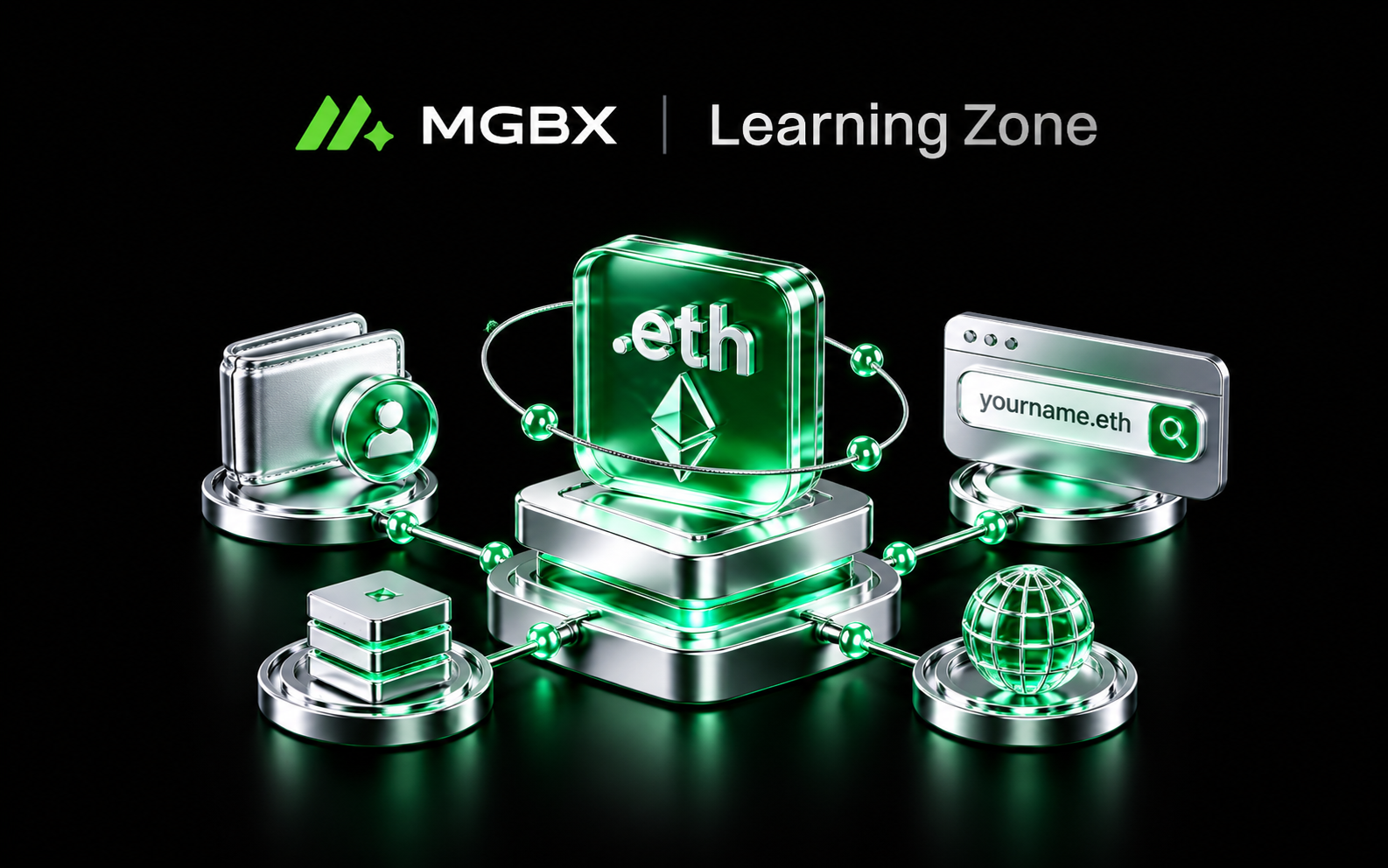
ENS simplifies complex blockchain addresses by mapping them to human-readable names. Users can link a .eth name to a wallet address, profile, or decentralized website. ETH domains can be used for receiving funds and displaying Web3 identity, but they are not permanently free assets and must be renewed while the controlling wallet remains secure. Domain names may also have market value, but prices depend on real demand, branding potential, and market conditions. A short name does not guarantee appreciation.
What Are ENS and ETH Domains?
ENS stands for Ethereum Name Service.
Blockchain wallet addresses are usually long strings of letters and numbers that can be difficult to remember and verify. ENS allows users to map these complex addresses to human-readable names such as name.eth. When a user enters an ETH domain in an ENS-compatible wallet, the system resolves the name to the corresponding blockchain address.
ENS serves a similar purpose to the traditional Domain Name System, or DNS, by making complex network resources easier to access through readable names. However, ENS registration, resolution, and ownership management are handled mainly through Ethereum smart contracts.
In addition to Ethereum addresses, ENS names can also be linked to other blockchain addresses, avatars, text records, and content identifiers. The exact functionality depends on whether the wallet or application supports those records.
What Are ETH Domains Used For?
The most direct use of an ETH domain is to simplify crypto payments. Compared with copying and pasting a full wallet address, a clear .eth name is easier to display, remember, and enter.
ENS can also be part of a Web3 identity. Users can set an ENS name as their primary wallet name, allowing compatible applications to display name.eth instead of a full 0x address.
For individuals, communities, and projects, ETH domains can also support branding and subdomain management. For example, after registering brand.eth, a project could create names such as pay.brand.eth or member.brand.eth for different purposes.
However, ENS does not completely eliminate transfer errors. Attackers may register names with similar spellings or use malicious websites to display misleading information. Before sending funds, users should still verify the ENS name, the resolved wallet address, and the recipient information.
An ENS name also does not automatically prove that the person or organization behind it is legitimate. A domain that looks like a brand name does not necessarily mean it is officially controlled by that brand.
How Do ENS Registration and Renewal Work?
Before registering an ENS name, users need an Ethereum-compatible wallet and enough ETH to cover both the registration fee and network Gas fees.
The basic process usually involves opening the verified ENS management app, searching for an available name, selecting a registration period, reviewing the cost, and submitting the transaction through a wallet. After registration, users can configure address records, a primary name, and other public profile information.
.eth names are generally registered for a specific period rather than purchased permanently with a one-time payment. Users need to renew the name before expiration or risk losing it after the applicable grace period.
According to ENS documentation, .eth registration and renewal are managed through controller contracts, while name ownership and transfers are handled through registry-related contracts.
Even though the ENS protocol is designed to reduce the risk of arbitrary name removal, users can still lose control of a domain if they lose access to the wallet’s private key or fail to renew the name in time.
Is Web3 Domain Trading Worth Considering?
Some users participate in Web3 domain trading by buying and selling ETH domains with specific meanings or perceived demand. Market prices may be influenced by name length, word meaning, number combinations, branding potential, and overall market interest.
Short names are limited in supply, but scarcity does not guarantee stable value. A three- or four-character domain may still remain unsold for a long time if there is little real demand.
Before participating in domain trading, users should carefully inspect the characters in the name to avoid confusion caused by capitalization, lookalike letters, or special characters. It is also important to check the remaining registration period, renewal costs, seller control, and the smart contracts used by the trading platform.
Registering a name that closely resembles another party’s trademark may also create trademark or impersonation risks. For personal use, choosing a name that is easy to recognize and relevant to a long-term identity is generally more practical than chasing short-term naming trends.
Mastering the basics is the first step. Follow MGBX Academy to access more cryptocurrency educational resources and market opportunities.
The process for trading on MGBX:
Register a trading account and complete the necessary identity verification;
Deposit funds and select a trade type;
On the cryptocurrency trading page, enter the amount or quantity of the cryptocurrency you wish to purchase;
Confirm the order to complete the trade, and check that your assets have increased accordingly.
Further Readings:
What Is Web3: A Complete Guide to the Next Generation of the Internet
The Web3 Technology Stack: Explained in 5 Minutes
The Next Generation of Web3 Wallets: MPC Wallets and AA Smart Contract Wallets Explained