What Is a Block? A Deep Dive Into Blockchain Block Structure
What is a block? Learn about block structure, block headers, block bodies, Merkle trees, timestamps, and previous block hashes to understand how blockchains organize transaction data.
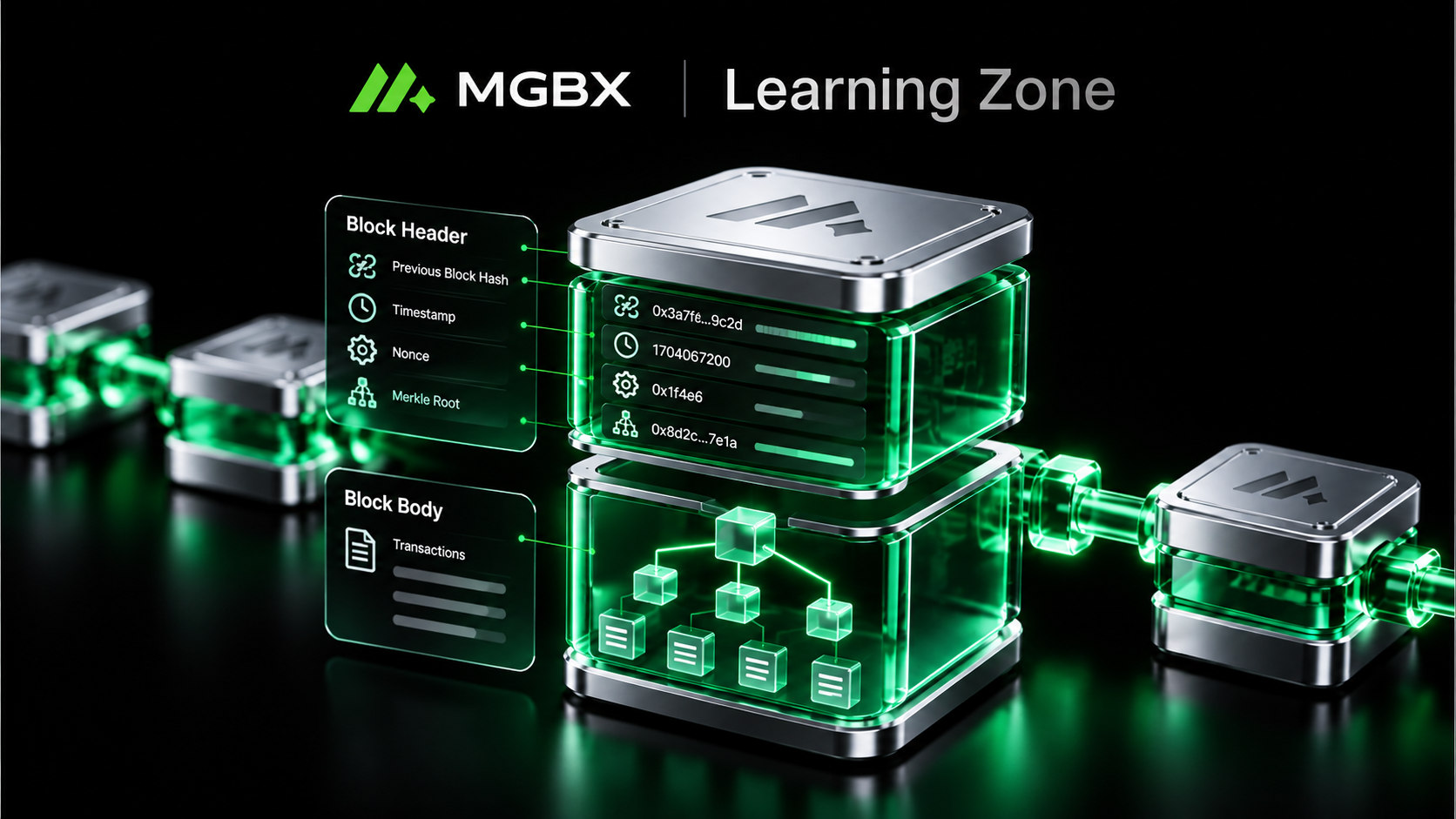
A block is an important unit used by blockchains to organize transactions and network data. In Bitcoin, a block can generally be understood as consisting of a block header and transaction data. The block header includes fields such as the previous block hash, Merkle Root, timestamp, and Proof of Work-related data. Since different blockchains do not use exactly the same block structure, it is important to distinguish between general concepts and protocol-specific implementations when learning about block headers, block bodies, and Merkle trees.
What Is a Block?
A block is an important data unit used by blockchain networks to organize and store information. For beginners, a block can be thought of as a page in a digital ledger. A group of transactions that meet the protocol requirements is organized into a new block, which is then linked to the existing blockchain history according to network rules.
However, blocks are not limited to storing simple transfer records. Depending on the blockchain, a block may also contain smart contract execution results, network state information, and other data required by the protocol.
This means block structure can vary significantly between networks. Bitcoin and Ethereum both organize network history into blocks, but the specific fields and protocol designs they use are different.
What Are the Block Header and Block Body?
When explaining block structure, the terms block header and block body are commonly used.
In Bitcoin, the block header contains fields such as the version, previous block hash, Merkle Root, timestamp, difficulty-related target data, and Nonce. These fields help nodes verify the block and its relationship with earlier blocks.
The remaining part of the block mainly contains the transaction count and the actual transaction data, which can be broadly described as the block body in beginner-friendly explanations.
A simple way to understand the distinction is that the block header mainly contains metadata used to verify and link blocks, while the block body mainly contains transaction and other network data.
It is important to note that this description is most useful for understanding Bitcoin and similar classic block structures. It should not be applied directly to every blockchain. Modern Ethereum blocks, for example, include information related to both the execution and consensus layers.
What Do Merkle Trees and the Merkle Root Do?
A Merkle tree is a data structure that organizes information through multiple layers of hashing.
In Bitcoin, transactions within a block are hashed and then combined through successive layers until a single Merkle Root is produced. This root value is stored in the block header.
One of the main advantages of a Merkle tree is that it enables efficient proofs of transaction inclusion. If a verifier already has trusted block header information, a Merkle path can be used to prove that a particular transaction belongs to a block’s transaction set without requiring every transaction in that block during the verification process.
The Merkle Root can therefore be understood as a cryptographic commitment to the group of transactions contained in a block. If the underlying transaction data changes, the related hash path and final Merkle Root will generally change as well.
Why Are the Previous Block Hash and Timestamp Important?
The previous block hash is one of the key elements that helps create the blockchain’s continuous chain structure.
Each new block records hash-related information from the preceding block, creating a cryptographic relationship between them. If an earlier block is modified, its hash may also change, which can disrupt the links originally established by later blocks.
A timestamp provides time-related information required by the protocol. However, it should not be treated as a perfectly accurate or tamper-proof real-world clock. Different blockchains use different rules and acceptable ranges for timestamp validation.
The integrity of blockchain history also does not depend on the previous block hash alone. Nodes must verify that each block follows protocol rules, while the consensus mechanism determines which valid history the network accepts.
Once the concepts of the block header, block body, Merkle tree, timestamp, and previous block hash are clear, the name “blockchain” becomes easier to understand: the network organizes data into blocks and connects them through cryptographic relationships and consensus rules to create a continuous, verifiable history.
FAQ
What is a block?
A block is a data unit used by a blockchain to organize transactions and other network information. New blocks are connected to existing blockchain history according to protocol rules.What information is included in a block header?
In Bitcoin, the block header includes the version, previous block hash, Merkle Root, timestamp, difficulty-related fields, and Nonce.What is a block body?
The block body generally refers to the part of a block that contains the main transaction data. Its exact structure varies across blockchains.What is the purpose of a Merkle tree?
A Merkle tree organizes transaction data through layered hashing and allows systems to efficiently prove whether a transaction belongs to a specific transaction set.Can a timestamp prove the exact time of a transaction?
Not necessarily. A timestamp is a time-related protocol field, and different blockchains have their own validation rules and accuracy requirements.
Mastering the basics is the first step. Follow MGBX Academy to access more cryptocurrency educational resources and market opportunities.
The process for trading on MGBX:
Register a trading account and complete the necessary identity verification;
Deposit funds and select a trade type;
On the cryptocurrency trading page, enter the amount or quantity of the cryptocurrency you wish to purchase;
Confirm the order to complete the trade, and check that your assets have increased accordingly.
Further Readings:
What Is Blockchain? How It Works and Core Concepts Explained
How Does Blockchain Work? From Transaction Creation to Confirmation
How to Check a Blockchain Transaction: Blockchain Explorer and TXID Guide