The Blockchain Trilemma
What is the blockchain trilemma? Learn about the trade-offs between decentralization, security, and scalability, and how Layer 2 helps scale blockchain networks.
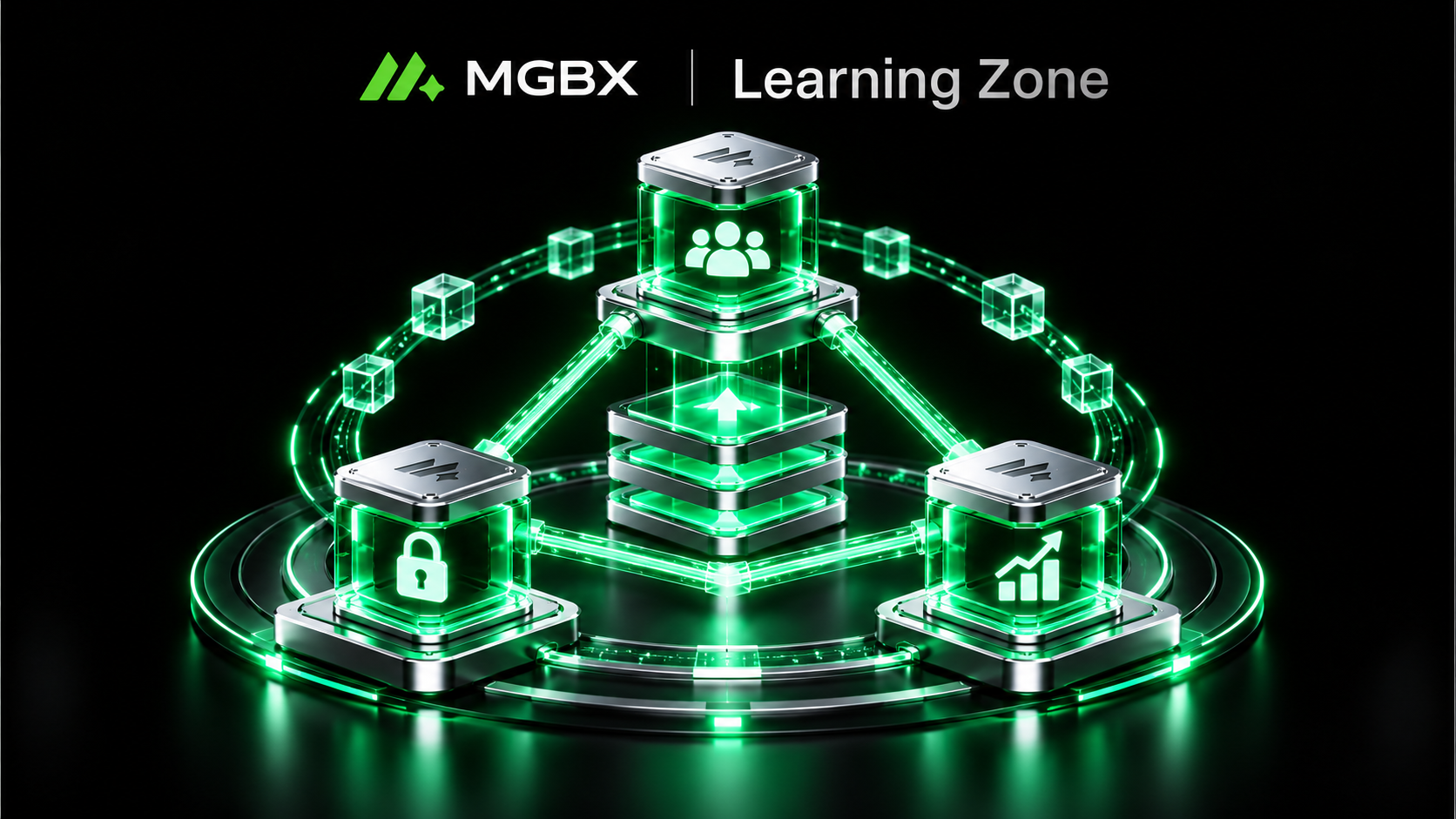
The blockchain trilemma describes the engineering trade-offs between decentralization, security, and scalability. Open blockchains aim to maintain broad node participation and strong network security, but a single base layer can process only a limited amount of data and computation. Layer 2 solutions move part of transaction execution and batch processing outside the base layer, while still relying on Layer 1 for settlement, data availability, or verification. This approach aims to increase network capacity while preserving as much of the underlying security model as possible.
What Is the Blockchain Trilemma?
The blockchain trilemma refers to the trade-offs between three major goals: decentralization, security, and scalability.
Decentralization: focuses on whether many independent participants can verify network data rather than control being concentrated among a small number of entities.
Security: focuses on whether the network can resist double spending, malicious blocks, chain reorganizations, and other attacks.
Scalability: focuses on how many users, transactions, data, and computations the network can handle.
The blockchain trilemma should not be treated as a mathematically proven law. It is better understood as an engineering framework for analyzing blockchain architecture. Ethereum’s current Layer 2 documentation also discusses the Blockchain Trilemma in terms of decentralization, security, and scalability.
For this reason, saying that “every blockchain can only choose two out of three” is an oversimplification. Modern networks use layered architectures, parallel execution, data availability solutions, and other technologies to improve the balance between these goals.
Why Can Higher Performance Affect Decentralization?
Suppose a blockchain wants to significantly increase the number of transactions it can process each second. One simple approach is to increase block capacity, shorten block times, and require nodes to use more powerful computing and networking hardware.
This may improve throughput, but it also increases the cost of running a fully validating node.
If validators need expensive servers, large amounts of storage, and high-speed bandwidth, fewer participants may be able to operate nodes independently. Validation power may then become more concentrated among professional operators.
By contrast, if a network wants ordinary users to participate with relatively modest hardware, it needs to limit how much data and computation each node must process. That can reduce the transaction throughput the base layer can support directly.
The trilemma therefore highlights the real engineering costs between performance, security, and participation requirements rather than suggesting that the blockchain with the highest TPS is automatically the most advanced.
Why Has Layer 2 Become an Important Scaling Approach?
The core idea behind Layer 2 is that the base layer does not need to execute every transaction directly.
Using Ethereum as an example, Layer 1 continues to provide underlying consensus, security, and settlement, while some Layer 2 networks process transactions in batches and then submit relevant data, proofs, or state results back to Ethereum.
Ethereum currently defines Layer 2 as independent blockchains that extend Ethereum and identifies Optimistic Rollups and ZK Rollups as major approaches. Their goal is to use Ethereum as a security and data availability foundation while reducing transaction costs and increasing capacity.
A simple way to understand this architecture is:
Layer 1 provides a trusted settlement foundation, while Layer 2 handles more everyday transaction activity.
This avoids requiring every Layer 1 node to process an unlimited amount of growing computation.
Can Layer 2 Completely Solve the Blockchain Trilemma?
Layer 2 is an important scaling approach, but it does not eliminate every engineering trade-off.
Different Layer 2 networks may use different designs for transaction sequencing, data availability, proof systems, cross-chain bridges, and administrative controls. Ethereum also notes that Layer 2 solutions can differ in technical maturity and trust assumptions, so using the “Layer 2” label does not automatically mean that every network has the same security profile as Ethereum mainnet.
Sidechains, Validiums, and Rollups should not be treated as identical either. Some systems use independent validators or store data outside the main chain, resulting in different security models.
The key to understanding Layer 2 is therefore not simply asking how many times it can increase TPS, but understanding how layered architectures redistribute execution, data, proof, and settlement responsibilities.
Ultimately, the blockchain trilemma shows that different networks make different design choices between competing goals, while Layer 2 gives developers more flexibility in how those goals are combined.
FAQ
What is the blockchain trilemma?
It is a framework for analyzing the engineering trade-offs between decentralization, security, and scalability in blockchain networks.Can a blockchain only achieve two of the three goals?
Not necessarily. The trilemma mainly highlights the trade-offs between the three, while modern blockchains use Layer 2 and modular architectures to improve the balance.What is Layer 2?
Layer 2 refers to scaling networks or protocols built on top of a base blockchain that process part of the transaction workload while relying on Layer 1 for settlement or security verification.Are Rollups considered Layer 2?
In the Ethereum ecosystem, Optimistic Rollups and ZK Rollups are among the most important Layer 2 scaling approaches.Are all Layer 2 networks as secure as Ethereum?
No. Different Layer 2 networks have different levels of technical maturity, data availability models, bridge designs, and administrative controls, so their security and trust assumptions need to be evaluated separately.
Mastering the basics is the first step. Follow MGBX Academy to access more cryptocurrency educational resources and market opportunities.
The process for trading on MGBX:
Register a trading account and complete the necessary identity verification;
Deposit funds and select a trade type;
On the cryptocurrency trading page, enter the amount or quantity of the cryptocurrency you wish to purchase;
Confirm the order to complete the trade, and check that your assets have increased accordingly.
Further Readings:
What Is Blockchain? How It Works and Core Concepts Explained
What Is a Blockchain Fork? Soft Forks vs. Hard Forks Explained
Consensus Mechanisms for Beginners: How Blockchains Reach Agreement
The Blockchain TrilemmaWhat Are Smart Contracts? Understanding the Idea of Code as Law