Distributed Ledger Technology: The Foundation of Blockchain
What is distributed ledger technology? Learn about DLT, decentralized databases, nodes, consensus, and the relationship between distributed ledgers and blockchain.
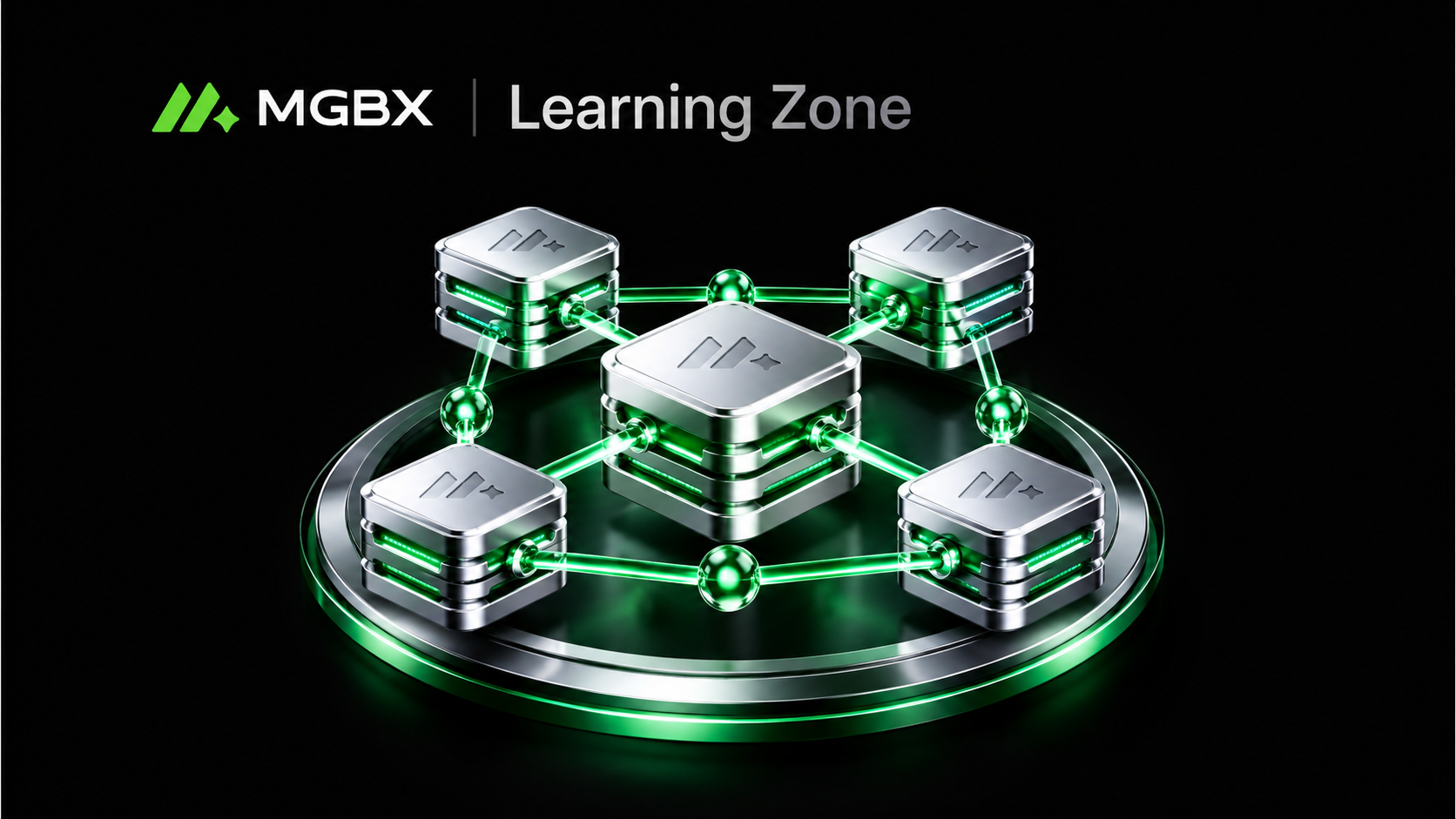
Distributed Ledger Technology, or DLT, is a data architecture that allows multiple network participants to store, verify, and synchronize records. Blockchain is one of its most common implementations. The key difference between DLT and a traditional centralized database is not simply that data is stored across multiple nodes, but also who has the authority to update records, how nodes verify transactions, and how the network agrees on a valid state. Understanding distributed ledgers, decentralized databases, and consensus is an important foundation for learning about blockchain, Bitcoin, Ethereum, and Web3.
What Is Distributed Ledger Technology, and How Is It Different From Blockchain?
Distributed Ledger Technology, or DLT, is a technical architecture that allows computers in different locations to participate in recording, validating, and synchronizing data. The BIS describes DLT as a set of protocols and supporting infrastructure that enables computers in different locations to propose and validate transactions and update network records in a synchronized manner.
Blockchain is a common form of distributed ledger technology, but the two terms are not interchangeable. In a blockchain, transactions or other data are typically organized into blocks according to protocol rules, and those blocks are cryptographically linked to the historical record. NIST describes blockchain as a distributed digital ledger with tamper-resistant and tamper-evident characteristics.
DLT can therefore be understood as the broader category, while blockchain is one specific architecture within it. Not every distributed ledger must use a “block + chain” structure, and not every DLT network is fully open. Some are permissionless networks that allow broad participation, while others are permissioned networks in which specific organizations control node participation or access rights.
How Does a Decentralized Database Work?
A distributed ledger is not simply a database in which every computer stores an identical full copy.
Nodes may perform different roles depending on the network. Some full nodes validate blocks and transactions, while lightweight nodes may only process or store the information needed for their own verification. Ethereum, for example, distinguishes between Full Nodes and Light Clients. Light clients do not store the entire blockchain and instead use block headers and other proofs to verify the information they need.
The key feature of a distributed ledger is that multiple participants can independently verify data according to shared protocol rules instead of relying entirely on a central database administrator.
In traditional distributed databases, administrators may still coordinate consistency between replicas or maintain a primary database. DLT can instead use cryptography, node validation, and consensus mechanisms to allow participants to collectively determine which transactions and state updates are valid.
This is the core idea behind a decentralized database: it does not mean there are no rules or governance. Rather, the authority to validate data and update network state does not need to be concentrated in a single entity.
How Do Distributed Ledgers Maintain Data Consistency?
When multiple nodes maintain the same ledger, one important question arises: if different nodes receive different transactions or blocks, which record should the network ultimately accept?
This is where consistency and consensus mechanisms become important.
Consistency does not mean that every node has exactly the same data at every millisecond. Because data takes time to propagate across the internet, nodes may temporarily see different transactions, blocks, or network states. What matters is that nodes can validate data according to shared rules and gradually converge on a state recognized as valid by the network.
Ethereum describes a consensus mechanism as a broader system of protocols, incentives, and rules that enables distributed nodes to agree on the state of the blockchain, rather than simply PoW or PoS alone.
In Ethereum, the execution client processes transactions and maintains network state, while the consensus client handles fork choice, block synchronization, and consensus-related logic. Together, these components help nodes determine which chain the network currently recognizes.
Bitcoin, by contrast, uses Proof of Work, node validation, and chain-selection rules based on accumulated work to maintain transaction history. Different blockchains can use different consistency and consensus designs, so distributed ledgers should not be assumed to synchronize data in exactly the same way.
Distributed Ledger vs. Traditional Database
One of the main benefits of distributed ledger technology is that it can reduce dependence on a single data administrator.
In open blockchain networks, independent nodes can verify whether transactions and blocks follow the protocol rules. This can improve verifiability, fault tolerance, and transparency while reducing some risks associated with a single database failure or unilateral modification.
However, a distributed ledger does not mean that data can never be changed, nor does it mean DLT is always better than a traditional database. When multiple nodes must validate, synchronize, and reach consensus, the system incurs additional computing, storage, bandwidth, and coordination costs. If an application already has a clearly trusted administrator and prioritizes low latency, high throughput, and easy data modification, a traditional centralized database may be more suitable.
The real value of DLT is therefore not simply copying a database across more servers. It is about redesigning who can write data, who is responsible for validation, and how the network determines the valid state when disagreements occur. Blockchain builds on this model by combining cryptography, consensus mechanisms, and economic incentives, allowing multiple independent participants to maintain a shared and verifiable digital history.
FAQ
What is Distributed Ledger Technology, or DLT?
DLT is a technical architecture that allows multiple network nodes to record, validate, or synchronize data, reducing dependence on a single central database administrator.Are distributed ledgers and blockchain the same thing?
No. DLT is a broader technology category, while blockchain is one common implementation. Blockchains typically organize records into sequential blocks linked through cryptographic relationships.Does every blockchain node store the entire ledger?
Not necessarily. Different node types perform different functions. A Light Client, for example, usually does not store the full blockchain history and instead retrieves and verifies only the information required for its role.What does consistency mean in a distributed ledger?
Consistency means that multiple nodes follow shared protocol rules and gradually converge on the same valid network state, rather than requiring every node to hold exactly the same data at every moment.Is a distributed ledger always more secure than a centralized database?
Not necessarily. Security depends on consensus design, node distribution, cryptography, permission models, software implementation, and the operating environment. The two architectures are also suited to different use cases.
Mastering the basics is the first step. Follow MGBX Academy to access more cryptocurrency educational resources and market opportunities.
The process for trading on MGBX:
Register a trading account and complete the necessary identity verification;
Deposit funds and select a trade type;
On the cryptocurrency trading page, enter the amount or quantity of the cryptocurrency you wish to purchase;
Confirm the order to complete the trade, and check that your assets have increased accordingly.
Further Readings:
What Is a Blockchain Fork? Soft Forks vs. Hard Forks Explained
Consensus Mechanisms for Beginners: How Blockchains Reach Agreement
What Are Smart Contracts? Understanding the Idea of Code as Law