How Does Blockchain Work? From Transaction Creation to Confirmation
How does blockchain work? Learn the complete blockchain transaction process, from transaction signing and network broadcasting to node validation, block inclusion, and confirmation.
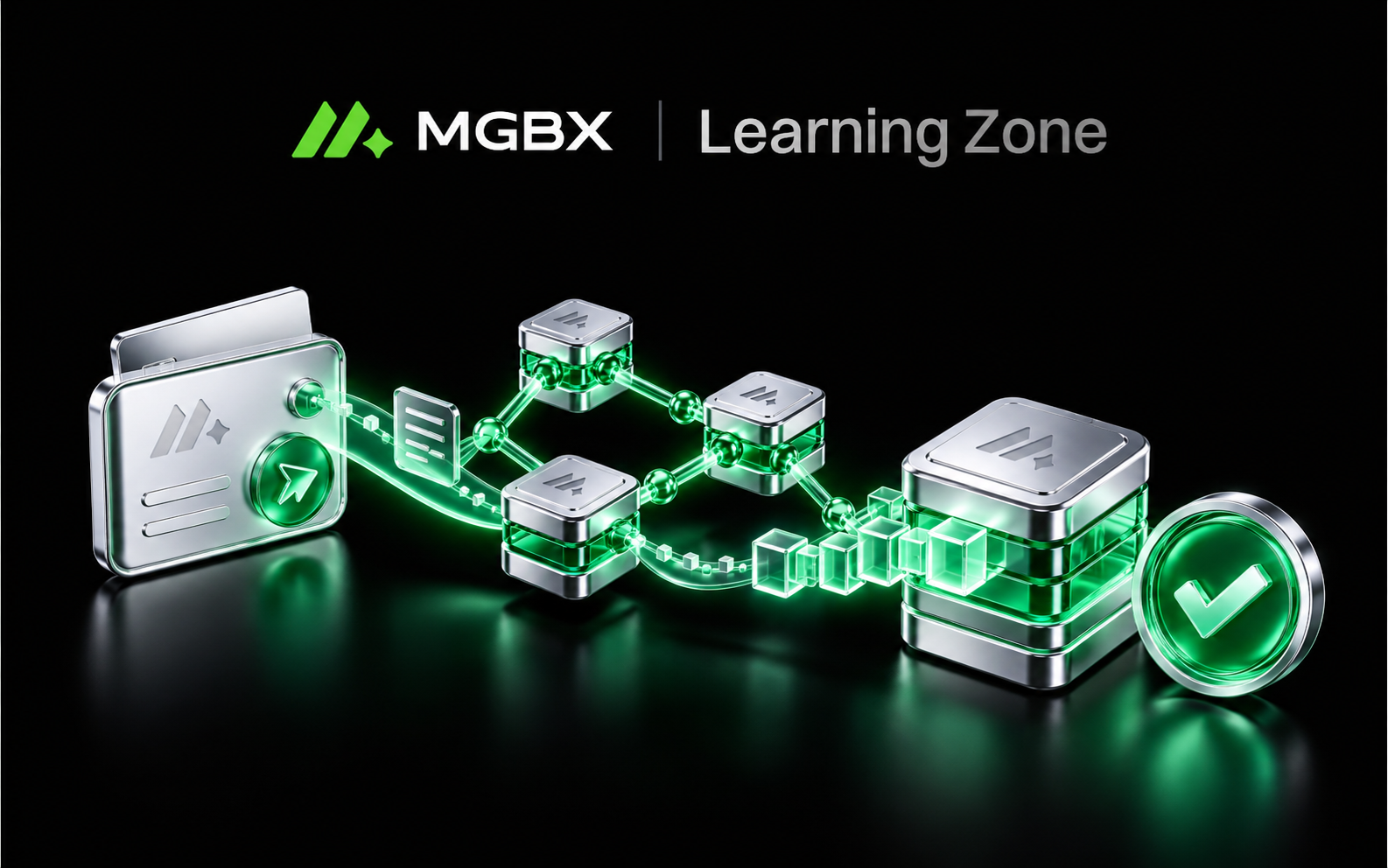
A blockchain transaction goes through several stages from the moment a user clicks send to the point when it is confirmed. These typically include transaction creation and signing, network broadcasting, node validation, waiting for block inclusion, being recorded in a block, and receiving further confirmations. Different blockchains use different transaction models and consensus mechanisms, but transaction creation, rule validation, block inclusion, and network state updates form the basic logic behind blockchain transactions. Understanding this process also helps explain why deposits, withdrawals, or transfers may sometimes be delayed.
How Is a Blockchain Transaction Created?
The blockchain transaction process begins with creating a transaction. When a user sends digital assets through a wallet, the wallet prepares the required information according to the rules of the relevant blockchain. This may include the recipient address, transfer amount, network fee, and other necessary parameters.
The transaction then needs a digital signature to prove that the action was authorized by the holder of the corresponding cryptographic key. A digital signature does not send the private key to the blockchain. Instead, it uses cryptography to generate information that the network can verify.
Once signed, the transaction is sent to a connected network node and then propagated to other nodes. This process is commonly known as transaction broadcasting.
It is important to note that successful broadcasting only means the network has started receiving the transaction. It does not mean the transaction has already been permanently recorded on the blockchain.
What Do Nodes Check When Validating a Transaction?
After receiving a transaction, nodes validate it according to the protocol rules of the blockchain.
Common checks include whether the transaction format is valid, whether the digital signature is correct, whether the relevant assets meet the conditions required for spending, and whether the transaction violates any network rules. Only transactions that pass these checks can move to the next stage.
Different blockchains use different transaction models. Bitcoin uses the UTXO model, while Ethereum is primarily based on accounts and state changes, so the exact validation process differs between networks.
Transactions that have passed basic validation but have not yet been included in a block usually remain pending. On networks such as Bitcoin and Ethereum, the term mempool is commonly used to describe a node’s collection of pending transactions.
Transaction fees may influence which transactions block producers prioritize, but a higher fee does not always guarantee earlier confirmation. Ordering can also depend on network rules, available block space, and block-building strategies.
What Does It Mean to Include a Transaction in a Block?
Validated transactions need to be included in a new block by a block producer. This process is commonly referred to as block production or block inclusion.
Under Bitcoin’s Proof of Work mechanism, miners organize candidate transactions into blocks and compete to solve the computational challenge required by the network.
Ethereum currently uses Proof of Stake, where the protocol selects validators to participate in proposing and validating blocks. This means not every blockchain relies on miners for block production.
Once a new block satisfies the protocol rules and is accepted by the network, the transactions inside it become part of the blockchain’s recorded history. At this point, a blockchain explorer can usually display the block containing the transaction, its status, and related confirmation information.
What Does the Number of Confirmations Mean?
Once a transaction is included in a block, it usually receives its first confirmation. As additional blocks are added, it generally becomes increasingly difficult for that transaction history to be reorganized.
However, different blockchains define “confirmation” and “finality” differently. Bitcoin mainly relies on increasing probabilistic security as more blocks are added, while Ethereum’s Proof of Stake system also includes a protocol-level concept of finality.
For users, the key point is that several transaction states are not the same. A transaction being broadcast does not mean it has been included in a block. Being included in a block does not necessarily mean it has reached the number of confirmations required by a platform. Even after the required on-chain confirmations are reached, the platform’s internal crediting process may still take additional time.
If a deposit, withdrawal, or transfer is delayed, users can search the TXID on the relevant blockchain explorer to check the transaction’s current status.
FAQ
What steps are involved in a blockchain transaction?
The process usually includes transaction creation, digital signing, broadcasting, node validation, waiting for block inclusion, being recorded in a block, and receiving additional confirmations.Does successful transaction broadcasting mean the transfer is complete?
Not necessarily. Broadcasting usually only means that network nodes have received the transaction. It may still be waiting for validation or block inclusion.What is node validation?
Node validation is the process in which network participants check whether a transaction follows protocol rules, including its signature, format, and asset-spending conditions.Why can a blockchain transaction remain Pending for a long time?
Possible reasons include network congestion, fee levels, transaction conditions, or limited block space. The exact cause depends on the status of the transaction on the specific blockchain.Why has the asset not arrived even though the blockchain shows the transaction as confirmed?
A trading platform may require additional confirmations or have its own internal crediting process, so on-chain confirmation and account crediting may not happen at exactly the same time.
Mastering the basics is the first step. Follow MGBX Academy to access more cryptocurrency educational resources and market opportunities.
The process for trading on MGBX:
Register a trading account and complete the necessary identity verification;
Deposit funds and select a trade type;
On the cryptocurrency trading page, enter the amount or quantity of the cryptocurrency you wish to purchase;
Confirm the order to complete the trade, and check that your assets have increased accordingly.
Further Readings:
What Is Blockchain? How It Works and Core Concepts Explained
How to Check a Blockchain Transaction: Blockchain Explorer and TXID Guide
Distributed Ledger Technology: The Foundation of Blockchain
What Is a Hash Algorithm? A Beginner’s Guide to Blockchain Cryptography