Position Management: Why You Should Never Go All-in
Learn crypto position management strategies, including capital allocation, single-trade risk control, and Position Sizing methods to avoid excessive trading risks.
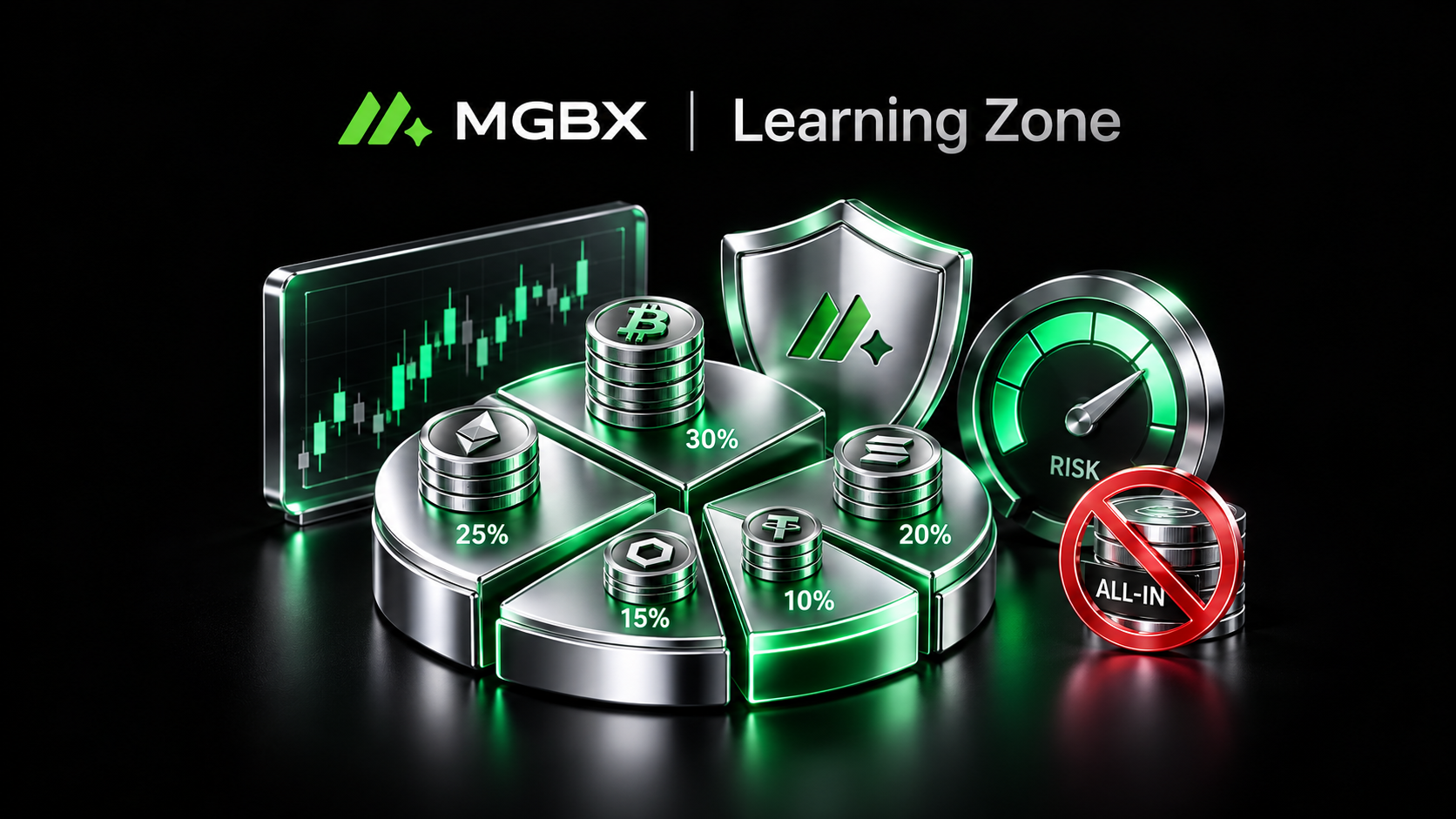
In cryptocurrency trading, position management determines how much market volatility a trader can withstand. While going all-in may amplify short-term gains, it also significantly increases account risk, and a single incorrect decision can lead to substantial drawdowns. This article explains the importance of position management, single-trade risk control methods, dynamic position adjustments, and position management principles for perpetual futures trading, helping traders build a more disciplined and sustainable capital allocation framework.
Why Should Crypto Traders Avoid an All-in Strategy?
In the cryptocurrency market, many traders are influenced by high-return success stories and believe that strong market conviction should lead to larger capital allocation. However, prices are affected by multiple factors, including macroeconomic conditions, capital flows, market sentiment, and unexpected events. No trading strategy can guarantee that every decision will be correct.
The biggest risk of going all-in is that it exposes the entire account to a single market direction. When the market moves as expected, an oversized position may generate significant returns. However, when the market reverses, losses are equally amplified. For example, if an account loses 50% of its value from a single trade, it requires a 100% gain afterward just to recover the original capital. This is why professional traders generally avoid maximizing returns from a single trade and instead use proper position management to maintain long-term market participation.
The purpose of position management (Position Sizing) is not to limit profit potential, but to improve capital efficiency while keeping risk under control. Traders should focus less on how much a trade can make and more on how much the trade could potentially lose.
Single-Trade Risk Control: Determine Position Size Based on Risk Amount
Effective position management usually starts with defining single-trade risk rather than deciding how much capital to invest directly. Traders should first determine the maximum acceptable loss, then calculate the appropriate position size based on the market price and stop-loss distance.
A common calculation method is:
Maximum risk per trade = Account balance × Risk percentage
For example, if a trading account has 10,000 USDT and applies a 2% risk rule per trade:
Maximum risk per trade = 10,000 USDT × 2% = 200 USDT
If the planned stop-loss distance is 5%, the appropriate position size can be calculated as:
Position size = Maximum risk per trade ÷ Stop-loss percentage = 200 USDT ÷ 5% = 4,000 USDT
This means that even though the account holds 10,000 USDT, it does not mean the trader should allocate the entire balance to every trade. A reasonable position size should be adjusted according to risk tolerance, stop-loss range, and market volatility.
This risk-first approach helps traders reduce the impact of consecutive losses while avoiding significant account drawdowns caused by a single incorrect decision.
For perpetual futures trading, position management becomes even more important. Since leverage improves capital efficiency but also amplifies price movements, traders need to consider leverage ratio, margin requirements, liquidation distance, and funding rates when managing positions.
Dynamic Position Adjustment: Managing Risk Based on Market Conditions
Position management is not a fixed rule. It should be adjusted according to changing market conditions.
In low-volatility markets, price movements are generally more stable, allowing traders to allocate positions according to their strategies. However, during periods of high volatility, such as major economic events, rapid market declines, or reduced liquidity, traders should actively reduce risk exposure.
Common dynamic position adjustment methods include:
Adjusting based on volatility: When market volatility increases, reduce position size to avoid excessive losses caused by normal price fluctuations.
Adjusting based on trade confidence: Higher-confidence setups may justify relatively larger positions, while lower-confidence opportunities should receive smaller allocations.
Adjusting after consecutive losses: When an account experiences multiple losses, reducing the risk per trade can help prevent emotional trading and further drawdowns.
Some professional traders also use mathematical models such as Kelly Criterion to assist with position management. The model calculates an optimal capital allocation ratio based on win rate and profit-loss ratio. However, due to the high volatility of crypto markets, traders often apply methods such as Half Kelly or Quarter Kelly to reduce drawdown risk.
The Core Principle of Position Management: Protect Capital, Not Limit Returns
Many traders believe that reducing position size means reducing profits. However, over the long term, proper position management actually protects future earning opportunities.
The market will always provide new trading opportunities. If an account suffers a major drawdown due to a single oversized position, traders may no longer have sufficient capital to participate when better opportunities appear.
A mature trading system usually includes:
Clear capital allocation rules;
Reasonable single-trade risk limits;
Defined stop-loss plans;
Continuous trade reviews.
Asset allocation is also an important part of position management. Trading capital, long-term holding funds, and reserve funds should be separated appropriately to prevent short-term trading decisions from affecting overall financial security.
For crypto traders, avoiding all-in strategies does not mean being overly conservative. Instead, it means using disciplined capital management to ensure that an account can withstand different market cycles and continue participating in future opportunities.
FAQ
Why is going all-in considered risky in crypto trading?
Because crypto markets are highly volatile, and every trade carries the possibility of being wrong. Going all-in exposes the entire account to a single market movement, which may result in losses that are difficult to recover from.What percentage should position management control?
There is no universal standard. It depends on account size, trading strategy, and risk tolerance. Many traders use a single-trade risk limit of around 1%-2% of total account capital.Can small accounts use an all-in strategy?
It is generally not recommended. Having a smaller account does not eliminate the need for risk management. Proper position sizing allows traders to gain experience while reducing the risk of losing the ability to continue trading.How should traders manage positions when using leverage?
Leveraged trading requires consideration of position size, margin ratio, stop-loss distance, and liquidation risk. The higher the leverage, the stricter the position management requirements.What is the difference between position management and capital management?
Capital management covers broader asset allocation and risk planning, while position management focuses mainly on the size of individual trades and is an important part of overall capital management.
Mastering the basics is the first step. Follow MGBX Academy to access more cryptocurrency educational resources and market opportunities.
The process for trading on MGBX:
Register a trading account and complete the necessary identity verification;
Deposit funds and select a trade type;
On the cryptocurrency trading page, enter the amount or quantity of the cryptocurrency you wish to purchase;
Confirm the order to complete the trade, and check that your assets have increased accordingly.
Further Readings:
Complete Guide to Crypto Trading Risk Management
The Art of Stop Loss: How to Set Stop Loss Orders Scientifically
Risk Reward Ratio and Win Rate: Core Metrics of a Trading System
Risk Reward Ratio Calculation: A Must-Do Step Before Every Trade