Web1 → Web2 → Web3: The Three Stages of Internet Evolution
Explore the evolution from Web1 and Web2 to Web3, and learn how data ownership, platform economics, and user control have changed across different stages of the internet.
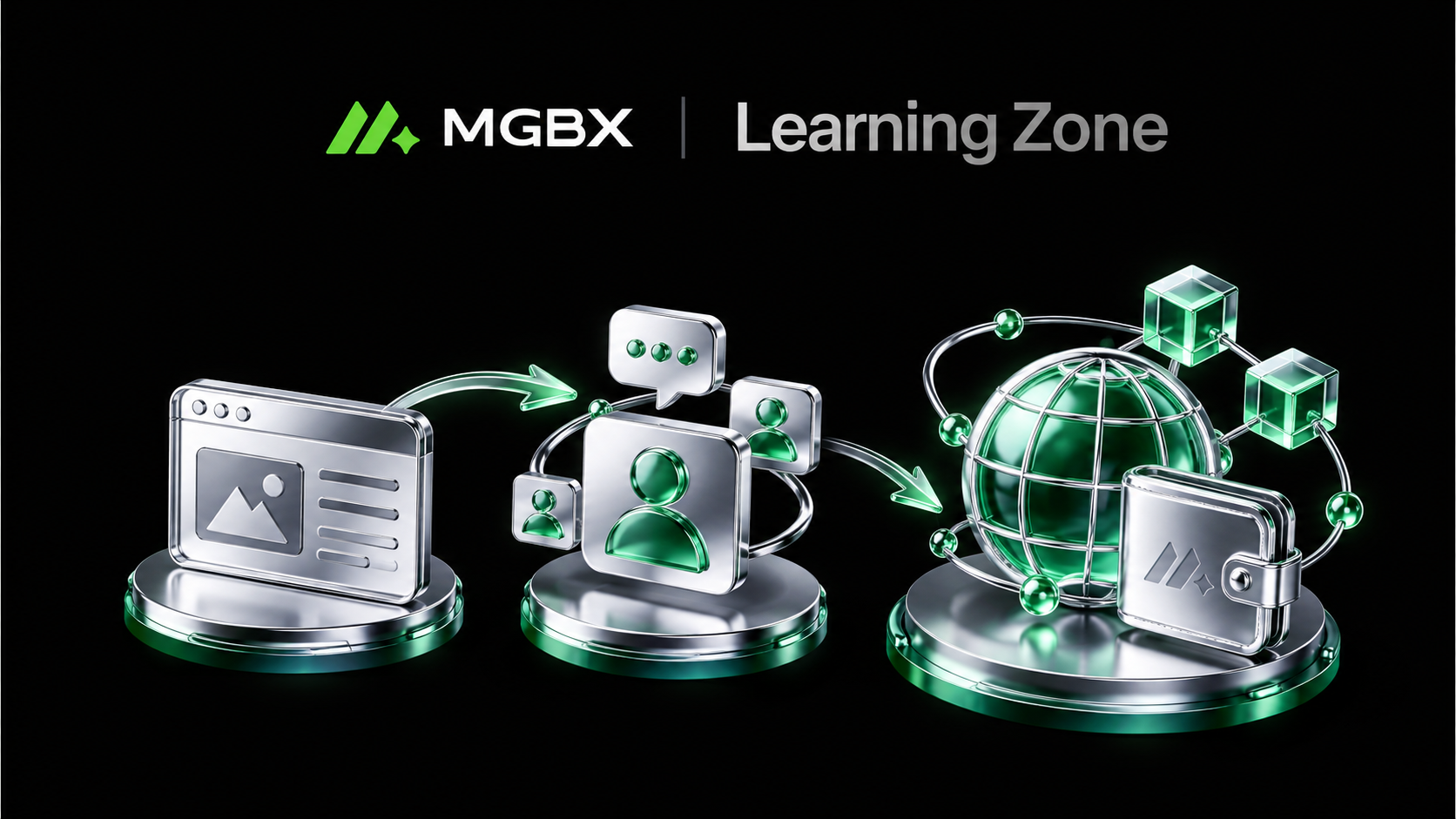
Web1 allowed users to read information online, Web2 enabled ordinary users to create content and interact socially, while Web3 explores greater user control over digital assets, identity, and online rights. These stages do not completely replace one another. Instead, they represent different layers of internet development. Understanding this evolution helps explain who stores data, who sets the rules, and what responsibilities users take on in each model.
Web1: The Read-Only Internet
Web1 generally refers to the early stage of the internet, when static websites dominated the web. It is often described as the “read-only web.”
During this period, most online content was created by companies, media organizations, schools, or website administrators. Ordinary users could read news, search for information, and download files, but they had limited opportunities to comment, publish content, or build complex online social relationships.
Web1 mainly solved the problem of digitizing and distributing information over long distances. Information that once depended on newspapers, television, or physical materials could now be accessed through a browser from almost anywhere.
However, interaction remained limited. There was a clear distinction between content creators and information consumers, with most users acting as readers rather than active participants in internet platforms and services.
Web2: Users Create Content, Platforms Manage Data
With the rise of social media, cloud computing, and smartphones, the internet entered the Web2 era, centered on interaction and user-generated content.
In Web2, anyone can publish articles, videos, comments, and products, while also participating in online communities through likes, follows, livestreams, and instant messaging. The internet evolved from “read-only” to “read and write.”
Web2 significantly lowered the barrier to content creation, but user accounts, social relationships, and behavioral data are usually stored in databases controlled by platforms. These platforms provide convenient services while also setting rules for content distribution, account management, and monetization.
Users may build large audiences and extensive content libraries on one platform, but they often cannot fully transfer that data to another service. This type of closed ecosystem is commonly referred to as a “walled garden.”
For this reason, Web2 data ownership is not simply a matter of platforms “taking” user data. More accurately, there is often an imbalance between users and platforms in terms of control, access, and how commercial value is distributed.
Web3: Exploring Data Ownership and User Control
Web3 builds on the interactive capabilities of Web2 by introducing blockchain-based ownership, digital wallets, smart contracts, and open protocols.
In Web2, user accounts are typically created and managed by platforms. In Web3, users can connect to different applications through wallet addresses.
In traditional games, in-game items are stored in a company-controlled database. In some Web3 applications, those items can exist as on-chain assets controlled through a user’s wallet.
This reflects one of the central ideas behind user sovereignty: users do not simply access services, but may also directly manage certain digital assets, identity credentials, and application permissions.
However, “user sovereignty” does not mean users always have absolute control. Smart contracts may include upgrade permissions, applications may still rely on centralized front ends, and digital assets can be affected by platform rules, market demand, and legal requirements.
The Ethereum community often summarizes internet evolution as “Web1: read, Web2: read and write, Web3: read, write, and own.” At the same time, Web3 still faces challenges involving cost, user experience, and reliance on centralized infrastructure.
Will Web3 Completely Replace Web2?
Web1, Web2, and Web3 are more likely to coexist for a long time rather than simply replace one another in sequence.
Many websites today still use Web1-style information publishing, while Web3 applications frequently depend on Web2 technologies such as cloud services, social media, mobile apps, and traditional user interfaces.
A single product may combine centralized login systems, blockchain settlement, and decentralized storage at the same time.
The key point in internet evolution is not which version is necessarily “better,” but how each model distributes control over data, assets, and rules.
Web2 generally offers lower barriers to entry and more mature customer support. Web3 provides more open asset interaction and verifiable rules. The future of the internet may combine both approaches, balancing convenience, privacy, security, and user control.
Mastering the basics is the first step. Follow MGBX Academy to access more cryptocurrency educational resources and market opportunities.
The process for trading on MGBX:
Register a trading account and complete the necessary identity verification;
Deposit funds and select a trade type;
On the cryptocurrency trading page, enter the amount or quantity of the cryptocurrency you wish to purchase;
Confirm the order to complete the trade, and check that your assets have increased accordingly.
Further Readings:
What Is Web3: A Complete Guide to the Next Generation of the Internet