What Is Web3: A Complete Guide to the Next Generation of the Internet
What is Web3? Learn about Web3 concepts, core technologies, use cases, digital identity, and wallets, and understand how the decentralized internet works.
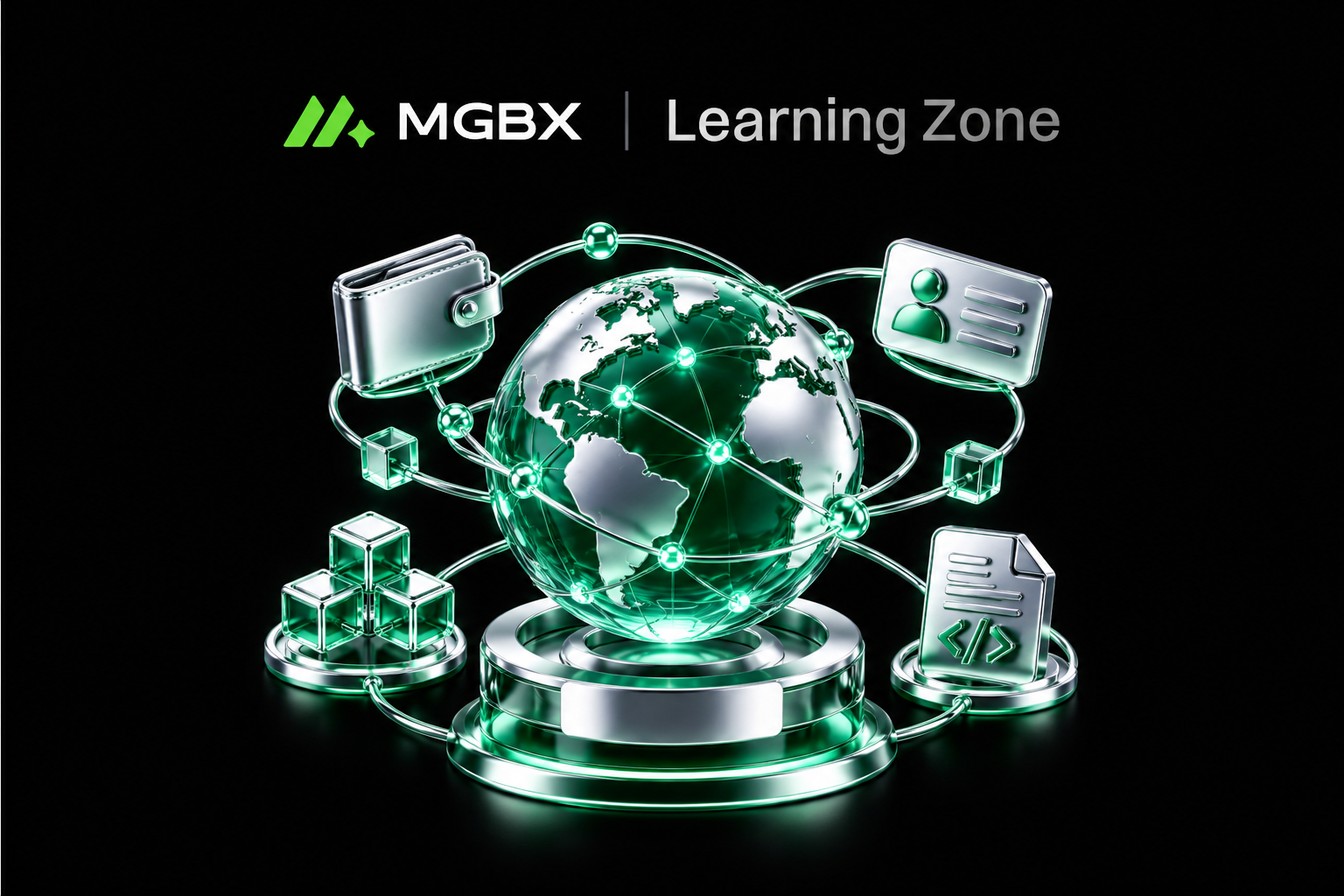
Web3 generally refers to the next generation of the internet built around blockchain, smart contracts, digital wallets, and open protocols. Its goal is to move users from simply using platform-controlled accounts toward having greater control over digital assets, identity credentials, and online rights. This guide explains what Web3 is, how it works, its main applications, and the opportunities and risks beginners should understand before getting started.
What Is Web3?
Web3 is an emerging internet model built around blockchain, smart contracts, digital wallets, and decentralized protocols. It is also often described as the “decentralized internet” or the “internet of value.”
In the traditional internet, users can browse information, publish content, and use online services, but accounts, data, and platform rules are usually managed by internet companies. Web3 introduces digital ownership and native value transfer, allowing users to manage on-chain assets, identity credentials, and application permissions through their wallets.
For this reason, Web3 is often summarized as “read, write, and own.” However, “own” does not mean that all data must be stored on a blockchain or that users always have absolute control. More accurately, Web3 uses open protocols and cryptographic tools to make digital ownership, transaction rules, and identity permissions easier to verify.
From Platform-Controlled Internet to User-Controlled Networks
To understand what Web3 is, it helps to look at the three major stages of internet development.
Web1 mainly consisted of static websites. Users primarily consumed information published by media companies, businesses, and website administrators, which is why it is often called the “read-only web.”
Web2 introduced social networks, mobile apps, and user-generated content. Users could not only read information but also publish videos, comments, and products, moving the internet from “read-only” to “read and write.” However, Web2 accounts are generally created by platforms, while content, follower relationships, and behavioral data are mainly stored in platform-controlled databases.
Web3 expands this model toward “read, write, and own.” Users can connect to different applications with a digital wallet and use cryptographic signatures to prove control over a specific address or asset. Some digital assets and identity credentials may also move across compatible applications without relying entirely on a single platform account.
For example, in traditional games, in-game items are recorded in the game company’s database. In some Web3 games, items can be represented as on-chain assets and managed through a user’s wallet. On traditional social platforms, accounts and follower relationships are usually difficult to transfer, while some decentralized social protocols allow users to carry public identities or social connections across compatible applications.
The value of Web3 is not limited to token issuance. Its broader goal is to solve real-world problems through open rules, verifiable data, and greater user control.
Digital value transfer:
Blockchain allows users to transfer crypto assets directly and use smart contracts for conditional transactions, creating a value layer that is native to the internet.Application composability:
Developers can interact with public smart contracts, while users may access multiple applications with the same wallet and carry certain assets and on-chain identities across them.Community coordination:
DAOs can use smart contracts and governance tools to organize proposals, voting, and treasury management. However, DAOs do not mean that all decisions are automatically executed or that every token holder has equal influence.
Web3 is not simply a replacement for Web2. Most Web3 applications still depend on websites, cloud services, mobile devices, and traditional internet infrastructure. The future is more likely to combine the convenience of Web2 with the ownership and interoperability features of Web3.
Further Reading: Web1 → Web2 → Web3: The Three Stages of Internet Evolution
How Does Web3 Work?
A Web3 application typically includes blockchain infrastructure, smart contracts, digital wallets, storage services, and a front-end interface.
Blockchain records transactions, asset ownership, and application states. Smart contracts execute predefined rules for token swaps, lending, asset issuance, governance voting, and other activities.
Digital wallets are one of the main entry points into Web3. A wallet does not directly store on-chain assets. Instead, it manages the keys used for signing and authorization. The blockchain records asset balances and ownership, while the wallet allows users to prove that they have permission to interact with those assets.
Because storing large files such as images and videos directly on-chain can be expensive, Web3 applications may also use technologies such as IPFS, Filecoin, or Arweave to store and distribute data.
It is important to note that using blockchain does not automatically make a project fully decentralized. Users should also understand who controls the smart contracts, whether the front end relies on a single server, and whether the project team retains upgrade, pause, or administrative permissions.
Further Reading: The Web3 Technology Stack
What Are the Main Web3 Use Cases?
DeFi is one of the more established Web3 use cases, using smart contracts to provide services such as token swaps, collateralized lending, and stablecoins.
GameFi introduces NFTs and token-based mechanisms into gaming, allowing some characters, items, and virtual land to be managed through wallets. However, owning an asset on-chain does not guarantee that it has market value or that it can be used across different games.
SocialFi uses open protocols to explore portable social identities and creator economies, while the Metaverse combines digital identity, virtual assets, and interactive environments to create new forms of online experiences.
In addition, DID is used to explore decentralized identity, while ENS can map complex wallet addresses to human-readable .eth names. MPC wallets and account abstraction wallets aim to reduce the complexity of private key management and on-chain interactions.
Further Reading: Web3 Use Cases, Web3 Identity (DID), Web3 Domains, The Next Generation of Web3 Wallets
What Should Beginners Know Before Getting Started With Web3?
Web3 can reduce some platform access barriers, but it also places more security responsibility on users. Private key exposure, lost seed phrases, phishing websites, malicious approvals, and smart contract vulnerabilities can all result in asset loss.
Beginners should first understand the differences between key parts of the Web3 technology stack, including wallets, private keys, gas fees, token approvals, and blockchain networks.
When using a Web3 application for the first time, verify the website domain, blockchain network, and contract address, and consider starting with a small amount you can afford to lose.
It is also important to understand that “code is law” is only a phrase used to describe the automatic execution of smart contracts. It does not mean that code is always correct. Smart contracts may contain vulnerabilities, and project teams may retain the ability to pause, upgrade, or manage certain functions.
Web3 is still evolving. It offers new ways to organize internet services, digital ownership, and online coordination, but it does not automatically solve issues involving trust, security, privacy, or fairness.
Mastering the basics is the first step. Follow MGBX Academy to access more cryptocurrency educational resources and market opportunities.
The process for trading on MGBX:
Register a trading account and complete the necessary identity verification;
Deposit funds and select a trade type;
On the cryptocurrency trading page, enter the amount or quantity of the cryptocurrency you wish to purchase;
Confirm the order to complete the trade, and check that your assets have increased accordingly.
Further Readings:
Web1 → Web2 → Web3: The Three Stages of Internet Evolution